There's something quite humbling about hearing your younger self.
Not a recording from twenty years ago. Just one from August 2024: a conversation with medium, teacher and author Kay Reynolds that I honestly thought I'd lost forever into cyberspace. When it resurfaced and I pressed play, I heard a version of me I recognised immediately, and one I've grown a long way from.
I was asking Kay question after question. How do you deepen the evidence? How do you get past the wall? At one point I told her that in every other part of my life, my business, the podcast, whatever I turned my hand to, I'd simply decide I was going to do something and do it well. But the moment I sat in a development circle, I'd find myself watching another medium give a beautiful reading and thinking, come on, give me something.
The harder I tried, the further into my head I went.
Listening back made me stop and take stock of how far I've come. It also made me reassess my relationship with trust as it is now. I'd love to tell you that trust is something you earn once and keep. In my experience, it's something you keep choosing.
Today I trust the spirit world implicitly. I believe in my abilities, and I trust the work. And yet, even recently, I've had experiences in my mediumship that stopped me in my tracks and made me look again at where my trust feels strong, where it gets shaken, and what I'm still holding on to.
So this isn't a post about arriving. It's about the difference between believing and knowing, why doubt is such a powerful energy, and how trust is actually built. Whether you're at the very beginning of your journey, returning to mediumship after time away, or somewhere in the middle wondering why it suddenly feels harder, I hope something here meets you where you are.
Belief or knowing? The first kind of trust
My first lesson in trust had nothing to do with my own ability. It was whether the spirit world was real at all.
I came to this work as a sceptic, and I wanted proof. (I've written about that road in From Proof to Trust.) For a long time, I could have told you I believed. I'd read the books, sat in circles and felt things I couldn't explain. But belief, I've come to realise, lives mostly in the head. It's something you hold, and something that can be argued with, by other people and by yourself at three in the morning.
Knowing is different. Knowing arrives through experience, and once it has arrived, it no longer needs defending.
The philosopher and psychologist William James described something similar over a century ago. In The Varieties of Religious Experience (1902), he wrote that mystical experiences have a "noetic quality". Although they resemble feelings, they seem to those who have them to be "states of insight into depths of truth unplumbed by the discursive intellect", and they "carry with them a curious sense of authority for after-time."
James was writing about mystical experience rather than mediumship. But a curious sense of authority for after-time is the best description I've found of what happened when believing finally became knowing for me. I stopped needing to think about it. It simply became part of who I am.
Kay's story about her dad is one of the loveliest examples I've heard. Driving home through the Fens, she asked him for proof that she wasn't imagining him. A car appeared from nowhere with KK on its number plate, his name for her. She laughed and told him it wasn't enough; that could have been chance. Then a second car appeared, carrying LD, the initials he went by.
"Okay, Dad," she said. "You've got my attention now."
What strikes me is that Kay already had a lifetime of experiences behind her: the man she saw in her bedroom at five, the relatives who visited her dreams, the messages she carried to her mum. And still she asked. I don't see that as a lack of faith. I think asking is part of how belief becomes knowing.
If you're somewhere between believing and knowing right now, you might find it helps to stop trying to argue yourself into certainty. Notice instead the experiences that carry their own quiet authority, the ones you keep coming back to. They are often the beginnings of knowing.
And once you know the spirit world is real, a second question tends to follow. Can I trust myself to hear it?
Why trust in your own mediumship never travels in a straight line
Listening back, one thing I said to Kay made me smile. I told her I was confident in every other area of my life. Only in circle did the doubt arrive.
At the time, that felt like a contradiction. Now I think it makes perfect sense.
The psychologist Albert Bandura spent decades studying what he called self-efficacy: our belief in our ability to succeed at a particular task. The key word is particular. Confidence built in one area of life doesn't automatically carry into another. And of all the ways that belief is built, Bandura found the most effective was mastery experience: actually doing the thing, and coming through it (Bandura, 2000).
In 2024, I had years of mastery experience in business. In mediumship, I was still gathering mine. Of course my trust was wobbly. I hadn't yet given it much to stand on.
What I didn't understand then is that trust in your own mediumship doesn't climb in a neat line. I told Kay it felt like "one step forward, twenty steps back". These days the steps back are fewer, but they still come. You can feel you've built a solid relationship of trust with yourself and the spirit world, and then a single reading or experience tests it so deeply that you feel knocked two steps backwards. I've had experiences like that recently, ones that stopped me in my tracks and made me look honestly at my own work.
Bandura wrote something about this that I find hugely reassuring:
"If people experience only easy successes, they come to expect quick results and are easily discouraged by failure. A resilient sense of efficacy requires experience in overcoming obstacles through prolonged effort."
In other words, the setbacks are part of how trust gets built. A trust that has never been tested is untried. A trust that has been knocked and has found its feet again is the kind you can rely on.
I often think it's the hardest lessons that lead to the biggest growth. That has been true in the business I built, and it has been true in my mediumship. The readings that didn't land the way I'd hoped have taught me far more about getting out of my own way than the ones that flowed.
There's a helpful idea from learning research here too. Psychologists Robert and Elizabeth Bjork at UCLA have spent years showing that how well we seem to be doing while we practise is often an unreliable guide to how much we're actually learning. As Robert Bjork puts it: "What we can observe is performance, but what we have to infer is learning."
A difficult evening in circle is a performance on one evening. It isn't a measure of your development.
Doubt is a powerful energy
If trust is what lets the spirit world in, doubt is what keeps the door half closed.
I don't say that lightly, because doubt is powerful. It can stop us before we've even begun. It can be the reason someone never puts their name forward for a demonstration, never books the class, never shares the impression that arrived in circle, or never comes back after a difficult reading.
Shakespeare put it perfectly four centuries ago, in Measure for Measure:
"Our doubts are traitors, / And make us lose the good we oft might win / By fearing to attempt."
Bandura saw the same pattern in his research. People who doubt their capabilities, he wrote, "shy away from difficult tasks, which they tend to view as personal threats", and "slacken their efforts and give up quickly in the face of difficulties."
I recognise a quieter version of this in mediumship, and listening back, I can hear it in myself. Doubt doesn't always make us stop. Sometimes it makes us grip harder. That was me in 2024: come on, give me something. The more I doubted, the harder I tried. The harder I tried, the further into my head I went. And the further into my head I went, the less I seemed to receive, which gave the doubt even more to feed on.
Kay's answer was beautifully simple. When you truly trust and surrender, she told me, the spirit world can come right in and blend with you, and that's when the evidence deepens. Grasping is doubt trying to make something happen. Trust is allowing it to happen.
There's one more cost of doubt worth naming. In mediumship, the impression you keep to yourself can never be confirmed. It never gets its yes, no, don't know or maybe, so you never get to learn from it. And on the other side of that impression may be a person in the spirit world who stepped forward hoping to be heard.
In the classes and circles I facilitate, I'm reminded again and again that mediumship, at its core, comes down to trust. Doubt might show up for you as a tightening before you speak, a voice suggesting someone else will say it better, or a quiet decision to wait until next week. However it shows up, it's worth getting to know. More often than not, doubt speaks for the part of you that hasn't yet gathered enough experience to know.
What Kay Reynolds taught me about going within
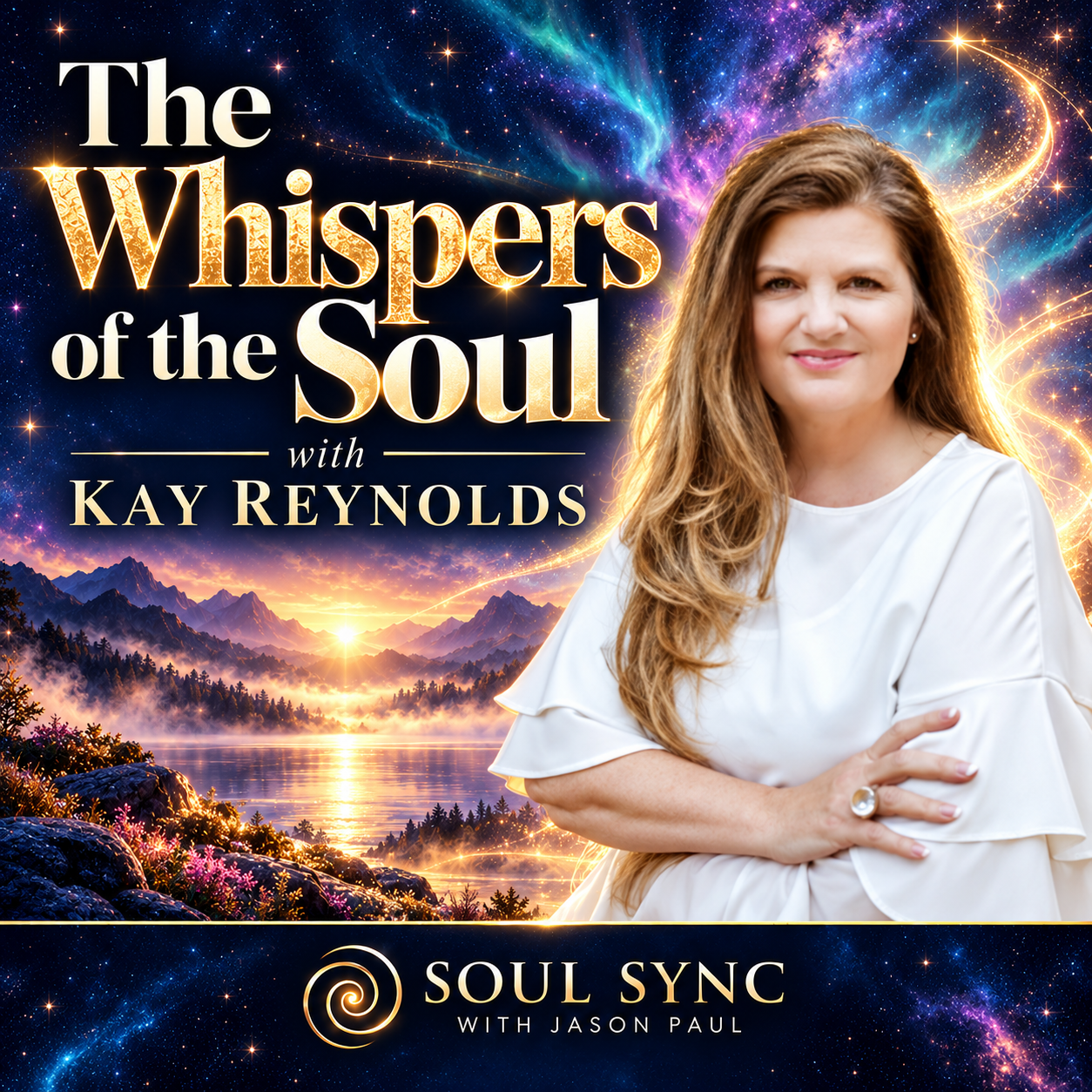
Kay Reynolds is an evidential medium, mentor and the author of The Evidential Medium: A Practical Guide for Developing Mediumship. She spent 29 years as a teacher, and she trained for more than ten years at the Arthur Findlay College under the mentorship of Mavis Pittilla. Today she teaches students around the world through her Intent, Trust and Surrender approach.
What I love about Kay is that she makes no secret of how hard the journey was. She talks openly about hitting walls. While training at the Arthur Findlay College, she believed the right exercises would eventually turn her into a medium. Every time she hit a wall and asked a tutor what to do, she heard the same answer: go within. Sit with yourself. Sit in the power of your own soul.
Nobody told her how.
So she sat. For the whole first year, her guide refused to speak to her, which, she admits, really made her mad. She would sit for forty-five minutes to an hour in silence with him. Only later did he explain what those silent sittings had been for: they were bonding. She was learning who he was energetically, and trust was being built between them. She would sometimes come out of those sittings in tears without knowing why, and she now believes healing was taking place.
Then came the moment she describes as a turning point. Sitting in the power one day, she found herself surrounded by swirling colours. When she asked her guide what she was seeing, he pointed at her. "You're seeing you." For the first time, she experienced herself as a spirit being, and what she felt was unconditional love.
Some time later, her guide appeared to her as colour too, and she realised he was just like her. If they were both spirit, there was no reason she couldn't connect with him.
"I've been saying that for years," she told me, "but I didn't believe it. But now I believed it, because I experienced it."
There it is again: belief becoming knowing, through experience.
This is the heart of what Kay taught me. Trust in the spirit world and trust in yourself are one journey. When you come to know yourself as spirit, communicating with spirit begins to feel less like reaching for something far away and more like recognising something familiar.
If sitting in silence feels like a struggle for you right now, you're in good company. I told Kay in 2024 that I could spin twenty plates at once but couldn't sit still. Her advice was practical: she started with five minutes, added a little at a time, and eventually sat for an hour. These days, her favourite way to connect with her guide is simply to go for a walk in nature. (I've shared more about sitting in the power and finding your own way to do it here.)
How trust is actually built
If I could sit beside my 2024 self, I wouldn't tell him to trust more. I'd tell him to practice more.
Trust can't be thought into being. It's built, one experience at a time, and that usually means stepping a little outside your comfort zone. Nothing I've ever achieved in life was achieved inside mine.
Bandura identified four main ways our belief in ourselves is built. I find they map beautifully onto mediumship development.
Doing the work. Mastery experience is the strongest builder of trust there is. Every message you share, every reading you give, every yes and every no adds to it. This is where belief turns into knowing.
Watching people like you. Bandura found that seeing "people similar to oneself" succeed raises our own belief. This is one reason a development group matters so much. It's also why comparison can quietly turn the same experience against you. Watching a fellow student give a beautiful reading can be a reason to think if they can, so can I, or a reason to doubt yourself. In 2024, I mostly chose the second. These days, I try to choose the first.
Encouragement. A good teacher's encouragement helps. But as Kay said, we can say we trust as often as we like; unless we believe it from the inside, it won't hold. Bandura made a similar point: "successful efficacy builders do more than convey positive appraisals." They create the conditions in which people can succeed for themselves. That's what I aim for in my own teaching.
How we feel in our bodies. Bandura found that easing our stress reactions strengthens our belief in what we can do. A racing heart before you speak in circle can feel like evidence that you can't. It may simply be your body preparing to do something that matters to you.
The learning research points the same way. In the Bjorks' studies, practice that felt more demanding, such as spacing sessions out and switching between different tasks, led to learning that lasted longer, even when it felt less successful at the time. A little struggle is often a sign that you're growing.
Ways to build trust, one experience at a time
Share the first thing you receive. In circle, offer what comes before you've polished or second-guessed it. That first impression is where the communication starts.
Count your attempts as well as your hits. Keep a note of every time you spoke up, whatever the response. You're building a record of courage as well as accuracy.
Let a no be part of the conversation. A no gives you the chance to go back to the spirit person and ask for more.
Sit again soon after a knock. When a reading or experience shakes you, explore what happened with curiosity, then go again. That's how a resilient trust is made.
Choose one small stretch. If you've only worked one-to-one, try a short message in front of a supportive group. If you always wait to go last, try going first.
Let other people's readings inspire you. When someone gives a beautiful reading, let it show you what's possible.
Write down the moments that carry their own authority. The experiences you keep coming back to are the foundations of knowing.
The doubt may never disappear completely. Even now, with all the trust I have in the spirit world and in my own work, I still meet it. The difference is that it no longer gets the final word.
Kay closed our conversation with a thought I keep returning to. "Listen to your soul," she said. "I call it the whispers of the soul, because your soul knows exactly what it is that you're supposed to do in this life. So listen to your soul. If it's pulling you there, give it a go. Take a dabble. See where it leads you."
Build your trust with us
Trust grows through practice, and practice grows best in good company. If something in this post has spoken to you, trance medium Donna King and I would love to welcome you into our online classes, live on Zoom.
The Power of You: Psychic Development · Sundays, 6–8pm UK
If you're new to development, or returning after time away, this is where I'd suggest you begin. Before we explore what comes from the spirit world, we get to know you: your own energy, how impressions come to you, how to sit in your own power, and how to trust what you receive without overthinking it.
Moving in the Intelligence of the Spirit: Mediumship Development · Mondays, 7–9pm UK
Open to all levels, with breakout pairs matched to experience. We work on building and holding a link with the spirit world, allowing the personality of your communicator to come through, and practising one-to-one readings and platform-style demonstration. Each week gives you a little more experience to stand on.
Places on every session are limited, so it's worth booking the dates you'd most like to attend early.
And if you'd like a place to keep practising in between, I co-host a free online mediumship development circle with Alexandra Rush every Tuesday, 6–8pm UK. There's an hour of demonstration followed by an hour of one-to-one readings: a gentle, supportive place to put your name forward and grow in confidence. Come as you are.
Listen to the full conversation
In this episode of Soul Sync, recorded in August 2024, Kay shares the man she saw in her bedroom at five, the dream visits that had her carrying messages to her mum, the serious illness that brought her to England and the Arthur Findlay College, and the number plates her dad used to get her attention. We talk about why mediumship asks you to go within, her year of sitting in silence with her guide, the moment she saw her own spirit, how to deepen your evidence, and the whispers of the soul.
Find Kay Reynolds
Website: kayreynolds.org
Free guide: 3 Trust Blocks Every Medium Faces
Book: The Evidential Medium: A Practical Guide for Developing Mediumship
Instagram: @mediumkayreynolds
YouTube: @MediumKayReynolds
You can read the whole conversation in the transcript below, chapter by chapter.
Your questions about self-doubt and trust in mediumship
Why do I doubt myself in mediumship? Self-doubt is one of the most common experiences in mediumship development, even for people who feel confident elsewhere in life. Psychologists describe self-belief as specific to each task, so confidence built at work or at home doesn't automatically carry into circle. It grows through experience: giving messages, receiving feedback and practising regularly.
What is the difference between believing and knowing? Belief lives mostly in the mind. It can be argued with, by other people and by yourself. Knowing comes through direct experience and carries its own quiet authority, so it no longer needs defending. In mediumship, repeated experience of the spirit world, and of your own connection with it, is what turns belief into knowing.
Why does my mediumship feel like it's going backwards? Mediumship development rarely moves in a straight line. A single reading or experience can shake your confidence, even after years of progress. Research on learning suggests that how well we seem to be doing on a given day is an unreliable guide to how much we're learning, and that working through setbacks builds a more resilient confidence than easy successes.
How can I build confidence as a developing medium? Practise regularly in a supportive group, share the first impression you receive, treat a "no" as part of the conversation, sit again soon after a difficult experience, and stretch a little beyond your comfort zone each time. Confidence is built through experience more than encouragement.
Do experienced mediums still have self-doubt? Many do. Experience changes your relationship with doubt rather than removing it completely. For many working mediums, doubt becomes a reminder to stay humble and careful, and less of a reason to hold back.