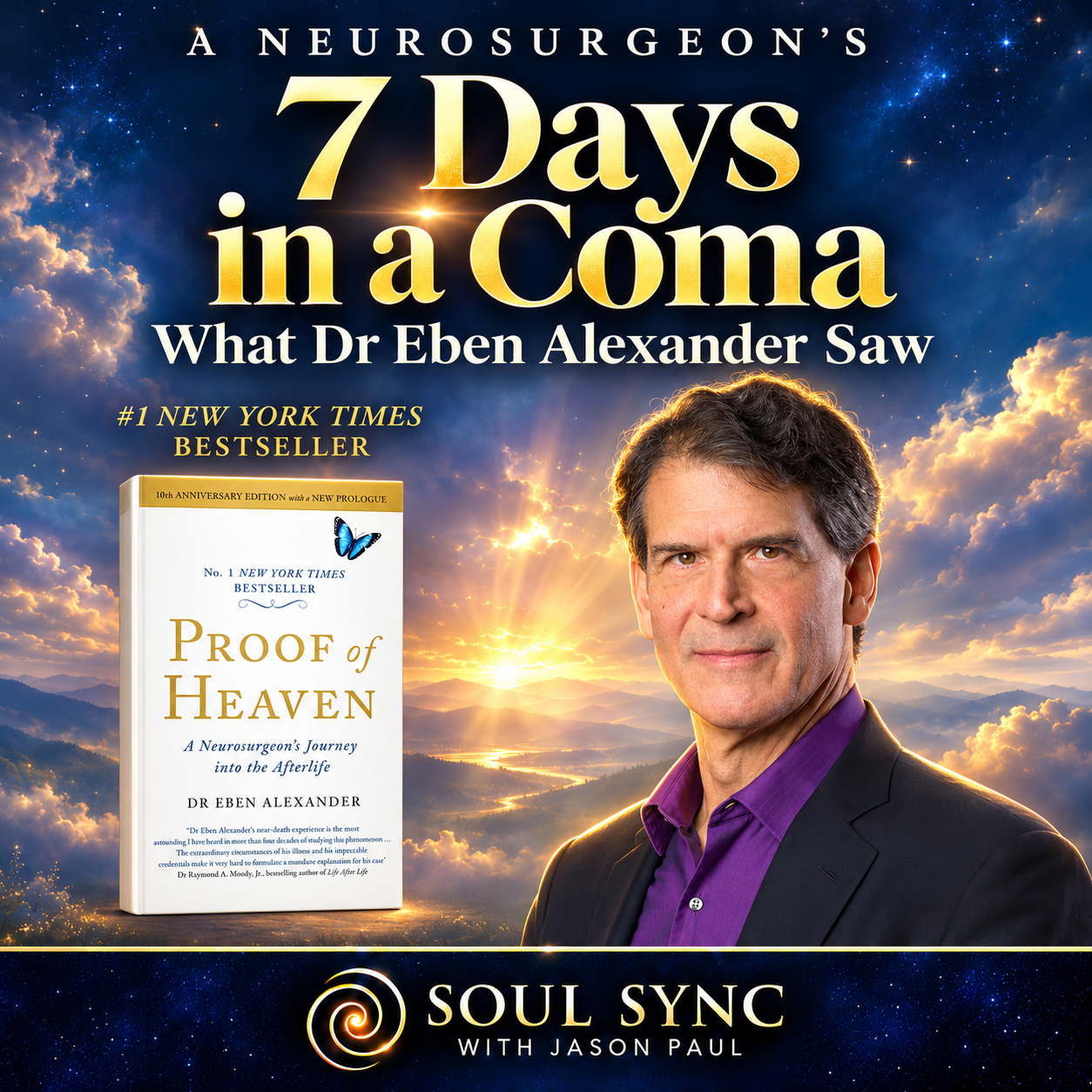
A quick note before you press play: this episode first came out in May 2024, when I was still running my recruitment business alongside my mediumship. At the start, I talk about what was going on in my life back then. A lot has changed since, and writing this, I'm looking back on that conversation with fresh eyes.
A few years ago, my mum and I were sitting out in Greece with a glass of wine, and somehow the conversation turned to death. She started telling me what she'd want at her funeral. I stopped her mid-sentence. "Please don't talk about this. I don't want to think about you dying."
Back then I was absolutely petrified of death. You lived, you died, and that was it. If I'm honest, it made the whole of life feel a bit pointless was my view back then.
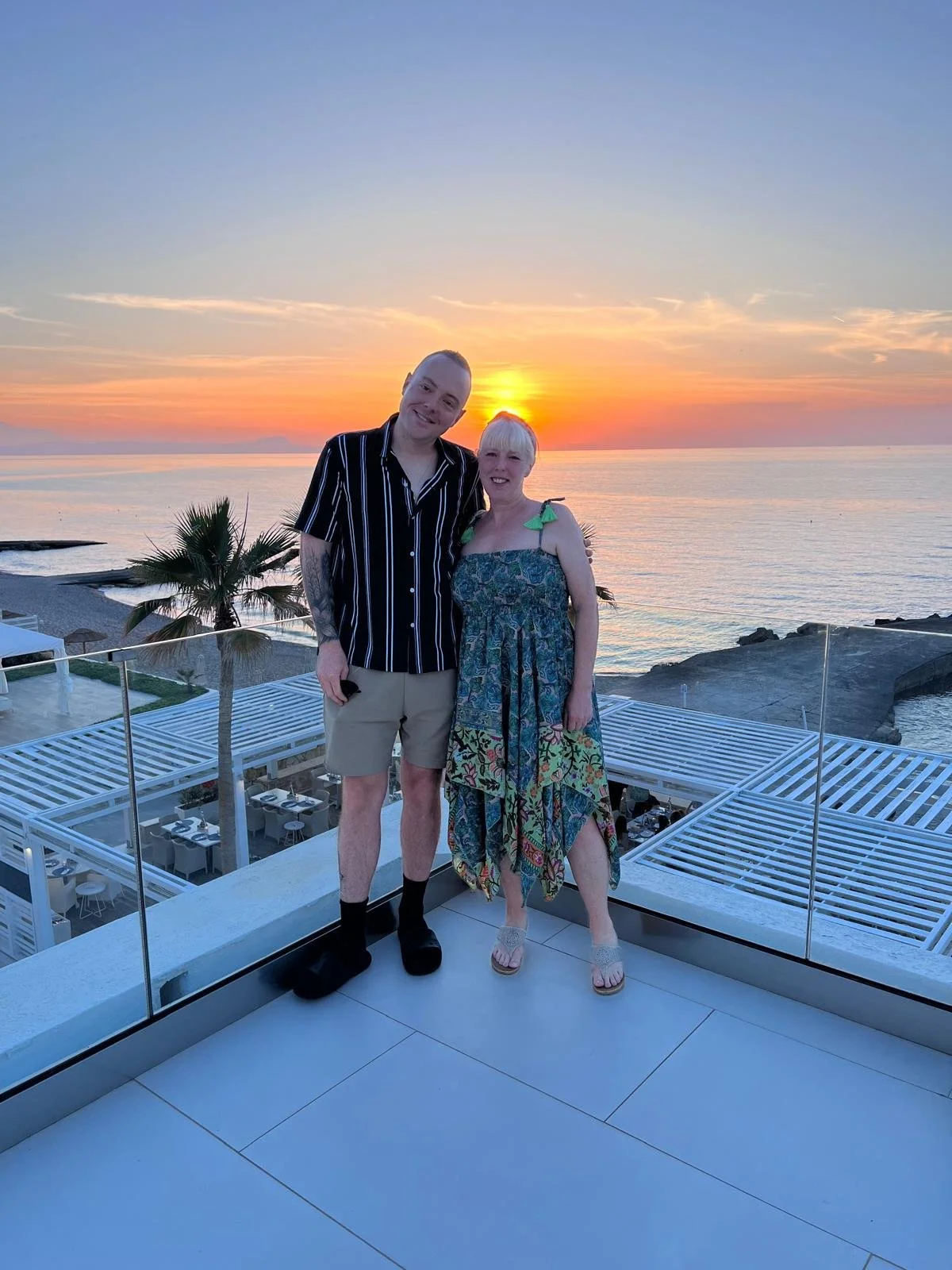
Mum and I in Greece
The holiday where it all began, with a glass of wine and a conversation I didn’t want to have.
That might sound strange, because my grandad was a medium. But he never spoke to me about that side of his life. It was death, and I was young. When he passed, he was my first real experience of grief, and I've carried a fair bit of regret that I never got to sit down and ask him all the questions I'd love to ask him now.
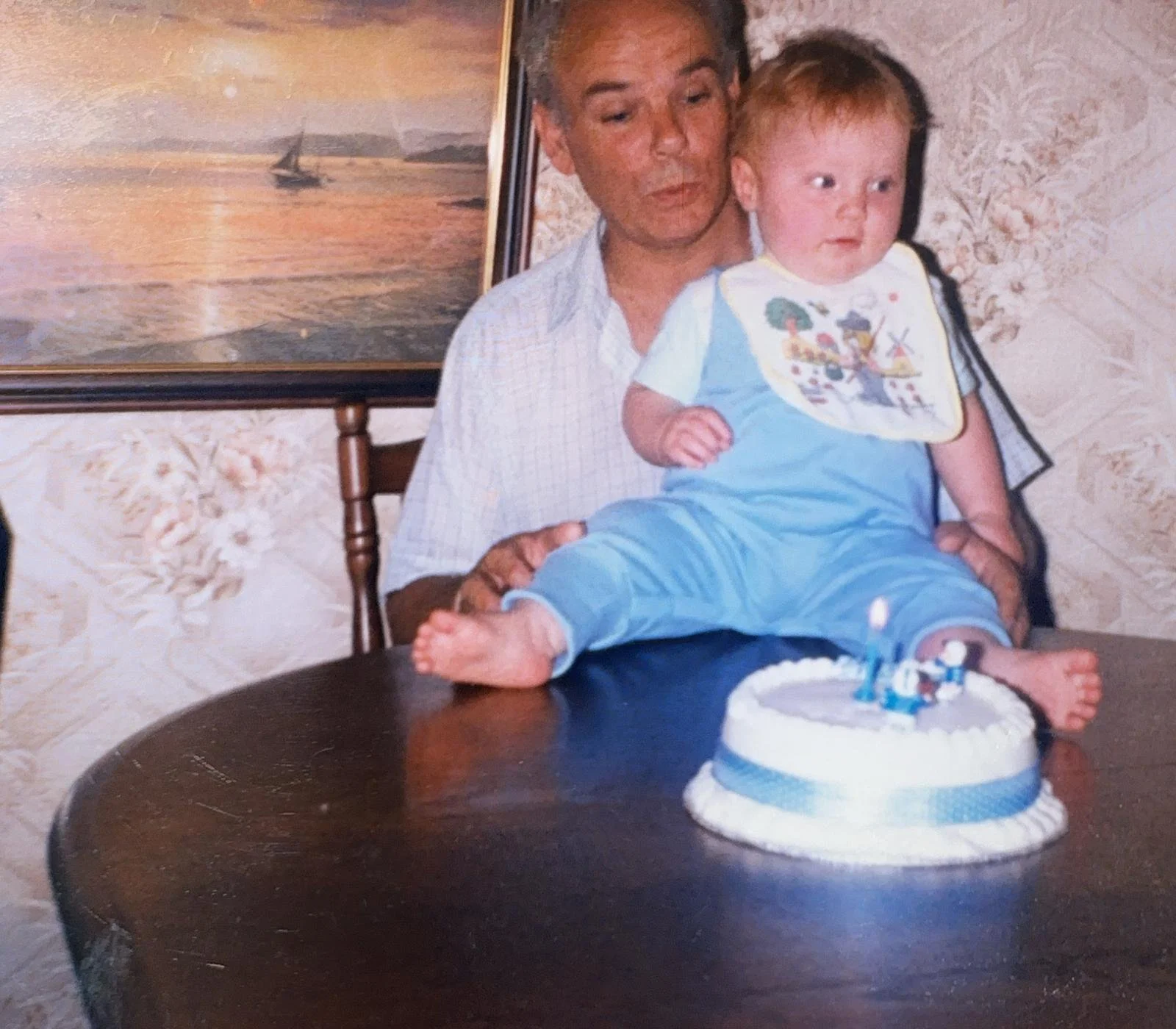
My grandad and me
My first birthday. I’d give anything to sit down with him and be in his presence. Although as you may know he is one of my guides and I hear from him all the time and he helps me in my work.
After he passed, I spent years going to mediums. They'd describe bits of him, and some of it I could take, and some of it I couldn't. But I never really felt the power of the spirit world come through. So I came at all of this from a sceptical place.
Mum didn't argue. She just handed me the book she'd been reading, with half the corners folded down. It was Heaven Called My Name by Theresa Cheung, a collection of true stories from ordinary people who'd had encounters with the afterlife.
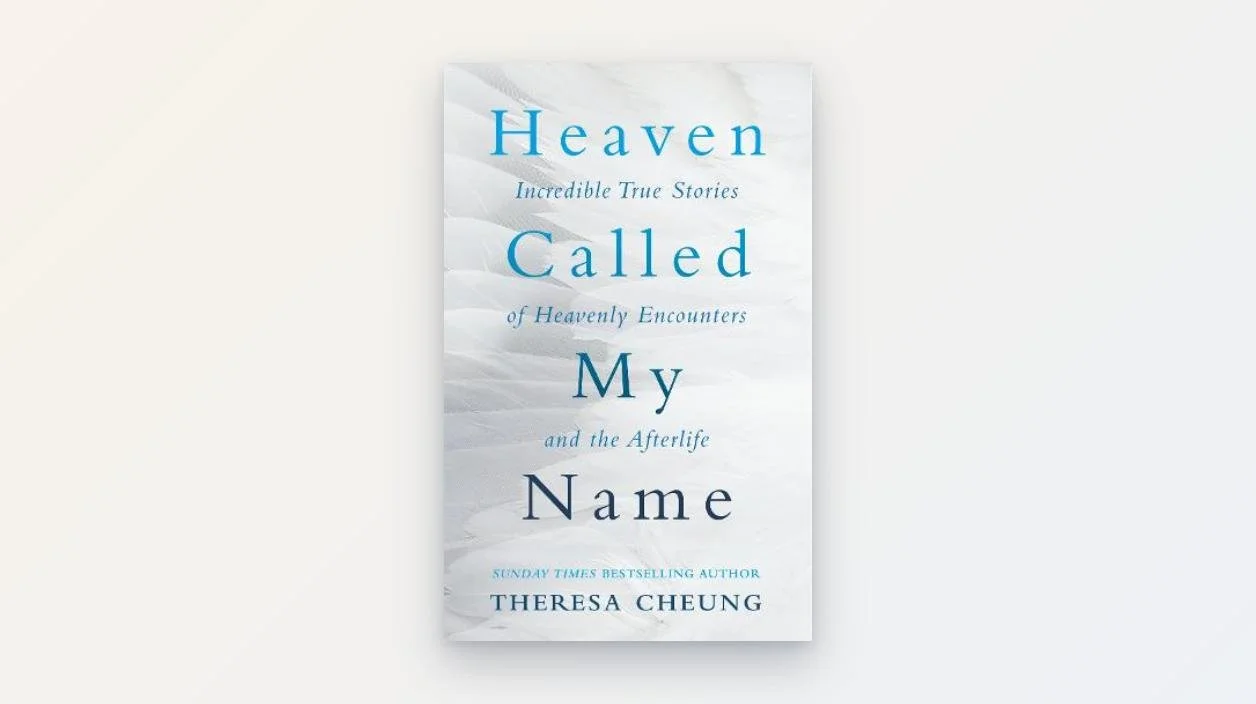
The book Mum handed me: Heaven Called My Name by Theresa Cheung.
I couldn't put it down. What struck me was the common thread running through every story: the same experiences, the same feelings, from people who had never met. And I couldn't find anything in science that explained it away.
It cracked something open in me. I'd always felt a pull towards the spirit world, but I'd also been a police officer, trained to look for evidence. I didn't want comfort. I wanted proof. Absolute proof.
That search led me to Dr Eben Alexander's Proof of Heaven, and his story hit me hardest of all. Here was a Harvard brain surgeon, a man who believed the brain makes consciousness and death is the end, saying he'd been wrong. Eben had found his proof of heaven. I was still looking for mine.
So I went looking. I read everything I could find on near-death experiences, then mediumship, and that road eventually led me to the Arthur Findlay College. Years later, I sat across from Eben himself on Soul Sync and told him how much his book had shaped my journey. It's still one of the most surreal moments of my life.
This is everything I've learnt since: what near-death experiences are, how common they are, what Eben went through, what the science says now, and why I think they matter to anyone who has ever lost someone.
If you've come here looking for proof
If you've found this page because you're searching for proof that life carries on after death, you may be standing somewhere I once stood. Near-death experiences are one of many doorways people walk through when they start questioning what happens when we die. It's a doorway that draws a lot of us in, because so many of us have a doubting, sceptical mind, and how we see all this often depends on the beliefs we start out with. It was my doorway.
So I'll be straight with you. Nobody can hand you proof in a blog post. What I can do is give you the facts as they stand, show you where every one of them comes from, and tell you what the sceptics say too, so you can make up your own mind, which I encourage!
I'll also be honest about where I stand. As a medium, I know that life goes on. It isn't only the evidence I've had along the way. It's years of building relationships with the spirit world. My grandad (and many members of my family) continue to come through with all sorts, and he has helped me every step of my journey. Today I bring through people in spirit every single day, very often someone's loved ones, because I've learnt to trust implicitly.
That trust didn't come easily. I went through some hard years in my twenties, and I came out of them a real cynic. Trust takes time, and to trust, you have to have a little faith.
But I'd rather show you the evidence than preach at you. Every study I mention is linked, and there's a full list of sources at the end.
What is a near-death experience?
A near-death experience, or NDE, is a vivid, deeply real experience some people have when they come close to death, or are clinically dead for a short time. The psychiatrist Raymond Moody gave it its name in his 1975 book Life After Life (Greyson, Zygon, 2006).
Every experience is personal, but the same things come up again and again:
leaving the body and watching what's happening from above
a deep sense of peace, with no pain
moving towards a light, often through a tunnel or a dark space
meeting people who have passed, and sometimes beings of light
a life review, where your whole life is shown to you at once
reaching a border or a point of no return
a feeling that this place is more real than here, and that it's home
Being completely moved by the feelings of love and light they experience
Researchers measure how deep an experience goes with the Greyson NDE Scale, created by psychiatrist Dr Bruce Greyson at the University of Virginia. It asks 16 questions, and a score of 7 or more counts as a near-death experience.
Not every NDE is blissful. Some people come back from frightening ones, and they deserve just as much care. IANDS has good support for both.
How common are near-death experiences?
Far more common than most people realise.
In the general population, surveys usually find that somewhere between 4% and 10% of people report one (NDERF fact sheet). A German survey found 4% (NDERF). A 2019 study of 1,034 people across 35 countries found 10% (Kondziella et al., PeerJ).
In March 2026, the International Association for Near-Death Studies (IANDS) polled 2,100 American adults. 23% said they'd had a near-death experience, and 35% said they knew someone who had (IANDS). The question was worded more broadly than older surveys, so the figures aren't directly comparable, but it shows how many people are quietly carrying these experiences around.
The most powerful evidence comes from hospitals. In 2001, Dutch cardiologist Dr Pim van Lommel published a study in The Lancet following 344 patients resuscitated after cardiac arrest in ten hospitals (van Lommel et al., 2001). 62 of them, 18%, reported an NDE. The experiences weren't linked to how long their hearts had stopped, the drugs they'd been given, or how frightened of death they'd been beforehand. Van Lommel's point has always stayed with me: if a lack of oxygen caused NDEs, nearly everyone who'd been clinically dead should have one. They don't.
Dr Eben Alexander: the neurosurgeon who didn't believe
Before 2008, Eben was the last person you'd expect to talk about heaven. He'd practised and taught neurosurgery, including around 15 years at Harvard Medical School. His adoptive father was a renowned neurosurgeon too. As he told me on the podcast, he believed the brain creates consciousness and that our existence runs from birth to death, nothing more.
On 10 November 2008, aged 54, he woke with severe back pain. Within hours he was fighting a rare and aggressive E. coli bacterial meningoencephalitis, an infection attacking his brain (Alexander, Missouri Medicine, 2015). He spent a week in a coma at Lynchburg General Hospital in Virginia. By day seven, his doctors were talking about stopping treatment.
Then he woke up. Over about two months, his memories and his medical knowledge came back, and he made a full recovery.
What he experienced in between is extraordinary. He described it to me as starting in a murky, primitive place he calls the "earthworm's eye view", like being stuck in dirty jelly. Then a slowly spinning white light appeared, carrying a perfect melody, and it lifted him into a valley he says was more real than anything here. In his words, this world is the dream by comparison.
He had no body. He was a speck of awareness on a butterfly wing, among millions of butterflies. Beside him was a young woman with sparkling blue eyes who never spoke a word, but whose message went straight into him: you are deeply loved, you have nothing to fear. From there he rose into what he calls the Core, a place of pure oneness and love.
What brought him back was a face. His 10-year-old son, Bond, had overheard the doctors and ran to his bedside, pleading with him to be okay. Eben didn't see him with his eyes or hear him with his ears, but he felt the pull of that love, and it guided him home.
The part that gets me, as a medium, is the girl on the butterfly wing. Eben was adopted, and had only met his birth family the year before. Four months after his coma, a photograph arrived of his birth sister, Betsy, who had died before he ever got to meet her. He recognised her straight away. She was the girl on the butterfly wing (Psi Encyclopedia).
Someone he had never met, never even seen a picture of, came to guide him. That's exactly the kind of evidence I look for when I'm working with spirit.
In September 2018, three doctors who weren't involved in his care published a case report in the Journal of Nervous and Mental Disease on his full neurological recovery from E. coli meningitis (Khanna, Moore & Greyson, 2018). They were as struck by his survival as he was.
In fairness, his story has its critics. A 2013 Esquire investigation argued that his coma was partly induced by doctors to control his seizures, and that his brain may not have been as "offline" as he describes (NBC News). Eben has stood by his account, and the 2018 case report backs up how desperately ill he was. I'd rather you heard both sides from me. For me, the Betsy story is the part that's hardest to put down to a sick brain.
What Eben Alexander's work has shown since
Before his coma, Eben was a serious academic. Over 25 years he wrote or co-wrote more than 150 papers and book chapters, mostly on brain surgery (BatGap biography). Since 2008, he has turned that same rigour on consciousness itself.
His own peer-reviewed paper (2015). In Missouri Medicine, the journal of the Missouri State Medical Association, Eben set out his medical case and why he believes his experience can't be explained as a hallucination, dream, drug effect or false memory (read it free). It was part of a series of medical papers on NDEs, later published as the book The Science of Near-Death Experiences (2017).
The independent case report (2018). The doctors who studied his records found his spinal fluid showed an infection so severe that a full recovery was very unlikely. Yet he recovered completely (Khanna, Moore & Greyson).
The books. Proof of Heaven (2012) tells his story. The Map of Heaven (2014) gathers the experiences of people who wrote to him afterwards. Living in a Mindful Universe (2017), written with Karen Newell, makes the case that consciousness comes first and the physical world second, drawing on neuroscience, quantum physics, NDEs, after-death communication and children who remember past lives.
Research into meditation (2020). Karen co-founded Sacred Acoustics, and psychiatrist Dr Anna Yusim tested its binaural beat recordings with her patients. Those who used them alongside their usual care saw anxiety fall by around 26%, compared with around 8% for usual care alone (Yusim et al., JNMD, 2020). It was a small pilot study, and the authors say larger trials are needed, but it's a start.
Bridging science and spirit. Eben founded Eternea, an organisation set up to promote research into the common ground between science and spirituality (Sopris Sun). With Karen he also teaches meditation through the Inner Sanctum Center.
The idea running through all of his work is one the Harvard psychologist William James argued over a century ago, and Eben explained it beautifully on the podcast: the brain doesn't create consciousness, it filters it. Think of it less as the source and more as a radio, tuning in.
What does the science say now?
The research has moved on a lot since I first picked up Eben's book.
The AWARE II study (2023). Led by Dr Sam Parnia at NYU Langone and published in Resuscitation, this followed 567 people who had a cardiac arrest in hospital, at 25 hospitals in the UK and US, with brain monitoring on 85 of them during CPR (the study; Elsevier summary). In nearly 40% of the monitored patients, brain activity returned to normal or near-normal, sometimes as long as an hour into CPR. Fewer than one in ten survived to leave hospital, but four in ten of those survivors recalled some awareness during CPR. Survivors, and 126 people from the wider community, described leaving their bodies, watching the resuscitation, a meaningful review of their lives and a sense of going "home". Parnia's view is that these experiences "cannot be considered a trick of a disordered or dying brain" (Freethink). In fairness, nobody identified the hidden image placed above their bed, and the authors say research hasn't yet proved or disproved what these experiences mean.
The dying brain (2023). At the University of Michigan, neuroscientist Dr Jimo Borjigin recorded a surge of gamma waves, the brain's fastest activity, in two of four dying patients after their ventilators were removed (Xu et al., PNAS; Michigan Medicine). Much of it was in an area linked to out-of-body experiences. She thinks NDEs are most likely produced by this activated brain. None of those patients survived to say what they experienced, and her team says the surge could also be unrelated to conscious experience.
Here's my take. A burst of brain activity tells us when something is happening, not what it is. When I tune in to someone in spirit, something happens in my brain too. That doesn't make the person in spirit any less real.
The Bigelow essay contest (2021). The Bigelow Institute for Consciousness Studies awarded around $1.8 million to the 29 essays that made the best case that consciousness survives death. First prize went to Dr Jeffrey Mishlove and second to Pim van Lommel (Singular Fortean). Eben pointed me to these essays on the podcast, and they're free to read on the Bigelow Institute website.
Why near-death experiences and mediumship go hand in hand
Over the years, on Soul Sync and in development circles, I've met so many mediums whose gifts opened up after a brush with death. It's as if the door, once opened, never fully closes again.
The research backs this up. Bruce Greyson surveyed people who'd had NDEs and found they reported more psychic experiences after their NDE than before it (Greyson). Many describe being more sensitive, more intuitive, and more aware of people in spirit around them.
The way I see it, a near-death experience is the sudden version of what we work towards gently in development. Sitting in the power, meditation, learning to quieten the mind: all of it thins the veil a little, without anyone having to nearly die. Eben meditates for an hour or two a day using binaural beats from Sacred Acoustics. I've always had a busy mind, and binaural beats are one of the few things that really help me settle into the stillness.
What near-death experiences mean for the rest of us
You don't need to have had one to take something from them.
People who come back almost always say the same things. Love is what matters. There's nothing to fear. We're more connected than we think. In the life review, many feel what they made other people feel, the kindness and the hurt. Eben summed it up simply: treat others as you would like to be treated.
For me, the biggest lesson is to look inwards, not just at the world around us. So much of the peace people describe after a near-death experience is already within us. We find it in the stillness, when we stop searching outside ourselves for the answers.
In the IANDS poll, half of the people who'd had an NDE said it gave them a deeper appreciation for life, and nearly a third said they were less afraid of death (IANDS).
That's what it did for me, too, second-hand through a book my mum lent me. I'm not frightened of death any more. If that conversation in Greece happened today, I'd pour another glass and listen.
If you've had a near-death experience and you're struggling to make sense of it, please don't sit with it alone. IANDS has support groups and resources, and speaking to someone you trust can help.
You can listen to my full conversation with Dr Eben Alexander above. And if you'd like to explore your own connection to spirit, come and join my free online mediumship development circle on Tuesday evenings, or book a reading.
Spiritual takeaways
You don't have to nearly die to find peace with death. Other people's experiences can open that door for you, the way they did for me.
It all starts with curiosity and honest questions. Look at the evidence, both sides of it, and trust what you feel.
The brain may be more of a radio than a source. Consciousness tunes in through it, rather than being made by it.
Love is the thread that runs through almost every near-death experience, and it's what brought Eben back.
The people we meet in spirit can be people we never knew in life, like Betsy on the butterfly wing.
Treat others as you would like to be treated. In the life review, we feel what we made other people feel.
Look inwards, not just at the outer world. Through meditation and sitting in the power, you can thin the veil gently and find the peace that's already there.
Sources and further reading
Every fact in this article comes from one of these. Where a study is free to read, the link goes straight to it.
The book that started it all
Cheung, T. (2016). Heaven Called My Name: Incredible true stories of heavenly encounters and the afterlife. Piatkus.
Dr Eben Alexander
Alexander, E. (2015). Near-Death Experiences, The Mind-Body Debate & the Nature of Reality. Missouri Medicine, 112(1), 17–21.
Khanna, S., Moore, L. E. & Greyson, B. (2018). Full Neurological Recovery From Escherichia coli Meningitis Associated With Near-Death Experience. Journal of Nervous and Mental Disease, 206, 744–747.
Yusim, A. et al. (2020). Efficacy of binaural beat meditation technology for treating anxiety symptoms: a pilot study. Journal of Nervous and Mental Disease, 208(2), 155–160.
Alexander, E. (2012). Proof of Heaven. Simon & Schuster.
Alexander, E. (2014). The Map of Heaven. Simon & Schuster.
Alexander, E. & Newell, K. (2017). Living in a Mindful Universe. Rodale.
Psi Encyclopedia: Eben Alexander's near-death experience, including the Betsy photograph.
The critique: NBC News on the 2013 Esquire investigation.
Near-death experience research
van Lommel, P. et al. (2001). Near-death experience in survivors of cardiac arrest: a prospective study in the Netherlands. The Lancet, 358, 2039–2045.
Parnia, S. et al. (2023). AWAreness during REsuscitation II. Resuscitation, 191, 109903.
Xu, G. et al. (2023). Surge of neurophysiological coupling and connectivity of gamma oscillations in the dying human brain. PNAS.
Kondziella, D. et al. (2019). Prevalence of near-death experiences in people with and without REM sleep intrusion. PeerJ.
Greyson, B. Increase in psychic phenomena following near-death experiences. University of Virginia, Division of Perceptual Studies.
Greyson, B. (2006). Near-death experiences and spirituality. Zygon, 41(2).
IANDS (2026). Results of new IANDS near-death experience poll.
IANDS: The Greyson NDE Scale.
The Bigelow Institute for Consciousness Studies: winning essays.
If you've had a near-death experience
Read the full conversation
Here's the full transcript of my conversation with Dr Eben Alexander, split into chapters. Tap a chapter to open it.
-
Jason Paul (0:29)
Hello and a massive big one welcome to this week's edition of the Soul Sync podcast. I hope you're keeping really well. How am I doing? I'll tell you a bit about what's been going on in my world over the last few weeks. Ever since the spring equinox, I feel like I have been planting lots of seeds on things that I want to do, things that I want to achieve. I've been working on some new projects at work, and it's really been all stations go. Also, um, in the last few weeks, I've become a single man again, which um I must admit, it's really allowed me to kind of look at my life, put myself back as number one, and make sure that I'm not doing all the things that I want to do because I really do believe that you have to put yourself as number one in life, because if you're not okay, then you're not gonna be around to look after number two, three, four, five, and six. I wanted to talk to you about a few exciting updates as well about resulting. So over the next few weeks, you'll start to notice on my YouTube channel, which is Jason Paul Medium, that I'm gonna be releasing videos all tied into my personal growth and things that I have been through, experiences that I've lived, lessons that I've learned, and I want to share these videos uh to help as many of you as possible. So there's gonna be a whole range of different videos and loads of different topics, everything from my spiritual awakening to my dark night of the soul, and even I'm gonna be talking about my business success because I haven't talked massively about my business on this podcast. But I literally um left school, no GCSEs, and went on this big long journey to saving up some money in the recruitment industry that eventually led me to start my own business, which I grew to be a multi-million pound turnover. And working in the recruitment industry, I've seen so many people um, you know, skyrocketing their careers, a lot of people plateau, and I've got so much experience that I want to share with you. So if you feel stuck in your career or you don't feel like you're where you want to be, or you don't feel you're earning what you want to earn, do keep an eye out for these videos. Just go and subscribe to my YouTube channel, Jason Paul Medium, and then you'll be notified as soon as they come up. At the moment, I'm trying to get my head around Adobe Premiere Pro, which is what I edit the videos in. Um, so I've been watching lots of YouTube channels to try uh to work out how to make these videos very appealing and easy to digest. Now, this week's episode we're talking to an absolute superstar in the world of spirituality, Dr Eben Alexander. Now, the first time I came across Dr Eben Alexander was a few years ago when I was in Greece. My mum and I were sitting down one evening having a glass of wine and we eventually got onto the subject of death. Now, uh, we were talking about my grandparents, and then my mum started to talk about when she might pass, and I said to my mum, please don't talk to me about death. I don't like it, I don't want to ever think about you dying. That's really not the conversation I want to have because back then I was absolutely petrified at death. I just thought to myself, you live life and then one day you die, and it just didn't make sense to me. You know, what is the point in life? So my mum had read a book by Dr Eben Alexander, his first book, Proof of Heaven, which she lent me. And I must say, it piqued my curiosity beyond belief hearing about his near-death experience. And I think what made it so interesting was the fact that he had a materialist worldview and he was an academic neurosurgeon. So it seemed like he was a really credible person to talk about this subject. So that led me on to this massive, uh, big kind of exercise of looking and researching the entire experiences, which eventually led me to start to ask a lot of questions about the spirit world. And that led me to the Arthur Findlay College, and then uh you know how the story goes from there because I've spoken about it. So in this week's episode, we're talking to academic neurosurgeon Dr Eben Alexander, whose career includes decades as a physician and associate professor at Harvard Medical School. Now, like I said, he was very committed to a materialist worldview, the belief that the physical world is all that exists. His scientific belief system was altered in 2008 by a near-death experience where he went into a week-long coma. Now, despite a very bleak medical prognosis, Dr Alexander awoke to make a full recovery. His medical case and recovery were validated in the peer-reviewed Journal of Nervous and Mental Disease. Now, since his near-death experience, Dr Alexander These days, Dr Alexander speaks all around the world to educate about the role that consciousness plays in wellness, healing and recovery. Now, he's been featured in more than 400 media interviews, including ABC's Good Morning America, Oprah, Super Soul Sunday, Larry King Live, Fox & Friends, Discovery Channel, and many, many more. His books are available in more than 40 countries: Proof of Heaven: A Neurosurgeon's Journey into the Afterlife, and his more recent book, The Map of Heaven: How Science, Religion and Ordinary People are Proving the Afterlife. Honestly, you really are in for a treat this week. I hope you enjoy. So, Dr Eben Alexander, firstly, a massive warm welcome to the Soul Sync podcast.
Dr Eben Alexander
Well, Jason, thanks so much for having me on. It's great to be with you today.
Jason Paul
So, like I was just telling you before the show um started, and I'm going to tell the audience this because I think it's a really interesting story, actually. Um, I first became aware of um Dr Alexander's work when me and my mum were in Greece about five years ago, and we were having a conversation where she started talking about uh death. And I said, please don't talk about death, please don't talk about it. I don't like that subject. And she said, Well, why? It happens to us all. I said, I just don't want like it, it's the end. And um, she was reading uh Dr Alexander's book and um then passed it to me, obviously, with lots of the corners folded down, and I started to delve into it, and that very book is what led me onto this spiritual journey that I'm on. So it's so surreal to be sitting opposite you now. So, firstly, welcome.
Dr Eben Alexander (7:01)
Well, great to be here, and I'm so glad it helped you. I mean, I've heard from uh, you know, many thousands of people who've had their own kind of experience like mine, and and it helped them to come to a deeper understanding of it. So I'm so glad it helped you, and especially this whole issue of death and fear of death in our culture is uh you know a major issue, and uh uh there are some deep truths about all of this that should be reassuring, and that's what I was trying to share in The Proof of Heaven.
-
Jason Paul (7:29)
So for people that don't know you necessarily or your um book, I'm sure loads of people are going to. Um but for people that don't know your story, because let's give some context to it. You you know, are a neurosurgeon. That is what you do. Explain to us your life before what happened to you um um back all those years ago in 2008.
Dr Eben Alexander (7:59)
Right. So we're about 15 and a half years out from when it all happened. At that time, I was uh 54 years old, I had uh practised neurosurgery, I taught neurosurgery at Harvard Medical School for 15 years, thought I had a some understanding of brain, mind, and consciousness. Uh, but I I I confess that I harboured a very conventional scientific worldview, and that conventional view is one of materialism or physicalism. And what uh physicalism says about it all is the brain creates consciousness and uh out of purely physical matter, and that things like thoughts, beliefs, attitudes, uh, you know, insights, intuitions have no basis in reality at all. Uh and so that was kind of the world I lived in. Now, my my own father, my adoptive father, because uh adoption is a giant part of my story for those who've read Proof of Heaven, but anyway, my adoptive father was a globally renowned neurosurgeon, and he was very influential in my life. He was a tremendous role model and mentor. Uh, he had been a combat surgeon in the Second World War in the Pacific Theater for over two years. In fact, I still have his little pocket Bible that was Psalms and New Testament that I think got him through that uh his faith in God and prayer got him through World War II relatively unscathed. And he was always very comfortable as a scientist, leading neurosurgical program, very aware of modern physics and cosmology, uh, but his belief in God was perfectly consistent with every bit of that. Now, like so many of us who grew up in the 60s and 70s, like I did, uh, you know, I always knew science is the pathway to truth. Uh, I wanted to believe some of what I heard in the Methodist church growing up, but it had to be consistent with the science that I was learning in school and uh that I was practicing. And uh for me that led to some confusion over a few decades as to how conscious awareness could survive the death of the brain and body. Uh and that's why I think I had such an extraordinary deep dive of an experience in 2008. But the person I was November 10th, 2008, who woke up with that severe back pain at the very beginning of my week in coma, that person was, you know, a conventional materialist neurosurgeon who uh thought brain creates consciousness and our existence is birth to death, nothing more. And I now realise that is woefully inadequate to explain human experience and the nature of reality that we have based on evidence of what happens to human beings. So uh that's where the whole thing gets very, very exciting. But essentially the lesson is that consciousness is primary, that all of the physical world emerges from the mental, not the other way around. And that's one of the reasons why scientists have been so confused by quantum physics and uh other aspects of neuroscience and philosophy of mind that don't really fit with the the big model they think is true, uh, because we need a much bigger model than that. And that's what my journey and my 15 years since that time working with other scientists around the world is all about.
Jason Paul (11:09)
Because I I I I I struggle to even comprehend how you can have, you know, it's one thing kind of having a belief system and it's another worldview, and I guess it's another thing being an associate professor at Harvard Medical School, not just believing it, practicing it coming from that family, you know, that was your way of life. So I what I I don't I I the near death experience that happened to you, I want to touch on it briefly, but I don't want to go too much into it because I think there's so much more I want to talk to you about, but just sort of briefly touch on what happened to you on that uh that day in in 2008.
Dr Eben Alexander
Okay, well, I I will try and be brief. One of the very unusual
Jason Paul
Well, you be as long as you want, I will say that. You take however long you want to do it.
-
Dr Eben Alexander (12:02)
And yes, people can learn the deep details of my experience by reading Proof of Heaven or looking at the, you know, there are many YouTube videos out there available for free that tell my where I tell my story. So all that is there in detail for people who want to learn more. Um but I think the main thing to point out, first of all, that very unusual feature. In fact, I've never heard of this as a main ingredient of other NDEs, but NDEs are always tailored to the individual. So for a neurosurgeon fascinated by consciousness, the brain, mind, connection, nature of reality, I needed an especially deep dive, and that's exactly what I got. And it demanded amnesia, that I have a complete loss of memories going into it. And I I have to tell people, don't worry, that's probably not going to happen to you unless you're a you know a neurosurgeon or neuroscientist fascinated by consciousness. So, anyway, amnesia is an important concept because it separates mine from many others. Um and also important to point out that the medical details that I point out in the book Proof of Heaven were greatly strengthened and amplified uh in a uh peer-reviewed uh case report on my medical records that came out in September 2018 in the Journal of Nervous and Mental Diseases. And the three doctors who wrote that report, not involved in my care, but fascinated by my recovery, made the point that uh my brain was far too incapacitated for you to expect any kind of dream or hallucination to come out of it. That's why that's what haunted me after my own uh story, after it happened. And then when I went back to investigate in the months after my coma, it didn't line up. I mean, neuroscience tells us all these things about the neocortex and its relationship to consciousness. And yet my neocortex, by medical facts of my case, was far too damaged to host any dream or hallucination. So there was a deep mystery there that I had to get to the bottom of. And it's one of the reasons the fact I was driven into coma due to meningitis, it's one of the main reasons the scientific community pays so much attention to my case. And then, of course, the other big point they made is my recovery is really unprecedented. Now, for most people in medicine, they can't really know that. They can't tell that from reading these medical details. But to anybody in medicine or healthcare, you read that case report and you go, oh my God, how this guy is a goner. You know, there's no way there's a hallucination or dream coming out of that brain. So, how did this all happen? So that's kind of where we're at. And also the survival, as I said. To explain the survival, um, the peer review editors challenged those three authors and said, How do you explain this? It's unprecedented in the medical literature for somebody to spend a week in coma, deep coma, according to neurologic exams here and CT and MRI scans, and then make a full recovery. How do you explain it? And they said it's because he had a near-death experience. And they knew of other similar cases of near-death experiences with absolutely miraculous medical healing. Uh so that's that's the kind of backstory. But anyway, so in the journey itself, in the setting of complete amnesia, it started in what I call the earthworm's eye view, a primitive course unresponsive realm, like being in dirty jello. It seemed to go on for a very long time, but luckily not forever. I was rescued by a slowly spinning white light that came packaged with a perfect musical melody. And this white light served as a portal up into this rich, ultra-real Gateway Valley. And the Gateway Valley, very important to stress, this is not a vague and murky dreamlike uh space. It is much more real than this world. This world is the dream compared to the the ultra-reality that we experience in those spiritual realms. And it's because really the brain um does a lot more to kind of reduce consciousness than to produce it. And uh so when we're liberated from the brain and body, like at the time of death or in a near-death experience, our exp our consciousness expands tremendously. So, example, in for example, in this uh Gateway Valley, um, it would be the place where people would have life reviews. Life reviews have been described going back thousands of years in NDEs. Uh, and the life review is very interesting because it's uh much more of a demonstration of how we're sharing one mind. Because in the life review, in a recent study from Bruce Greyson, uh in 700 life reviews that he reviewed in his uh near-death experience database, uh, he found that something like 74% of the people uh reported they were experiencing the events, but from the perspective of everybody involved. So, in other words, if you're busy handing out pain and suffering to others, greedy, selfish, etc., in the life review, you feel what that is like to be exposed to that, uh dealt out by you know someone else, which so in other words, it's uh a beautiful example of treat others as you would like to be treated. Because in the life review, we get to feel what it feels like that we treated other people in all the different ways we did. And so, anyway, in this in this particular setting of it, uh in my experience, I couldn't have an Eben Alexander life review because of my amnesia, but I had a very profound vision of reincarnation in life reviews uh as I ascended up through these multiple levels. So in this Gateway Valley, very dramatically real, kind of earth-like, but spiritual ingredients. It's like Plato's world of ideals, but for the individual soul. Um, and I was a speck of awareness on a butterfly wing. Never at any point did I have any kind of body awareness. I was just aware of what was going on around me. And on this butterfly wing with millions of other butterflies above this beautiful valley, uh, that was my vantage point. And in the valley below were thousands of beings kind of going off into the uh distance. You know, I call them souls between lives. Uh, when I wrote it all up weeks later, um, and I remember the most beautiful thing about it was there was a companion on the butterfly wing. She never said a word, never had to, but sparkling blue eyes, high cheekbones, high forehead, beautiful smile. She looked at me with a look of pure love and her message telepathically into my awareness, you are deeply loved and cherished forever. You have nothing to fear. You were richly cared for. And I cannot tell you how refreshing and uh validating that was in that moment. Uh, and it turns out that that was just the gateway, as I said, on my journey. And so from that point, I witnessed yet another portal forming up from this the chants and anthems and hymns that were thundering down from these angelic choirs up above in this beautiful gateway valley. And I remember all of four-dimensional space-time collapsing down, all of deep time uh in that spiritual realm. And here I'm noting pay attention that if in life reviews commonly described birth, death, everything in between can be simultaneously presented to you, that's a whole different ordering of causality. One of the reasons why these journeys are so absolutely impossible to put into words using our very limited language.
-
Jason Paul (19:00)
Um, and and this is Well, language is one of the big problems, isn't it? How do you explain it?
Dr Eben Alexander (19:05)
It's a horrific problem. It's one of the reasons why in our third book, Living in a Mindful Universe, where we bring the science and spirituality together and make these arguments about how all this is showing us primacy of consciousness, but it also reveals the power of our free will as souls. Um and this is all stuff that we cover in our third book, Living in a Mindful Universe, which really goes the distance. But but anyway, back to my uh my story, um, you know, in that uh beautiful uh what I ascended to is what I call a core. Uh the core was a complete resolution of all dualities. You know, we live in a world of dualities. You have darkness, light, good, evil, masculine, feminine, et cetera. But in that in those spiritual realms, all of that begins to coalesce into oneness. And in fact, in the core realm, I I recognise that my very conscious awareness was directly sourced in that infinitely loving God force at the core of creation. And that was one of the things I um hesitated when I came back to call that deity that I perceived, that infinitely loving force, God, because for me, God was a word with a lot of baggage to it. I called it Om because that was the sound I heard uh as a resonance in eternity and infinity. Uh that is exactly what I heard. And so uh is the term vites, bites. That was the sound. And to make the point, very importantly, uh I came back realizing it doesn't matter if you want to call that force God or Allah, Brahman, Vishnu, Jehovah, Yahweh, all those are petty little human attempts to claim ownership of this through a religious ideology. But ultimately, this loving uh power of kindness and and uh um you know beautiful connection, uh unconditional love that so many near-death experiencers have have witnessed, that is what the deepest form of our reality. And it's there's not a battle between good and evil at the heart of the spiritual universe, it's pure oneness and love. And yet, as we get out there way out in the periphery towards the material world and our ego personalities, you start to run into all kinds of toxicity and problems and mismatches. But ultimately, the journey described by NDEs, by people who've come close to death, is one of getting really into that world of peace and love and comfort, a spiritual home that is very refreshing and reassuring. And that's what I was witnessing. I would cycle through these multiple levels multiple times. Uh again, there's so much more of this story, but all that is called Proof of Heaven and other sources for people who really want to get uh dig into the details. But ultimately what happened was I was told every time I entered the core, we'll teach you many things, but you're not there to stay. Uh, and in fact, I'd come to believe that going back down to the earthworm's eye view, and then by remembering the musical notes of the melody to conjure up these light portals that led me back up into the higher levels, that's all I needed to know. But no, that was not so. And there came a point where I could no longer conjure up that light portal to take me up out of the out of the earthworm's eye view. Um and that's when I witnessed thousands of beings going off in the distance, heads bowed, many holding candles, this murmuring energy coming from them that was welcoming me back. So even in this kind of dark, murky earthworm's eye view, I was sensing the beautiful glory and love and connection uh of that spiritual. Realm. And it was coming from these beings around me. And that's what I called that in my writings weeks later. It was the power of prayer to kind of draw me back. I explained that in much more detailed fashion in the book. But anyway, the last thing I saw were six faces that bubble up out of the muck, would say a few words and disappear. My amnesia was still active, so I didn't understand the words. But I remember their faces as brightly and vividly and in detailed fashion as if that whole thing happened just yesterday. I mean, these memories are astonishingly vivid and alive and vibrant and resilient. And those six faces are very important because they served as veridical time anchors to help me conclude that the vast majority of my spiritual journey happened between days one and four or one and five of my seven-day coma. I explained the timing of all that in the book, so that's where you can figure that out. But the bottom line is it was the last face that really drew my attention. It was a 10-year-old boy. I still was amnesic, didn't recognise him. It was my 10-year-old son Bond. They had protected Bond from the worst news during that week, but that Sunday morning, day seven, he was outside of the conference room, overheard the doctors saying I gone from 10% chance of survival down to 2%, no chance of recovery. And therefore it was time to take me off the ventilator, take me off the three powerful antibiotics I've been on, and just let me go. And when Bond heard that, uh-oh, things were much worse than he'd been told, runs down the hallway, pulls open my eyelids, uh, one eye looking over there, one over there, neither pupil working. Anybody in medicine knows that's a horrible picture. And I promise you, I didn't see him with my eyes or hear him with my ears, but his message got through. I was very far from this world in the dying process. And his message, uh, you know, it it was basically, Daddy, you're gonna be okay. Daddy, you're gonna be okay. As if his 10-year-old pleading could make that so. Uh, and obviously it worked in some fashion because he was what guided me back to this world. And I'll confess, because of my amnesia, most of this journey, I thought this can continue, it can cease, nothing matters. But when I saw his face and sensed his kind of pleading, even though I didn't understand the words, but I knew I had a tremendous responsibility as a soul. There was another soul out there. And that was really what drew me back was that sense of love for his soul, even though I didn't really know who he was at the time. But I could sense we had a deep connection and that I had to come back. And when I did come back and woke up in the ICU room, my brain was just wrecked from the uh meningitis. I didn't even recognise my mother, my sisters, my sons at the bedside. All I knew was where I'd just been, this incredible spiritual journey. But memories from my life before came back slowly over two months or so, but everything came back over two months. That's the fascinating thing. And in our book, Living in a Mindful Universe, we discuss how memories are not even stored in the brain. It's one of the last nails in the coffin of materialist neuroscience that memories are not stored in the brain. But we discuss it in great detail in the book and make that case. Uh, and I think most neurosurgeons would agree we've never had a case where any brain resection, including hemispherectomies in young children who have severe seizure disorders, half the brain removed, never has there been an example where anybody lost long-term memories by resection of brain. So uh we've doubted that whole uh assumption for a long time, but now it's we discussed the proof behind it uh in Living in a Mindful Universe.
-
Jason Paul (25:57)
Do you know what? Considering so much of what you're talking about, like we just said, is really hard to put into words. I think you you do an absolutely fantastic job. I can't I I guess what was it like to integrate back into when you did come round? And how did you explain this to because you went from that belief system to this? How did you even go about explaining this to your family? The fact that it changed everything from the rest of your life changed from that moment. How did the integration process work?
Dr Eben Alexander (26:28)
Well, the integration, you know, it actually was a much more challenging, deeper, vexing set of conflicts than than uh than you can imagine. I mean, when I first was waking up, uh, you know, I tried to explain to my doctors in the first few days about this experience, and they would pat me on the back and say, well, your brain was soaking in pus. In fact, we can't even uh figure out how you're coming back to us. You were so ill. But the good news is you are coming back. So you can forget about all that. It's a trick of the dying brain. So that was my default assumption. You know, we believe our doctors, and all my medical neurosurgical knowledge was gone for the time being, uh, yet to return over two months. And so uh I began as my own worst sceptic, thinking, wow, what a hallucination. That was incredible. But I did not yet realise how ill my brain was, and that my brain, the medical parameters of the case would prove that that brain could not have hosted a dream or hallucination or a confabulation. That brain was in no shape for any of that. So all the tenets of modern neuroscience are greatly challenged by this kind of case. And but it was in going back in the next weeks and months to for follow-up visits, talk with my doctors, go through the medical records, go through all those uh Glasgow coma scales and neurologic exams, uh CT and MRI scans, showing that all of my brain was infected. There was no part that was left unscathed that would allow for any little island of brain to uh create this little confabulation. So, and it was much richer than anything I'd ever experienced. So the deep mystery to me was how is it that by taking the brain offline with such severe damage that you can have an extraordinary enhancement and clarity of mental processes? And it's because consciousness is not created by the brain, it's filtered in by the brain. Uh, but our primary consciousness is actually much richer and more expanded. And that's why near-death experiences are universally explaining these incredible expansions of consciousness to witness their entire life, reconnect with souls of departed loved ones, have telepathic ability to connect with other souls, like in the form of what's called a shared death experience, where a dying soul will often take a bystander soul along, even to the point of witnessing a full-blown life review before that bystander soul comes back. That's called a shared death experience. And they are not uncommon. Uh, but anyway, I had to go through this incredible wrestling match in my own mind of struggling out of all this to make sense of it. Uh, the more I learned of my medical records and everything, the more I realised, no, my brain could not have created all these phenomenal experiences. So, where'd they come from? And then so then by the time you get to our third book, Living in a Mindful Universe, you find that we are using the principle of consilience. That is, we take data from um neuroscience and what's called the hard problem of consciousness, defined by David Chalmers in the mid-1990s. It's actually an impossible problem for uh materialists. In other words, there's no way that materialism will end up succeeding in describing consciousness, given the challenge of the hard problem. But it goes far beyond that. Philosophy of mind, the binding problem, the apparent unity of consciousness. You know, everything that I see here, uh sense, uh, body awareness, uh, access to memories, executive function, it's all one unified whole. Uh, and that's hard to explain if it's coming from a bunch of different neuronal populations in a big network, each providing their own piece of it. Uh, and then you've got parapsychology with all the evidence for non-local consciousness. For example, Guy Lyon Playfair's book, Twin Telepathy, more than 35% of identical twins have powerful telepathic experiences, uh, to the point where one twin can touch a hot stove and the other twin a thousand miles away will have a blister and develop a pain in that finger. So that's a really strong telepathy. But things like remote viewing, which is one of the most proven uh uh uh parapsychological phenomena in the scientific literature, even though Wikipedia says uh remote viewing is pseudoscience, but that's because Wikipedia is a pseudo-encyclopedia. Uh, you know, remote viewing has been proven by professionals and experts around the world to be a true uh phenomenon. And it's another example of this non-local consciousness, this thing that we're sharing the mind of the universe. Um, and then of course, quantum physics. Right at the heart of quantum physics is the deep mystery of the primacy of consciousness. And it has vexed brilliant scientific minds for the better part of a century or more. Uh, and we we take all of these major scientific lines of inquiry and combine them in our book, Living in a Mindful Universe, to make the case for primacy of mind. And uh, that uh our our free will, as opposed to what materialist science would try and tell you, they would say you don't have free will. It's all chemical reactions, electron fluxes in the brain. They give you the illusion of free will, the illusion of conscious awareness. Uh, but they're wrong because quantum indeterminacy, by its very nature, allows for the reality of free will in sentient beings. And when you explore that very deeply, you start to realise that it's undeniable. In fact, uh, quantum physics, uh, in this very open and uh powerful interpretation not only allows for the reality of spiritual experience, it demands it, uh, as opposed to the idiocy of, say, the many worlds interpretation, uh, which some physicists still cling to. Uh, but uh, you know, infinite parallel universes unfolding at every uh choice point in an observation by a sentient being. It's it's uh uh even though the math and physics work, uh it's a very unsatisfactory explanation for the measurement paradox in quantum physics. So all of these things combined are what tell us that consciousness is primordial in the universe and that the physical universe emerges from consciousness. And that's what our book, Living in a Mindful Universe, is all about.
Jason Paul (32:31)
I can't wait to read this book. I am so excited. Do you know what? It's one of the things that um it was I'm gonna be reading that in a few weeks on my holiday. One of the things that I read, which is your kind of interpretation, and this really I had to go back and read it a few times was the br the brain works as a filter of consciousness, not the creator of it.
Dr Eben Alexander (32:57)
Right. That's an old concept, actually. The the filter theory is it's kind of loosely labeled, uh, where the brain is a transceiver or uh it filters in an eddy current of that primordial consciousness. And we assume that eddy current is all there is, and yet it's connected. And that's where remote viewing, telepathy, all those things, and of course, near death, shared death experiences are major examples of that connectedness of mind. Uh, but filter theory was very popular in the late 1800s, early 1900s. William James, the head of psychology at Harvard University, was a huge proponent of filter theory, uh, as explaining many of the phenomena he witnessed as a psychologist and psychiatrist. Uh, but then also you had people like uh F. C. S. Schiller, uh Henri Bergson in France, um, Aldous Huxley in the United States. He wrote a book, Doors of Perception, which was a brilliant set of insights based on his experience with mescaline, with the psychedelic, uh, where he realised, you know, the brain is not creating this. And now, all this is borne out very strongly in the modern era, because there are scientific papers that have been coming out since 2012 that show that when you use functional MRI and magnetoencephalography to look at the brain in people under the influence of psilocybin, magic mushrooms, LSD or DMT, among other uh substances. They cause severe uh kind of uh uh interactions and liberations of conscious awareness. If you do these uh brain studies on them, you find the brain is going dark. Functional MRI and magnetoencephalography show the brain basically getting out of the way. Anyone who's ever taking those substances would think their brain is lighting up like a Christmas tree. But that is not the case. The brain is not the source of those phenomenal experiences. They're happening elsewhere. When I read that first paper from Robin Carhart-Harris in 2012, to me, it opened a tremendous window of refreshing uh sunshine because I knew what it was like when meningitis took down my neocortex. And wow, what a brilliant ultra-real reality I got to witness. Well, similar principles apply with these uh psychedelic substances or entheogens, as I like to call them. Never call them hallucinogens, because that implies that what you're witnessing is a hallucination. It's not. It's part of reality, and it's a deep spiritual reality to which we should pay attention. Um but uh, you know, and multiple papers since then have confirmed this. The brain gets out of the way, it goes dark. The default mode network, so responsible for kind of ego and sitting in the here and now and being present, uh, the default mode network dissolves under the influence of these substances. So uh, you know, the science fully supports the brain does not create consciousness. Uh, we discuss all that also in Living in a Mindful Universe.
-
Jason Paul (35:54)
I guess um is that kind of well, I wanted to ask you two questions, kind of in one question. And do you still like do practices? Like obviously, a lot of people will do meditation to try and get their brain to that place to then go back into that. Well, do you do that now? Is that something that you
Dr Eben Alexander (36:13)
I meditate an hour or two a day. I have I use differential frequency brainwave entrainment. I very specifically use sacredacoustics.com. Now, a full disclosure, the co-founder of Sacred Acoustics is my partner, Karen Newell. We've been together for 11 years now. Um we are uh spiritual partners. Uh she's the co-author of third book, uh Living in a Mindful Universe. That's by Karen Newell and myself. Uh, but yes, meditation is absolutely essential. Uh, the key here is to recognise our ego mind, the voice in our head is not our consciousness. I love how Michael Singer in his book, The Untethered Soul, he calls the voice in your head your annoying roommate. Yep, that's the answer. Yes. Consciousness, the mystery of consciousness is the self-awareness. That part is a really profound mystery that's hard to explain. Um, and it turns out that uh a lot of this uh work can become very clear to people who are deep meditators, who spend a lot of time meditating. They come to realise they can get out of body, they can uh uh develop uh, you know, uh ESP, they can develop skills, remote viewing, abilities to see distant events across time and space. I mean, meditation is a tremendous boon. Uh, and basically, I would say you're just thinning the veil, you're you're heightening and cultivating a relationship with that primordial mind, with that God force of mind that uh is so reassuring to near-death experiencers for thousands of years, to reassure them that death is not the end, it's simply a transition. Uh, but uh, this is all about a tremendous revolution in scientific understanding of the brain-mind connection and the nature of reality itself. But primacy of mind is essential to getting this. So, idealism, or in a much more sophisticated way, I would say when you realise that all these minds are connected and it's really the mind of the universe that we're intersecting with, in this notion of the brain filtering in that primordial consciousness, uh, I would call it evolutionary pan-entheism. That's the philosophical term that I think is closest to what's really going on. Pan-entheism basically means the God force is in all of reality. Uh, the universe is within that consciousness of that God mind, uh, and that we all share that. And it's evolutionary because we have free will, and that's due to quantum indeterminacy. The fact that within the world of quantum physics, which is exactly the world of neurons as uh quantum computers, because it's all due to ion channels and synaptic vesicles operating in the energy regime of Heisenberg's uncertainty principle. And that's what allows for mind over matter to occur, so that all of this uh work in the brain is being coordinated by this top-down causality, that primordial mind. And it's filtered in in a fashion that leads us to believe that it's just our mind and it's isolated. But scientific evidence reveals that it's not, it's interconnected with others. And meditation is one of the key ways to get to this deep realization uh through personal experience for the individual. And in fact, Living in a Mindful Universe is not only a great expose of the unification of science and spirituality in these major kind of big vision ways, but also it's a guide for the individual seeker uh for using meditation. We talk in there a lot about Sacred Acoustics, about binaural beats and why they're so powerful. Every sound you've ever heard that might have engendered a transcendental conscious experience, a chant, anthem, hymn, whatever have you, is processed up in the temporal cortex, uh, in the acoustic cortex and the temporal lobes. These are circuits that have basically evolved in the last two to three million years in primates and homo sapiens. Very different from the circuits that are uh intercepting that Sacred Acoustics binaural beat. That's all happening way down in the lower brainstem in circuits that are more than 300 million years old in evolutionary biology. I think that's one of the reasons why Sacred Acoustics, when you learn to kind of relax and go with the flow, allows for such extraordinary liberations of conscious awareness from the here-now and sense of self. That's exactly what these oscillations in the lower brain stem do.
Jason Paul (40:31)
I must admit, I I didn't realise about Sacred Acoustics. I've come across it, and the the quality of the tracks is just absolutely incredible. I I have been trying, Eben, to uh meditate for a very long time. My problem is I've got ADHD and I've only just recently started coming across um binaural beats, and it's the it's the only thing I would say so far that's allowed me to quieten down and and try and have that experience. I'm on my own mediumship journey trying to do this, and I I do find it hard, it should be simple, but to quieten down my mind is not an easy thing.
Dr Eben Alexander (41:12)
Um that's where those tones can be very, very helpful. And you know, there's a free 20-minute om download that we highly recommend. Go to sacredacoustics.com. You can find that. In addition, I will point out there is a scientific study peer-reviewed in the Journal of Nervous and Mental Diseases, came out in February of 2020. It's by Dr Anna Yusim, Y-U-S-I-M. And it was a peer-reviewed study to look at the use of Sacred Acoustics binaural beats uh for the relief of anxiety. She has a psychiatric practice in Manhattan in New York City, uh, very busy, a lot of anxiety in a big city like that. And what she found is using Sacred Acoustics, just offering it to her patients, uh, and it's it's uh called the Whole Mind Bundle. Um if you go to Sacred Acoustics, look up Whole Mind Bundle, and you can get the very same tones that were used in the study. She found a 26% reduction in anxiety symptoms over two weeks of listening. And that's compared to an only 7% reduction in the control group that received standard psychotherapy for anxiety. So a very powerful, amazing result for Sacred Acoustics to alleviate anxiety. And that's, of course, is just the beginning. We know of addiction doctors, for example, who have patients who will come in in uh uh drug uh withdrawal and overdose symptoms, et cetera. Uh, and they put headphones on and play uh the Sacred Acoustics Om file, and people just calm right down. It's very therapeutic in that acute kind of spiritual crisis setting. Um likewise, we've heard uh from several acupuncturists who work with children who have tried to commit suicide in several places around the country who use Sacred Acoustics to help calm the children down as they give them acupuncture and try and relieve the situations that led them to suicide uh or attempt suicide. Uh and some of those kids are saying, wow, if I'd heard these sounds before, I never would have attempted suicide. So it's it's a lot of power. Uh and uh also I will point out that that Whole Mind Bundle, Karen uh realised how uh anxiety was such a huge problem in this world during the uh COVID pandemic and the economic collapse that accompanied it. So she dropped the price on the Whole Mind Bundle, I think to $19, which is an incredible bargain. But also because she realised some people in that pandemic and an economic crisis wouldn't have the financial means, she uh gave a free option. There's a free button there. So you can download the same set of frequencies that were used in this very successful peer review study, Whole Mind Bundle off sacredacoustics.com, and get the same great power. We we hope people who can pay will pay. Uh but the ultimate uh generosity and kindness of Karen and Sacred Acoustics, uh, her business partner, Kevin Kossi, uh, I would I would also uh want to honor him in the in this work. But they're they're gifting the world with these incredible tones that are can really be effective to alleviate anxiety and to help people with kind of spiritual awakening and spiritual journeying.
Jason Paul (44:20)
Oh, do you know what? Well, you you've solved my evening for me, Eben. I know what I'm gonna be doing tonight and what I'm gonna be putting off.
Dr Eben Alexander (44:26)
Try out that Whole Mind Bundle.
-
Jason Paul (44:30)
Oh, I do know what thank you. I think that's so lovely of you. To to ask about your view now on kind of more holistic Eastern sort of energy-based medicines. Well, what's your kind of opinion on those sort of more holistic treatments versus kind of traditional Western medicines?
Dr Eben Alexander (44:51)
Well, I think there's a lot more to it, especially as we come to recognise that a tremendous amount of potential for healing is within our own grasp. And that's where I think meditation-centering prayer can be very helpful at bringing healing and wholeness, both to self and to friends and colleagues and others that we might pray for and meditate for. And so I've certainly gained a tremendous amount of respect for healing in this grander sense. And for me, as a physician, that discussion starts with, for example, placebo effect. And many people misinterpret placebo effect. They think a sugar pill fixing a headache is unimpressive, but they don't realise that in many cases you can have healing from very advanced diseases just because somebody believes they can get better and they believe they're doing something that can make them better. And so placebo effect is just the beginning of the power of mind over matter and a demonstration of how these beliefs and kind of attitudes can change our ability to heal and ourselves and bring wholeness and healing to ourselves and others. And then, of course, you can get to beyond placebo effect is spontaneous remission. For example, if you go to noetic.org, the Institute of Noetic Sciences website, put in the search term spontaneous remission. You'll find a book that they published in the mid-1990s by Hirshberg and O'Regan, I think it is. And in that book, they discuss more than 3,500 cases of spontaneous remission of cancers, of advanced infections, other diseases, even congenital things, things people are born with, healing, but in ways that go completely beyond any medical intervention they've had. So it's showing kind of the mind over matter and the power of kind of spirit to help bring us into healing and hold us. And then you can go to the grand puba, which is the miraculous healing and near-death experiences, which is one of the most extraordinary set of examples we have of how kind of spirituality can uh be associated with tremendous healing far beyond any kind of medical intervention. Uh, in fact, that was what the those peer review editors at the Journal of Nervous and Mental Diseases were so impressed with in the case report on my medical records. There was no explanation for how I could have had such an unprecedented, miraculous recovery, other than the fact that I had a near-death experience. And both the peer review editors and the people who had written the report knew of other NDEs with similarly uh profound healing, like Anita Moorjani, who wrote the book Dying to Be Me, uh, and her stage four uh B lymphoma. She was deep in coma, 85 pounds, with weeping ulcers all over her skin, should have died within hours. Well, she didn't. She had a profound near-death experience, a spiritual experience, um, came back to this world knowing that her cancer would disappear, which it did. Or Dr Mary C. Neal, she wrote the book To Heaven and Back, Orthopedic Surgeon, a kayaking accident in Chile in the late 1990s. She was driven under a waterfall, legs broken, kayak jammed under a boulder. She was underwater more than 30 minutes. Ask any doctor about what do you expect after an over 30-minute warm water drowning? And they'll tell you, well, you've got a your brain is dissolving into uh liquid. It's no longer any good. You're dying or dead. Uh they brought her to the surface dead, but they resuscitated her. She made an incredible recovery, went back to work as an orthopedic surgeon. I presented with her at conferences on near-death experiences. She's Mary Neal is a beautiful presenter and tells a gorgeous story of an NDE and the kind of spiritual healing that comes from it. So it should be a giant wake-up call to all of us. Uh, I know the thing that pressed Bruce Greyson, you know, as a sceptical psychiatrist who's investigating these things for more than 45 years, was way back in the 70s when he saw that people who had near-death experiences, that the healing of their soul that came from these near-death experiences completely obliterated and outmastered any healing that he was able to do as a psychiatrist with medications, et cetera, and therapy. And he was fascinated with the healing potential of these experiences. So uh there's a lot to be learned by this kind of deep dive into our spiritual nature and how each and every one of us has the power to bring this kind of healing and wholeness to our lives.
Jason Paul (49:26)
I guess lastly, um, Eben, I'd like to ask you, what do you think the future is kind of looking like between that bridging the gap between spirituality and science? Do you think there's going to be more research done into this? And what what do you think the few where are we going, do you think, between?
Dr Eben Alexander (49:44)
Well, let's let's put it this way. Um, it's no longer a question as to whether or not the afterlife and reincarnation are a definite part of a scientifically proven reality. They are. And I can say that with great assurance, and I can give you a resource. Go to bigelowinstitute.org. You will find 29 essays, 28 or 29, depending on how many legally could be included. Uh, but there were 29 winners of that contest. So bigelowinstitute.org, uh, read Jeffrey Mishlove's first place paper. You'll quickly realise that it's no longer a question as to whether or not these events are real. They're absolutely real. They show us a much grander aspect of the universe and scientifically validated, because that was, in fact, a question that was asked in that contest. What's the best scientific evidence for uh the afterlife, for continuity of consciousness after permanent bodily death? And uh there are other scientific essays in there: Bernardo Kastrup, Pim van Lommel, Dean Radin, uh, Julie Beischel, and others, great scientists have written incredible essays in that contest. You'll realise if you do your homework, you no longer doubt the reality of the afterlife reincarnation. This primordial mind starts to emerge as the as the most obvious explanation. In fact, Dr Pim van Lommel, in his second place winning essay in that contest, at the end of it, he's getting to the one-mind hypothesis, and he lists four resources for that one-mind hypothesis, which is where the science is headed. I will tell you that's where the evidence leads. Those four resources, our book, Living in a Mindful Universe, also the book Spiritual Science by Steve Taylor, uh One Mind, the book by Larry Dossey, and then the paper by Bernardo Kastrup, Journal of, I think it's uh Consciousness Studies, 2018. It's called The Universe in Consciousness. Uh, and those four resources, Pim van Lommel said, are some of the best modern scientific resources on the One Mind hypothesis. Uh, and I would also highly recommend Pim van Lommel's book, Consciousness Beyond Life. But for anybody who cares and is doing the homework, uh, it's crystal clear that this is all very real. We need to understand much more about how it all works. Quantum physics is right at the heart of that. It's important that the Nobel Prize in physics in 2022 was for entanglement, uh, you know, the spooky action in a distance that Einstein hated. Uh, but Einstein was absolutely wrong on this one. He thought hidden variables would explain it. But uh no, not at all. The three uh uh physicists who won that Nobel Prize, John Clauser, Alain Aspect, uh, Anton Zeilinger won it because they revealed spooky action at a distance is absolutely what it appears to be. It's a connection of information across time and space that keeps particles connected if they're created in a common subatomic event. Uh and what I would say is that uh field of entanglement uh is uh an integral part of the quantum field, and it has everything to do with conscious awareness. Uh and uh I'm sure there are quantum physicists out there that'll argue uh that there's some other non-conscious explanation for entanglement, but ultimately the deeper you dive into consciousness, brain-mind connection, and the nature of phenomenal experience, the more you start to realise that mind over matter is the rule. Idealism or pan-entheism is the way it all works. It's not materialism. And we just need a richer understanding of this form of top-down causality. But the science is outlined and moving forward. And uh we'll never go back to the bleak and paltry fiction of materialism. And I'll also stress that that fiction of materialism with its false sense of separation has been very damaging to this world. It leads to corporate greed for things like the energy industry. Scientists in the energy world have known since the early 20th century that burning carbon-based fuels would heat the planet and someday it would heat it to intolerable levels. Um, but they the profit margins were way too huge for them to do that, to uh, you know, honor the science. But now climate change is getting to be such a horrible uh and an ever-worsening issue. It's important for us to realise that things like corporate greed that are part of egotism and the materialist sense of separation do not fit a quantum-informed world where we realise we're all in this together. We're responsible for the welfare of our fellow beings, not just humans, but all life on earth, uh, depends on the stewardship that we do. Uh, and that's more of a kind of a spiritual uh journey of wisdom uh to show that we're here to take care of each other, uh, take care of the least, the last, and the lost, uh, and to really make this world a better place for all involved, but not through corporate greed and through that egotism and narcissism that is so toxic to our modern society, but through an acknowledgement of the scientific truth, of the unity of consciousness, how we're all in this together. Uh, the deepest messages from uh near-death experiences are how we're all bound together through love. And that is what demands of an upshift in uh our worldview as humans and our uh culture and our civilization to this recognition of the scientific uh fact of uh eternity of soul and that our our lives go on and that we're here to make the world a better place for all. That's what life reviews teach us. Treat others as you would like to be treated, treat this world as you would like to be treated, which means treat it well, and we have to shift away from uh a lot of the kind of greed and uh uh kind of militarism and false sense of separation and materialism and move much more to the scientifically validated world of common consciousness and binding force of love that we're all in this together.
-
Jason Paul (55:42)
Do you know what? I love the work you do, and I completely agree with everything you're saying, and I I I have so much admiration for everything that you're doing. And I must say, um Eben, I don't think you could have got more into this hour if you tried. There's so much. I'm gonna have to go back and listen to this three or four times because honestly, it it's just some of the stuff you um have said is just so profound and so interesting. Well, I I feel like we could sit here and talk for another two hours, but um, you know, there's just so much to it. But I just thank you so much for everything that you're doing for society, for um medicine. And you know, I'm really grateful because without your book, um, I wouldn't be on this journey. And it's absolutely terrible. Uh, but I haven't read your second one, which I can't wait. I am so excited.
Dr Eben Alexander (56:37)
Um, the second one is called The Map of Heaven, and that's really about the universality of these experiences. Uh, but it's not not my my personal journey is Proof of Heaven and Living in a Mindful Universe. Uh, I I certainly also recommend Map of Heaven because I think a lot of people gain tremendous benefit from that book. Uh, but the reality is if you're mainly interested in my journey, that's Proof of Heaven and Living in a Mindful Universe. That's where all of that comes out.
Jason Paul (57:02)
Well, if you want to find out more about Sacred Acoustics or Eben's books, they'll all be in the show notes. So you can just go down and find them easily there. And all I will say is a massive thank you for coming on the Soul Sync. It's been so nice to talk to you, Eben.
Dr Eben Alexander (57:16)
Well, my pleasure, Jason. Thanks so much for having me on. The only other reference I would add is innersanctumcenter.com, I-N-N-E-R sanctumcenter.com. Uh, if you go there, you'll see there are multiple channels of new information, of learning more that Karen and I have put together, uh, a set of interviews we did during the pandemic with thought leaders around the world. Uh, there's a monthly uh webinar where our fans keep in touch with us, all at innersanctumcenter.com. There's also a mental health practitioner course that we did with Dr Anna Yusim. So every bit of that is at innersanctumcenter.com. Thanks for all that you do, Jason, to get this out to the world.
Jason Paul
Oh, thank you so much, and you have a good rest of the day.
Jason Paul (57:57)
Well, there we go. Do you know what? I'm gonna have to listen to that episode back at least two or three more times because I don't know if you can probably tell while watching it, but my mind was blown and I was really struggling to keep up with some of the things uh Dr Eben was saying because it was so profound and mind-blowing. So I really hope you enjoyed that episode as much as I did. And thanks very much as always for joining me on another episode of the Soul Sync podcast. Do remember that if you want to stay in the loop and get notified when new episodes are out, just simply hit the follow show button wherever you listen to your favourite podcast. If you want to get involved in my Facebook community, I love hearing from you on there, I love reading your comments, I read every single one. You can find out the details by just going to the show notes, all my social tools are there. Also remember on my YouTube channel, um there's going to be lots of videos coming up, uh, all about personal development. So uh do go over to my YouTube channel again. Jason Paul Medium is the handle. As always, if you want to get in touch with the show, the email address is also in the show notes. I hope you've enjoyed this week's episode. I'm Jason Paul, sending you lots of love. Until next time, goodbye.