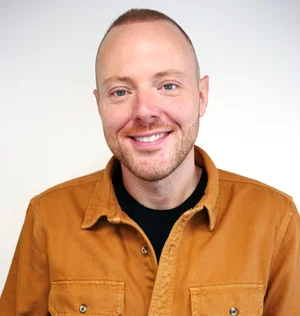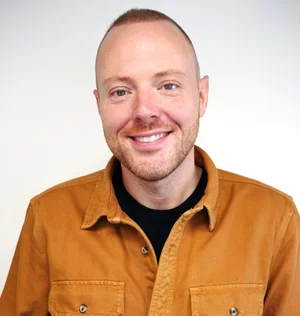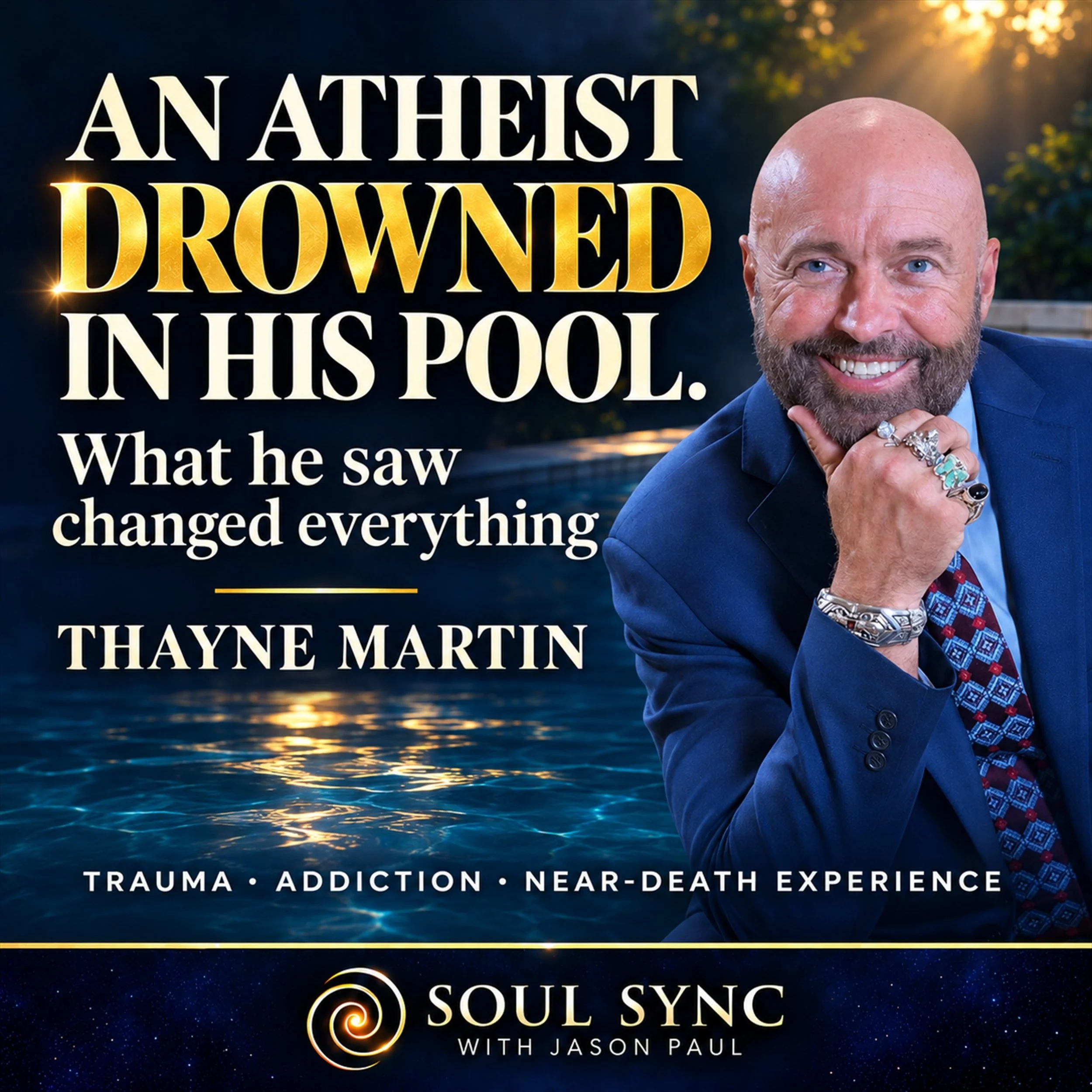
An Atheist Drowned in His Pool. What He Saw Changed Everything, with Thayne Martin
Soul Sync with Jason Paul, in conversation with Thayne Martin of Its Pure Love. Listen below, or read on for the full write-up and transcript.
Thayne Martin went into his swimming pool an atheist. He woke up at the bottom of it.
It was the middle of the night on 13 August 2023. He hadn't slept for over 24 hours, he'd just taken a medication he says he should never have been given, and he had a reaction to it in the water. He lost consciousness, sank, and by his own account, died.
What happened next changed everything he believed about God, about death and about himself. He went into that pool living with ten separate personalities. He came out, he says, as one person.
I've interviewed a lot of people on Soul Sync. Very few conversations have stayed with me like this one. Not only because of what Thayne saw, but because of the question underneath it, the one I keep coming back to in my own life:
Why do some of us only wake up when everything falls apart?
When life has to break before it opens
Some people come to spirit gently. A book, a teacher, a meditation that opens something up, a quiet knowing that there has to be more to life than this.
Others arrive through the back door: addiction, breakdown, grief, illness, the edge of life itself.
I'm not going to romanticise that. Nobody needs suffering to be spiritual, and I'd never wish some of what I've been through on anyone. But I've seen it too many times, in my own life and in the lives of the people I work with, to pretend it isn't real. Sometimes the life we've built has to stop working before we're willing to ask who we really are underneath it.
There's a name for this in psychology. Psychiatrist Stanislav Grof and his wife Christina coined the term "spiritual emergency", a deliberate play on "emergence", to describe crises that carry both a problem and the chance to rise into something new. I love that. Emergency and emergence, sitting side by side.
Thayne's story
Thayne's life was hard from the start. As a young boy, he was abused, and he carried that secret for decades, including from his own family. He describes being manipulated into believing it was his fault.
To survive it, his mind split. He developed dissociative identity disorder, and over the years ten different personalities shared his body. They weren't aware of each other. He'd wake up in places with no idea how he'd got there. He was also very successful in business, which tells you everything about how well a person can hide.
He walked away from the church and from God. As he put it, everyone else was worshipping something in the sky that had done nothing for him. Over time he came to believe God had abandoned him because his soul was bad.
By the night he went into the pool, he was on so many prescriptions that he needed seven pillboxes to manage a single week.
My own breaking point
I recognised more of myself in Thayne's story than I expected to.
My breaking point didn't come out of nowhere. It came from trauma I never dealt with.
When I was a police officer, I went through a very difficult time and suffered real trauma in the police. At the same time, I was in a very abusive relationship at home. By the time I left the police, something in me had broken.
I took a two-thirds pay cut to go into sales and moved to Manchester, a city where I didn't know a single person. And then I ran. Within three years I'd gone from serious debt to saving £70,000 to start my own recruitment agency. Within two more, I'd grown it into a multi-million-pound business.
That is not healthy. I never once stopped to face what had happened to me.
Underneath it all, I was carrying so much trauma that I ended up battling addiction, with cocaine, for a long time. I didn't quite hit the gutter, but I came close. And I felt far too much shame to tell anyone, because from the outside, everyone was congratulating me. Look how successful you are. Well done on the company.
That's the part I really want you to hear. You can look completely fine to everyone around you and be falling apart inside. It's one of the reasons so many people we lose to suicide seemed fine to the world until the very end. Outward success can be the most convincing mask there is.
Then, in 2019, came my psychosis. I'd stopped sleeping. My thoughts were going ten to the dozen. I ended up lost by the side of a road somewhere in England, convinced I was being followed and that the radio was talking to me. I sent my mum a WhatsApp pin from the middle of nowhere. She didn't even drive.
The weeks and months afterwards were some of the hardest of my life. Even now there are parts I can't fully revisit.
Here's what I've come to understand. When you push yourself relentlessly, the ruler eventually snaps. And sensitive people, the ones who feel everything, are often the ones who end up reaching for something to take the edge off. The late Harvard psychiatrist Edward Khantzian called this the self-medication hypothesis: the idea that people are drawn to drugs to ease emotional suffering, and that the more useful question isn't "what did the drug do to you?" but "what did the drug do for you?"
That question changed how I look at my own past. And I believe it applies to a lot of the sensitive, intuitive people who find their way to mediumship.
What Thayne says he saw
Thayne says the first thing he understood on the other side was love. Nothing but love, "in every way, shape, and form."
Then came the life review. He describes every moment of his life as a kind of bubble. He was invited to step into each one, and when he did, he didn't feel what he had felt. He felt what everyone else in that moment felt. Every cruel word he'd spoken, he felt land in the other person's heart.
But the review wasn't only about pain. As a boy, his mum used to send him to mow an elderly neighbour's lawn. He hated it. In his life review, he discovered she used to wait at her front window every Friday, just to watch him walking up the street. She was so excited to see him. He'd never had a clue.
That story gets me every time. How many of those moments are we creating without knowing?
Thayne says he wanted to stay. It was, in his words, a hell of a lot better than here. But he came back with a mission, and he believes he's living it now.
Heaven isn't somewhere you have to reach
The line from Thayne that stopped me in my tracks was this: "Heaven is right here."
He described the spirit world not as a distant place but as another layer of reality, right alongside us. The people who have passed are around us now. We simply can't see or hear them with our ordinary senses.
I agree with Thayne that heaven is all around us. The spirit world isn't up there, waiting at the end of a long road. It's here, close, woven through everyday life. Our human eyes just don't allow us to see it.
Where I'd go further is this: I believe we can sense the spirit world, to some degree, with the senses we already have. The problem is that we've been conditioned to believe we're separate, when we're not. We are all part of God, the One, the Great Spirit, whatever you want to call it. And if your mind is racing ten to the dozen, as mine was for years, you'll miss it. Especially at the beginning, spirit is very subtle. It's often in the quiet that we start to notice.
I didn't arrive at that belief easily. Even though my grandad was a medium, I was highly sceptical for a long time. He passed during that terrible period in the police, one of the hardest times of my life. As the years went on, I wanted to believe in the spirit world, but I wanted proof more. So I came into this looking at the science, reading everything I could, and questioning it all.
The proof came at the Arthur Findlay College. On my first visit, my grandad came through over that week with so much evidence that there was no doubting it was him. It wasn't only the details that proved who he was. He spoke about my own life, things he knew about me that no one else in that room could have known. In that moment, I knew it was true.
Over that same week, I started bringing through information for other people too, from those in spirit connected to them. The information was so precise that people were left emotional, with tears in their eyes. I could feel the power of spirit moving through me, and it was through what I sensed and felt that I could relay it. That week changed my life forever and set me on this path. Every reading since has made it more unshakeable.
Today my grandad is one of my guides, and a teacher from the other side. It took me a long time to trust that, but he's always there, helping me on my own path and, I've come to realise, taking real pride in helping to teach mediums from the spirit world. He's very clever in how he does it.
Then there's my dad, who passed about a year ago. We had a very tricky relationship when he was alive. He struggled a lot with his own issues, and because his passing was so sudden, I was left feeling there was so much we'd never had the chance to say to each other.
When he was in a coma in his hospital bed, I found it hard to even be in the room. The love from the spirit people around him was overwhelming. In that moment, I knew he was going to go to the other world, and that they were preparing him for that transition. I still find that memory incredibly emotional.
Since his passing, he has come through many times, and it's helped me heal. Recently, he came through in a demonstration by the medium Eileen Davies, in the sanctuary at the Arthur Findlay College. It blew me away. Through his messages of love, I could feel how much he himself had healed. Reading by reading, I've even watched his ability to communicate grow.
That's not something I read in a book. It's something I've lived.
This is where I think religion hasn't always helped people. When heaven is taught as somewhere you have to earn your way into, it becomes a destination you're always reaching for, and a judgement you're always afraid of. Thayne lived with exactly that fear. He was raised to believe he'd be judged and sent to hell if he didn't measure up, and with everything he was carrying, he never could.
What he found when he died wasn't judgement. It was love. He came back convinced there's no hell waiting for anyone, only love and fear, and that every ugly emotion we have grows out of fear.
What the research says, and where I stand
I've always wanted to know what the research says, so here it is. The honest picture is that science hasn't settled this, but it is catching up, with more trials and brain studies than ever.
Near-death experiences are not rare. In a landmark Dutch study published in The Lancet in 2001, cardiologist Pim van Lommel followed 344 people resuscitated after cardiac arrest. Around 18% reported a near-death experience, and whether they had one wasn't linked to how long they were unconscious, the medication they were given, or their fear of death beforehand.
More recently, the AWARE-II study led by Dr Sam Parnia at NYU followed 567 people who had cardiac arrests in hospital. About four in ten survivors recalled some degree of awareness during CPR that standard measures didn't pick up. Survivors described separating from their bodies and evaluating their actions and relationships, which sounds a lot like what Thayne calls the life review.
Sceptics see it differently, and it's only fair to say so. Neuroscientist Jimo Borjigin's team at the University of Michigan recorded a surge of gamma brainwaves, the kind linked to consciousness, in two of four dying patients as their life support was withdrawn. Their view is that the dying brain itself may produce these vivid experiences. Some popular NDE accounts have also faced serious questions.
Even the AWARE-II researchers say the research so far has "neither proved nor disproved the reality or meaning" of these experiences.
I’ve looked at the wider evidence in more depth in Near-Death Experiences: Is There Proof of Life After Death?
So here's where I land, and I'll say it plainly: I have absolutely no doubt that life continues after death. Not because of one study, but because of the evidence I've had over many years, from my own family in spirit and from the people who come through in my readings with details I couldn't possibly know. A brain surge might explain why someone sees a light. It doesn't explain my grandad telling me about my own life, or my dad stepping forward through another medium with exactly what I needed to hear.
What strikes me most is what happens to people afterwards. Research led by Dr Bruce Greyson at the University of Virginia has found that NDEs are usually followed by dramatic reductions in the fear of death, and often more compassion for others. People don't come back with a list of rules. They come back kinder.
I know that feeling. I was so afraid of death I wouldn't even let my mum talk about it. Then she gave me a book of near-death stories, The Afterlife Is Real by Theresa Cheung. Reading it first cracked that fear open and started me thinking there might be something more.
Gratitude: Thayne's way back
After his experience, Thayne became obsessed with one question: why had years of therapy helped him, but never quite stuck?
His answer is that the mind and the nervous system aren't the same thing. You can understand your story perfectly and still have your body replay the old one every time you're triggered. For him, that showed up as explosive anger.
Out of that, he created what he calls the Equation of Life and Abundant Happiness, and his company, Its Pure Love. The idea is simple: add what brings you joy, take away what doesn't serve you, grow what's good, and share what you don't need. And at the centre of the equation is gratitude.
One line of his I've kept with me: "I'm not asking you to be happy... I'm asking you to be neutral." Gratitude, for him, is what brings you back to centre.
Thayne makes some bold claims about the neuroscience behind his method, and those are his to make. But the idea that expressing gratitude changes us has research behind it. In a well-known 2005 study, psychologist Martin Seligman and colleagues tested five exercises, and writing and delivering a gratitude letter to someone you'd never properly thanked showed the biggest boost to happiness a month later.
Try the gratigram
This is the exercise Thayne asked me and every listener to do, and I'm passing it on to you.
Think of three people who have genuinely touched your life.
Take out your phone and record a two-minute video for each of them. No practising. No retakes.
Tell them what they mean to you, and remind them of a moment you've never forgotten.
Tell them you don't want anything. You just want them to know.
Send it out of the blue.
The no-retakes rule is the point. Most of us feel a flicker of fear at this: they'll think I'm weird. Thayne believes that's exactly why it works. You meet the fear, do it anyway, and your body learns that what's on the other side is connection, not rejection.
And if one comes back to you, save it. There will be days you need it.
One soul at a time
Thayne ended our conversation by saying his goal is to change the world, one soul at a time. I believe him.
I also believe our struggles aren't wasted. When we go back home to spirit, I feel it's those hardest experiences we'll look back on most fondly, because they're what taught us and shaped us. They're how we grew.
If you're in the middle of yours right now, I hope something in Thayne's story gives you a little light. And if any part of this has touched something raw, please don't sit with it alone. Spirituality can bring comfort and meaning, but it's never a replacement for proper support. You'll find people who can help in the resources below.
POINTS TO SIT WITH
Your breaking point may also be a doorway. Crisis can be where something new begins, not only where something ends.
Ask what it did for you. If you've reached for something to cope, be curious about the pain underneath rather than ashamed of the habit.
Heaven is closer than you think. The spirit world isn't a destination you have to earn. It's here, around us now.
You've touched more lives than you know. Like the neighbour waiting at the window, small kindnesses travel further than we ever see.
Gratitude goes both ways. Send one unscripted thank-you today, and notice what comes back.
Sit with us
If you'd like somewhere to sit in stillness with others, my free online mediumship development circle runs on Zoom every Tuesday, 6–8pm UK time. Everyone is welcome, wherever you are on your path. It's a gentle space to slow down, experiment with your own connection and simply be. For deeper work there's my online mediumship development class, and if you'd like a one-to-one reading, you can book a reading here.
You can find out more about Thayne and his work at Its Pure Love.
Helpful resources
If you need someone to talk to now
Samaritans (UK and Ireland): call 116 123, free, any time of day or night. samaritans.org
NHS 111 (England): call 111 and choose the mental health option for urgent help.
Shout: text SHOUT to 85258 for free, confidential support by text.
988 Suicide & Crisis Lifeline (US): call or text 988, or chat at 988lifeline.org.
If you're in immediate danger, call 999 in the UK or 911 in the US.
If you're worried about drinking, drugs or other addictions
Your GP: a good first step; they can talk things through and refer you to local services.
FRANK: confidential drugs advice, 24 hours a day, on 0300 123 6600. talktofrank.com
Further reading
The Afterlife Is Real by Theresa Cheung: true stories of near-death experiences.
References
van Lommel, P., van Wees, R., Meyers, V. & Elfferich, I. (2001). Near-death experience in survivors of cardiac arrest: a prospective study in the Netherlands. The Lancet, 358(9298), 2039–2045.
Parnia, S. et al. (2023). AWAreness during REsuscitation – II: A multi-center study of consciousness and awareness in cardiac arrest. Resuscitation.
Xu, G. et al. (2023). Surge of neurophysiological coupling and connectivity of gamma oscillations in the dying human brain. PNAS, 120(19), e2216268120.
Pehlivanova, M., Carroll, A. & Greyson, B. (2023). Which near-death experience features are associated with reduced fear of death? Mortality, 28(3), 493–509.
Pehlivanova, M., McNally, K. C., Funk, S. & Greyson, B. (2025). Support needs after a near-death experience. Psychology of Consciousness: Theory, Research, and Practice.
Grof, C. & Grof, S. (2017). Spiritual emergency: the understanding and treatment of transpersonal crises. International Journal of Transpersonal Studies, 36(2).
Khantzian, E. J. (2017). The theory of self-medication and addiction. Psychiatric Times, 34(2).
Seligman, M. E. P., Steen, T. A., Park, N. & Peterson, C. (2005). Positive psychology progress: empirical validation of interventions. American Psychologist, 60(5), 410–421.
-
Jason Paul: Hello and welcome back to the Soul Sync podcast. I'm Psychic Medium Jason Paul. Lovely to have you here. Now, sometimes awakening arrives gently. It can come through meditation, through synchronicity, through a book, a teacher, or a quiet inner knowing that there must be more to life than we can see. But sometimes awakening can come through breaking, through addiction, through trauma, through mental illness, through reaching a point where the life that you have been living can no longer continue in the same way. And it was much like that for me with my addiction to cocaine that went on for a considerable period of time. It almost felt like I had to get to the gutter before I could turn my life around. Luckily, I didn't quite get to the gutter, but let's just say I came very close. I think that there is something that so many of us are reluctant to admit, that some of the darkest experiences of our lives can become doorways. Not because the suffering was necessary, not because we should romanticise addiction, suicide attempts, or emotional pain, but because when everything we thought we were falls away, we are sometimes forced to meet deeper healing within ourselves. And you know, I know this from my own life that that path towards healing and spirituality is very rarely a straight one. In my times of experiencing addiction, I have known what it is to lose myself. I have lived through periods uh in my life where my mind uh no longer felt like a safe and familiar place. And although I would never, never, never wish those experiences upon anyone, um, especially psychosis, it definitely changed me. They stripped away certainty, they made me ask different questions. Who am I beneath the coping mechanisms? Who are you beneath the fear? Beneath the identity that we have built to survive, and there is something within us that remains whole even when our lives appear to be falling apart. So, my guest today, Thayne Martin, has lived an extraordinary and deeply complex journey. His story includes childhood trauma, addiction, serious mental health struggles, suicide attempts, and an experience of drowning that became a profound turning point in his life. He describes entering that experience as an atheist and emerging with a radically different understanding of consciousness. His wider work now focuses on authenticity, emotional balance, and helping people stop chasing happiness outside of themselves. But today's conversation is about so much more than one man's near-death experience. It asks something much bigger. Why do some people awaken through peace while others awaken through pain? Why does one person find spirit in a church, another through a meditation, another through grief, and another only when they reach the edge of life itself? People, we do not all need the same doorway. This is my conversation with the amazing, authentic Thayne Martin.
-
Jason Paul: Welcome to the Soul Sync.
Thayne Martin: Thank you.
Jason Paul: It's very lovely to have you on.
Thayne Martin: It's an absolute pleasure to be here today.
Jason Paul: Now, I knew we were gonna have fun because I was saying to you even before we got recording, and I was I was having such a good gossip with you. I was uh you know, I said I thought to myself, I need to push the record button because we're having such a nice conversation. Your guest sheet is absolutely bubbling with personality, and it looks to me that you have lived a life that you probably struggle to even cram into one book. So tell us about you. Take us back to you know who you are now, where you were, who you are now, how do you get there?
Thayne Martin: Uh wow. Okay, so um, you know, I I guess what I would say is I've lived a full life and a life that has been full of big highs and big lows. And it's been a journey. It's definitely been a journey. I think what makes my story unique is what happened to me. And I don't mind talking about it because it's part of my story and it's it's also why I talk about it. So sadly, I was born into a lovely family, great mother and father, older brother, younger sister. I was a troubled middle child. And I ended up, I ended up moving, we lived on a a street where it was a safe street. At least that's what my parents thought. But what they didn't know was that a man moved into our neighbourhood who was a paedophile, and he began grooming children in the neighbourhood, and I began being groomed at about age four or five by another little boy in the neighbourhood who was also being abused by this man. And then ultimately I was first assaulted July 4th, 1976. I was eight years of age, and I was assaulted by this neighbour, and he uh threatened me, and I was young, and I didn't know what to believe, but he manipulated me into believing that it was my fault. And I was so humiliated and traumatised by the experience around the shame that goes with that kind of assault that I kept my secret. I kept my secret my whole life, and my body did some unusual things. Ultimately, the gentleman was involved in a paedophile ring that ran inside of the church that I went to. So I didn't have, I would go to church and I didn't always attend meetings. Sometimes I would be peeled off from the groups, and then I would be molested at church in rooms in the church. So pretty twisted, pretty ugly stuff. So I spent most of my life trying to process that and uncover that unsuccessfully. That's what I would tell you. I knew a life of craziness. I at one time I had developed some pretty severe mental health stuff, really weird, bizarre stuff. One of them was dissociative identity disorder. So at one time in my life, I had 10 different personalities that ran this body. I do not have that anymore, but I did at one time for many decades of my life. I was also diagnosed with bipolar one, severe ADHD, and complex PTSD with dissociative states. So my life was crazy. I ended up being overmedicated by a medical establishment that had good intentions, but ultimately had me completely overmedicated. At the height of the madness, I had seven pillboxes to manage my week. So I literally had seven by seven grid of medication that I took day, midday, night, all under doctor's care, all with good intention. But ultimately, that's what led to my second NDE. My first NDE happened when I was a little boy. I was being abused by the paedophiles and they OD'd us. And I uh I was submerged in an ice bath to bring me back. So my first near-death experience happened then when they OD'd me along with another little boy that they drugged. So that was I was young when that happened.
-
Thayne Martin: But the NDE that completely changed my life happened uh August 13th of uh 2023. I had been given some medication I should have never had been given. And I was alone at night swimming in my pool. My family was asleep and I couldn't sleep. I had been up for at least 24 hours, couldn't sleep, and I had just been given this medication, and so I took it, and I should never have been given it. I had an allergic reaction to it that ended up resulting in me drowning in my pool. And I lost consciousness and I died. I literally sunk to the bottom of the pool, and that is where I woke up at the bottom of the pool. And and then there's a story behind all of that. How I got out, and then that night, everything changed. Everything changed because I went into that pool as a multiple, I came out of that pool as a single person. Okay, so something happened to me that changed everything for me, and it set me off a path of discovery. And so I spent the last two and a half years of my life since August 13th of 2023, almost three years now, unpacking my near-death experience, writing something I call the Equation of Life and Abundant Happiness, and then creating a neuroscience company that teaches people how to heal from within using some techniques that I learned when I died. That is the truth.
Jason Paul: Thayne, you know, I I I almost don't know where to where to start there, really. It as you were saying that, and you were talking about even the mental health breakdown, it's hardly surprising, is it, when you've kind of carried that weight of something for so many years. And I can relate to you in the sense that I had a psychotic episode that went on, psychosis, in 2019, where I basically reality was merging with fiction, and there was some undercurrent of truth of what was going on, but it was sort of blown up to the point that I used to be a police officer and I had some awful trauma happen to me in the police [...]. My life was sort of flipped upside down, never had a chance to even process that because what I had to do was jump back on the treadmill of life. We need money, we need this, and you know what really was running through when you were talking there was yeah, the fact that you were having the highs and you were having the lows. Because it almost feels to me, and what happens a lot in my journey was I would chase the big highs, the outward success things, because almost that would I was almost expecting that that in itself would heal me because now I have reached that place. But it as you were talking, it very much felt to me like you know, there was that mask of fame that was on that was saying everything was okay, but you were struggling to cope because you weren't talking, you were suppressing it.
Thayne Martin: That's what led to my suicide attempt when I first began. So that happened in my late 30s, early 40s was one of one of many suicide attempts. That one was the wake-up call for my family. My mother and father learned of what happened to me as a child then in my late 30s, early 40s. They had no idea. But now, of course, my mom and dad can look back and they can see because I was an emotional kid. I had big highs, big lows, I cried a ton. They could never figure out why. And it's because I was keeping my secret.
Jason Paul: Well, even the fact in addition is you know, I can't even imagine as a child having that happen to you. And, you know, even at that age, we're so susceptible to you know, that those years of our life really determine the outlook, the beliefs we have, how we see our internal reality, and you know, the fact what happened to you was in that um religious setting as well. You know, that that has eroded your faith in well, yes, it it it straight away. You know, you've had to find God in a way of nearly dying and being brought back.
Thayne Martin: I did.
-
Thayne Martin: I so I mean, I will tell you this, you know, so I was I was raised in um the Mormon church, an offshoot of Christianity, and I left the Mormon church, I became an atheist because it was the Mormons that abused me, and I became an atheist, and and the night that I died in the pool, I was an atheist. Okay, I didn't believe in anything at that stage.
Jason Paul: But I know it's got to that stage as well because I but if you'd have said to me, What am I? I was always atheist.
Thayne Martin: Yeah. Yeah, I'm like, I was angry. I'm like, so I know all of you up there are worshipping this thing in the sky, but the thing in the sky has done nothing for me. I mean, I was abused by over 50 paedophiles for six fucking years. Excuse my French. But but how do you, how do you, how do you process that as a child when you're looking at other kids that that go to school and they're not being abused and they don't have a secret and they don't have to cry themselves to sleep at night? You know, so I had an ugly relationship with God. I believed in God as a child, but then as my life went on, I realised that I had been abandoned by God. And then I then I began blaming myself that I was being punished, that my soul was so bad that God abandoned me. And that's how I felt most of my life. And it it really wasn't until, you know, I started working with therapists after that suicide attempt. That's when my wife, my mother, my father, my friends learned that something was wrong with me. Late 30s, early 40s. Well, now I'm 58. All right. So I did like everybody else did, I went to the professionals and I'm grateful for the therapist and the psychologist and the psychiatrist that I worked with. But then I'll also tell you that that that ultimately was essentially my demise because I got stuck in the system and I got medicated by the system. And ultimately, it was the system that led to that near-death experience because I had seven prescription pills. You don't put seven boxes of pills in a person and then wonder if there's interaction from other drugs.
Jason Paul: Well, I tell you this actually, when I was first diagnosed with psychosis, so what happened was on I got basically lost. I have what I call the psychosis weekend, where basically I'd absolutely lost the plot. I thought I was being followed by the government, I was on my way to what I thought was a safe place, God knows where I was, and then I just got lost on the side of the road, thought the radio was talking to me directly, and then had to [inaudible]
Thayne Martin: Had you been up for a period of time?
Jason Paul: Yeah, I hadn't slept in the days leading up to it. Yeah. And it was like a climax, and it was almost like, you know, I was going 10 to the dozen, like so many thoughts so quickly, almost like erratic. And then what happened was I got lost on the um roadside, sent a WhatsApp pin to my mum, and all it was was this random A road in the middle of nowhere in England, and all she had was a pin, and she didn't drive. And as you can imagine, I'm screaming down the phone, absolutely horrendous, because I'm saying I'm lost, I don't know where I am, this is happening to me. Anyway, she then sets off with a colleague of mine of all things to find me, and then just as she arrives, literally at the same moment, the police arrive, and then it brought back all the trauma of me thinking I'm being followed, so I'm starting to lose the plots, whatever. But the the point is when I was put on the medication, the first thing that I was done obviously was put on a lot of different medications in this kind of crisis state, and diazepam, this, that, and the other. Then the problem was one of them, God knows which one, was starting to cause me to have leg cramps, it was causing me to not be able to sit still. Then it started to cause me to the point that I couldn't leave a dark black room through fear that I was going to kill myself, which is totally not like the way I would think. And I just couldn't, and the problem was was because I was on all these medications, they'd have to take one down very slowly to see if it was that one, then take that. And the process went on for months all the while longer. I don't even know. I was running a business, a multi-million pound business as CEO, whilst this was going on, because it what that is is unprocessed grief and unprocessed trauma that you've sat on. Yeah, and it's if you and even your story there, the what the I guess the part because I I think I need more therapy to be quite honest with you, but that process of you starting to do that, you know, very I can imagine it was very hard and to get to even revisit that and whatever, but you were you releasing that then, wasn't you? And you've been suppressing that for so long.
Thayne Martin: Yeah, I had suppressed it my whole life. Yeah, it wasn't until the suicide attempt where my close childhood friend discovered me and saved my life. That was when my wife and my mother and my father and my brother and my sister had first learned what had happened to me. They had no idea. Nobody knew in my family, not one person. Only the other boys that had been abused. Now, sadly, true story, three of the little boys committed suicide as adults, and then one of them died from AIDS early on before there was any cure. They didn't even know what it was, and he died of AIDS. So four children that I went to church with are dead, and I would have been the fifth, right? And then and it's a this is my life, this is the story. I I also have an active litigation case against the church today because they they allowed it, they knew of it, and that's why someday I'm gonna hold them accountable, right?
Jason Paul: I'm in so it's so sad to me about this is what happens, and you know, the scandals that have gone on in churches is enough to turn anyone off religion. But it's it's sad, isn't it? Because how the reason I never liked the word god was because I associated it with you're not allowed to be gay as a uh as a man, and that that was the reason why I would describe myself as an atheist. Funny thing about the word atheist, though, is you even as I say it, when I used to say it, I wouldn't say that I didn't believe in anything, that's not a word that I would just say it was in a word of I don't associate. And if I said I was probably around late 20s, I would have said I was Buddhist religion, but I didn't really know what that was, but I knew it was the one I was the closest to.
Thayne Martin: Buddhism, sure, sure. So interestingly, when I had dissociative identity disorder, okay, so dissociative identity disorder is a really rare psychological condition that develops primarily in people that have been repeatedly abused at a young age. And it's a coping mechanism that develops in the brain because they have to be like the way I explain it to people is imagine being a little boy, and the night before, the day before, you were horribly abused, and then the next day you had to go to school as if nothing happened. Well, the only way that the brain can do that is literally by splitting. So I began splitting at a young age so that I could show up in a world that I didn't belong in based upon the things that were happening. Well, eventually that led to the development of over my lifetime, 10 complete different personalities that operated inside of my consciousness, but they were not co-conscious, meaning that I would switch personalities and I wouldn't know that I had switched personalities because I did not, I was not aware that the others existed. Okay. So throughout my life, I developed crazy coping skills, wicked coping skills. You could drag me in the anywhere of any place, and I could figure my way out because that's what I did every day. I could be talking to you, Jason. You and I could be having a conversation, and you said something and I switched in the middle of the conversation. Now I'm talking to you, and I don't know who you are. And sadly, neither do I. So I would have to carry on the conversation in such a way that I could get enough clues to either begin controlling the conversation or I would end the conversation and walk away. So, needless to say, I had some behaviour that made it challenging, but yet I was also very, very successful in business. So some of…
Jason Paul: Because you're a warrior, you're a gladiator.
Thayne Martin: And I'm sharing this with you, okay, because some of my alters were gay. All right. So some of my alters identified as bisexual, some were asexual, some were heterosexual, and some were homosexual. So put those all together and be married to a woman with a family. You can imagine the hell that was on my family when dad dials up and today he's gay, but last week he was straight. You can imagine the hell that has been on my family, right? It's, you know, probably one of the most beautiful things in my story is my story with my wife and the journey that we've had together because, you know, she's had to watch me go off on dates with men, knowing that I was gonna come back, you know, maybe the next day, maybe two days later, and be somebody different.
Jason Paul: That wasn't easy to you know what I keeps going through my mind as you're saying this. It's so understandable how uh you would get into this situation of having these 10 different personalities because you've learned to disassociate yourself and have different masks that you you know you're putting on to show that you're coping in that moment, and you've almost got these default ways of being. And I can almost imagine, as you know, if someone was to look straight through, yeah, they become default, and then they become you.
Thayne Martin: You see, that's where it develops. So, so and and mine weren't co-conscious, meaning that I had 10 different personalities, but I didn't know they existed. Right? I would only know they existed by evidence in my phone because I had multiple people using the same phone.
Jason Paul: My goodness, that must be really scary. Which word version of yourself at that time would you have said is the truest version of you? How would you even know what normal was? Because that would have been you didn't.
Thayne Martin: I didn't know. I I I only knew who I was at the time. That's it. Right? And then and then I would have to try and piece my life together, right? And understand. I mean, I would wake up. I mean, Jason, I travelled for a living, and I would wake up sometimes in places that I had no idea how I got there. No idea. Like literally, I have woken up laying next to somebody that I don't know. And I don't know how I got there.
Jason Paul: Well, I've had some moments like that, I have to say, which were related to drugs and alcohol, but that was again not a happy time, you know.
Thayne Martin: I I get it. Yeah, you know.
-
Thayne Martin: So interestingly today, you know, after my near-death experience, all of that is gone from me. Okay. So the interesting thing is I've spent the last two and a half years since that NDE unpacking all of the memories that belongs to all of the alters. So all I can say is I lived a very interesting, crazy life, and I know many people, and I don't even know that I know them. That's what I would tell you.
Jason Paul: Isn't it interesting? Even my psychosis, you know, I still don't fully know what happened. And it took me time. A very it was a very painful awakening because I had to get to the point of realising that everything that I felt was so real, that first of all, I was getting annoyed at other people, you know, why can't you see it? Why? And then I I get to the point where I'd have to go through that process of realising that actually it was me all along, and these things that I believe were so real weren't real. And to be honest with you, even now, I still can't tell you the exact story because it's too painful for me to actually revisit. It's actually, and I I kind of but you know what? There's something that is interesting in in this, and I just want to talk about these different personalities and this disassociation that you had started to get, and it's it's hardly surprising why you know you rose to be successful because you probably had a mask for that, another personality that was achieving 100%. Yep. The interesting thing is, you know, I feel very much you've had to, and I I I I don't even feel like I want to say this, but all these experiences that you have gone through and that trauma, and the fact you went to that NDE and the fact that you came back from that is you all of these experiences of what's happened to you has brought you to right now who it feels to me it's a journey now and discovery of who is the real Thayne, who is because it feels to me your whole life, it's you've not known who that is at all.
Thayne Martin: Yeah, yeah, a hundred percent. Well, I will tell you that I know exactly who I am today. And I and here's the fun thing I'm a poster child. I know the the the medical establishment, like I'm the poster child for success, but but I will tell you that the medical establishment is struggling to understand how I healed. And and and that's also why I started my own company, because I wanted to learn. I discovered something miraculous when I died in that pool. All right. And I learned that there is a way that you can rewrite and reset your nervous system, all right? Because all the therapy in the world was helpful to me, but it didn't stick. And here's why. Okay. You think about what you learn in therapy. We're gonna go to therapy and we're gonna bring up some subjects that we need to talk about, and some of them are ugly, and eventually I can talk about them, and I can do it in such a way where I'm not crying, and I've made progress. So I can touch the subject, okay?
Jason Paul: But all certainly not relaxing you, though, is it in that moment? It's painful and it's probably tense.
Thayne Martin: It is, and here's the reality, okay? All of the brain work in the world is helpful, but it will not heal you ultimately. And here's why your nervous system is separate from the way that your brain operates. And what I realised is that my nervous system was stuck in stories that it was playing, regardless of what my mind told it to do, right? And I found that oftentimes in life, I was showing up in ways, exhibiting behaviour that was unbecoming of me. I knew better, but yet I couldn't seem to control it. All right. So for so one of the things for me was explosive anger, okay. I was I was the the most wicked Karen on the planet, all right? Like if you were my friends and my family, I loved you. But if you were somebody in the public that didn't do your job up to par, I would own you, okay? And I would make you cry and I would walk away feeling good about myself. And that was also the person that I didn't like. I didn't like to be that person, but I was a person that was hurting. I was a person that was angry. I'd never been healed. So I showed up in life pissed off. I was a victim my entire life until I drowned in the pool. And I went to the other side, and I have a complete understanding of how that works and why we're here and what we do while we're here. And then I also know what it takes to get back. And the questions you gotta know to continue your own path.
Jason Paul: Can I ask you a question? Your life, thank you. Your your life had been so challenging. Yeah, what made you come back for because I've never had a near-death experience and I have an understanding of what the light is, but I think I have a 0.0 fraction of the speck of me of what this is, because you know, I fall down the same pit holes as everyone else, you know.
-
Jason Paul: I and but what was it that brought you back? Because if to me, it would have felt like why would you have come back?
Thayne Martin: Because well, I can tell you that the other side, okay, the other reality that we move into when we die, it it operates in in one frequency, okay? It's love. There's nothing but love on the other side in every way, shape, and form. Every way, shape, and form. Is life review difficult? Yes, life review is difficult. I understand it, I went through it, I know how it works, but ultimately, by the time I reach the end of my experience and the time I spent with, and I'm gonna use the word God, okay? The time that I spent with God, I had an opportunity and a choice to make. Okay. I wanted to stay because trust me, it's a hell of a lot better than it is here. Okay. You don't you do not want to leave because this body, this reality, it's dense, it hurts, it doesn't feel good. It's hard. Okay. Living on earth is hard. And and getting the choice, do you want to go back, Thayne, or do you want to you want to stay here? The interesting thing was is that I did not really have a choice as to whether I would stay or not. I didn't really have a choice. I was given, I'm just gonna say it, a mission. I've got a mission, okay? And through I'm executing that mission today.
Jason Paul: So I thought I find all this fascinating because it was near-death experiences, Thayne, that booted my journey off because I had a fear of death so much to this point that I wouldn't even talk about it. I wouldn't even I said to you to say to my mum, I don't want to talk about death, it's horrible, it scares me. But it was the near-death experiences of my mum gave me a book about them, and I started reading it, and I started to think to myself, perhaps there is something. It was that drew me into it. What were you described the life review there? So you'd gone from this moment of being faced down in the pool, and I think one of the difficulties from what I understand of near-death experiences is it's trying to find human language to even explain it, I think is a challenge in the first place. What happened to you? How could you describe that that to me?
Thayne Martin: Okay, so I didn't I didn't how can I say this?
Jason Paul: This is the challenge, it's finding words, isn't it? Yes.
Thayne Martin: Okay, so think of it this way: right now, our senses, the world around us, resides in your head. Okay, everything in reality is an interpretation of your brain, and that's exactly what it is. So the entire universe literally fits inside your head. So understand that first, okay. And if you understand that, that means that slipping into the next reality is literally moving into it's like a wavelength. It's like moving into the next like layer of reality. But like the best way to describe it is this heaven is right here, okay? It is right here. The people that have passed on, the souls that have lived a life that are on the other side, they are right here, right now. They're around all of us, they're around you, okay. But you can't see them, you can't hear them, and we can't detect it because our ears and our eyes and all of the senses that we have inside our body cannot pick up on the other reality that is right here. Okay. So when you understand that, then you start to understand how it works. Okay. So I came back because I I was given instructions, okay?
Jason Paul: Like whom?
Thayne Martin: By God, by the one. There's only one. Okay. When you when you meet, I call it the creator. You can call it whatever you want, okay? The one, the one that controls everything, okay?
Jason Paul: There's only and how is the one communicating with you?
Thayne Martin: It's it's I it's not like this. It's it is telepathically. Yes, you just know everything in heaven exists, okay? So all knowledge is present, everything exists. So if you want to know who killed JFK, the answer is on the other side. Okay. If you want to know why men do this and women do that, the answer is on the other side. Literally, anything you ask, the answer is already there. There's no delay. You already know. You already know.
-
Thayne Martin: Okay, so what is life review like? Life review works where when when you when you it's like you walk into a reality, and then everything becomes like digital in a way, but it's alive. Okay, it's like it changes, all right. So the way that I'm gonna explain it is the best I can.
Jason Paul: Well, I think you did a bloody marvellous job. Go ahead.
Thayne Martin: Okay, so it's it's they're bubbles, okay. Inside of every moment in time is every probability in existence to reach that moment. Okay, in in so think of it as a bubble. And if I had to know what did it take for Jason to meet Thayne on different sides of the pond, and what life did Jason have to live, and what life did Thayne have to leave, live in order to meet today, right now.
Jason Paul: So even if you think about all of our ancestors, what's happened in this moment, the trauma that you've went been on uh has got you to this point.
Thayne Martin: That is correct. Yeah, that is correct. So so everything in existence exists inside a bubble. Okay, now here's where it gets interesting. So this is a bubble, okay. My fist is a bubble, okay? Yes. Now, the next bubble over is everything that's in this bubble, but one variable has changed. Okay, so in this variable, I'm sitting down. In this bubble, I'm standing up, but everything else is the same. Okay. So when you go to the other side, life review is is and is basically like people say it plays back like a movie. That's the best way to describe it. But you, you will see…
Jason Paul: It must have been a very difficult movie for you to watch.
Thayne Martin: Absolutely. Absolutely. Okay. Because here's the thing: you're gonna see all the amazing things that you did with your life, and you're gonna see how the one thing that you did connected and impacted everything. Because that's probably the most important thing that I learned is that we are all connected, every single one of us. We're all connected through the same light, number one, okay. The second thing is that everything is recorded in our reality with light and sound, so that's how the one keeps track of us is through light and sound. So our lives are recorded through light and sound, okay? And understand that every single speck is related, okay? Every atom is related to every atom, all right, and they know each other and they can take instruction, all right? So what happens in life review is basically you're standing there with the one, okay? The one, the one who created you, all right? And God kind of like shows you your life, and he's like, hey, Thayne, do you wanna do you wanna see that over there? Well, not really, God, because that looks like a pretty nasty bubble. I don't know that I want to walk into that. Okay, well, Thayne, I want you to walk into that bubble. I'm coming with you. And then you walk into the bubble. And when you walk into the bubble, it's as if you were right there. But here's the difference. Instead of feeling the experiences of yourself, you feel the feelings of everybody else in that moment. So if I was in a fight with you, Jason, in that bubble, and I said some things that hurt you, then in that moment, I would feel your feelings. So as I hurt you, Jason, as I stuck you in the heart with my words, I felt what I did to you. All right. So if you've lived your life and you spew a lot of negativity in the world, you're gonna relive every moment and you're gonna feel every crappy thing that you did to another person. And that feeling that you created, guess what? You get to feel it.
Jason Paul: Well, do you know what? Some of the what happens to us, you know, how some people go around treating other people. I can think of a number of people myself that are gonna have very uncomfortable life reviews. But the in the interesting thing about from what I understand of near-death experiences and from my understanding of mediumship and from what the spirit world have told me is in the life review, the reason that's really what matters, I believe, at the end of the day is love and kindness and acts of kindness and how we can touch as many people as possible with love, because that is ultimately, yeah.
Thayne Martin: And and okay, so you see all the shitty things that you do, okay, and then God shows you all the amazing things that you did, right? Like the little old lady that I used to mow her lawn for free. My mom would send me down there every end of Friday. I would go down and and and mow this woman's yard. And I didn't want to do it, but my mom had me do it to wear me out, to teach me hard work. And then what I got was to feel the heart of that woman from the goodness that I did as a little kid, right? Like I had no idea as a little boy that she would wait in the front window for me to see me walking up the street. She was so excited to see me.
Jason Paul: You had no idea how you touched her.
Thayne Martin: I had no idea. No. So, so you basically get to live. You will see everything that you did, both good and bad. You will feel it. You will feel the good feelings that you created, and then you will feel the bad things that you create. All right. And then ultimately, it boils down to an understanding. Okay? It boils down to three things that I teach people that you kind of have to know and understand. And if you know and understand these three things, then life is really freaking easy for you. And that's the truth. And life is really freaking easy for you when you die. It's a heck of a lot easier. Okay. So, you know, the message that I share with the world is this it's just love. Okay? The only thing that exists on the other side is love. All right. Now, I know everybody that, you know, I was raised a Christian. So I was raised believing that that God would judge me and that if I didn't do good things, I'm going to hell, and this guy named Satan's gonna take my soul. That's what I was raised, okay? And I can't tell you how much I lived my life in fear and depression because I could never live up to those expectations. I couldn't, not with the mental health that I had, not with what had happened to me, right? It was hell for me to try and understand that. So imagine how amazing it was for me to literally die and realise, realise that hell did not exist. Okay, that Satan is a made-up thing that that that sadly is used to manipulate people and it's greed, and it's it's greed. It's mostly greed. But there's and I know you know, I get people take shots at me all the time, I don't care. Because the truth of the matter is that the only thing that exists on the other side is love and fear. Okay, the only thing that exists in the world is love and fear. Everything else ugly emotion comes from fear. Everything comes from fear, everything. It's love and fear. That's it. Okay.
Jason Paul: Well, actually, fear isn't even a thing. Fear is just the fear is just the lack of love.
Thayne Martin: Um, well, we can go down so yeah, so so here's what I've done with the rest of my life.
-
Thayne Martin: All right, so I died, I went through life review. Okay, when I came back, I became obsessed with science. Okay, now realise I have a I have a degree in finance. I've been I've done well in finance, banking, sales, uh, all kinds of different things. I have a patent, but there's also parts of my life that are, you know, small and meaningless. But yet all of that experience led collectively to who is Thayne, right? So that night while I was laying there on the side of the pool, I became fascinated with science. And something that I learned is that the language of the universe is math, okay? And the creator keeps everything in reality in perfect balance, always. Okay. Everything in life and our reality is always perfect balance. All right. So if the creator can keep the stars, the planets, and everything working perfectly using math, could I also use math to level set my life? Yeah, I could. You know why? Because human emotional energy is physical energy, the same atoms that make up the very things that I'm sitting on and using right now. So I wrote something, and it's called the Equation of Life and Abundant Happiness. And and from that near-death experience, I created a company, and we're a neuroscience company, and my company is called Its Pure Love. All right, because what I learned is that you can heal yourself the two most powerful things in existence. The first one is gratitude. Okay, gratitude. And now I'm not talking write a list, I'm not talking an app, I'm talking experiential gratitude. Okay, experiential gratitude, something different, right? That's number one. Number two, of course, is love. Okay. The reason why gratitude is so important is because gratitude is the spark and fuel for love. Think about that. Okay. If I saw you, Jason, and we were walking down the street, and I just came up to you randomly and I just gave you a hug, you would you'd probably hit me. You'd be like, dude, what the hell are you doing? You don't know me, get away from me. That would be on the day of the week, to be quite honest with you.
Jason Paul: But on an average day, I'm not sure.
Thayne Martin: Okay, but what if I walked up to you and I said, Hey, Jason, you know, hey, I know you don't know me and I don't know you, but I do know that we share the same real estate. And at this moment in time, I'm standing in front of you, and you're standing in front of me. And I don't know your life and you don't know mine, but I guarantee you there's things that you've done in your life that have actually benefited me. And I want to thank you from the bottom of my heart for being a human being, for showing up in a world that oftentimes we get our ass handed to me. And I know that and I get that. But today, standing in front of you, I want you to know that I see you. I see you as a human being. I see you as somebody trying to get through life just like me. And I know it's hard. So if it's okay with you, Jason, would you mind if I put my arms around you and gave you a big old hug just to show you what love feels like right now?
Jason Paul: Oh, Thayne. What we've had to go through to get to this moment in our lives at this very second. Yes, I want to embrace it.
Thayne Martin: Absolutely. Okay. So did I not just use gratitude to open your heart? Okay. So that night when I died in the pool, I realised that our emotional energy as human beings can actually follow the same principles of math. And this is how it works. So the Equation of Life and Abundant Happiness is a philosophy. And it's now part of this very amazing company that I've created because I teach this for a living. Okay. And the way it works is it's adding the principal mathematical operators to human emotion. So, how does it work? We add those things in life that brings forth goodness and joy. That's addition. Okay. Subtraction is letting go of those things that don't serve us, that don't benefit us in the long run, and we let them go. Now, the thing upstairs, which everybody gets to define, okay? I know what I believe and I know why, but I let everybody define the thing upstairs. All right. The thing upstairs, the expectation is that you and I will learn how to balance our emotional energy in the moment. So that's the first thing I teach you. And the first thing you're gonna learn is the word gratitude. Because in the Equation of Life and Abundant Happiness, the equal sign is gratitude. Okay? Because gratitude is the balancing agent of any and all things. Okay. I can take the ugliest conversation and using gratitude, I can calm that person's amygdala in two seconds. Okay. Because gratitude is neuroscience. Okay. Gratitude actually quiets our amygdala and it forces our brain to let go of the amygdala and move the thought to our prefrontal cortex where we can rationally process what's going on. So in my course, the first thing I'm gonna teach you is gratitude number one. Whenever I get presented with a situation that knocks me off of centre, the first thing I go to is gratitude every time. Why? Because it shuts off my amygdala, right? If I just had something ugly happen to me, if I don't do anything, my amygdala is gonna take the negative stimulus, it's gonna go find the story that it always is gonna play, and it's gonna show up fierce. That's what's gonna happen. Okay. But what if I could learn to control my body so that when it gets stimulated, I'm in control and it doesn't play the tape that it always plays. Hmm. Okay. So everybody has 0.25 seconds. That's how much time we have between when the brain gets a stimulus and when your subconscious will execute the program it believes is most likely gonna keep you what? The safest. Your nervous system is really designed to keep you safe at all costs, which means your nervous system lies to you. My nervous system lied to me. It does it all the time, okay? So the thing upstairs expects us to balance positive and negative in the moment, become neutral, okay? Now, once you're neutral, now I'm aware and I'm in control. Before that, you were not aware and you were not in control. So we add, subtract, using gratitude in the moment to bring myself to centre, neutral. Okay. Understand, I'm not asking you to be happy. That's bullshit. Okay. What I'm asking you is to be neutral because when you're neutral, now I can go. What's next? Multiply. Multiply. What's that about? That's growth. Okay. Multiplication is taking your action, your intention, embodying those of your family, friends, and the thing upstairs, okay? And creating. Multiplication is about creation. So if we're using math, I had 100 bucks. I balanced action intention. I grew it. Now I have a thousand. You with me? Yes. All right. What do you do next after multiplication? What did you learn in grade school? After you learned your times tables, you learned what? Division.
Jason Paul: Oh, well, I was gonna say the square roots. I was I was going off on a tangent.
Thayne Martin: Yeah, no, you learned division, right? Yes, yes. One plus one, one minus one, one times one, and then one divided by one. That's what we learned. Okay. Yes. So that's why the Equation of Life and Abundant Happiness is so easy. I'm just using mathematical operators to control my emotional energy. Okay. So what's division? Division is taking what I have created in goodness through love and then dividing it. Okay. So division also uses something called the principle of abundance. Okay. And the principle of abundance is a cost that comes from your heart. Okay. And the way that our world is supposed to work is like this. I had 100 bucks, I made a thousand bucks. I need $600 to pay my rent this week and put food on the table. I need another $150 to put in my bank account. You know why? Because the thing upstairs knows that humans need to feel safe. So it's okay. And you should have some safety. But what does that also mean? That means I got $200 left over out of that thousand, that's abundant and I don't need it. So you know what we're supposed to do? Put it back in the system. Okay? Yeah. Because you believe, if you believe in a connected world and a connected deity, then you understand that you will provide it for at all times and anything that you need. Okay? So you give the money away. So I take that 200 bucks. I don't need it this week. I give it to my sister because she's struggling. That's what we're supposed to do. But we don't do that. We live in a world today where we've taken the wealth and it's been distributed to billionaires and trillionaires, and yet we still have people in all over the world that go to sleep at night with no food in their belly. And I'm not okay with that. I'm just Yeah, I'm not okay with it. I'm not okay with that. All right, so add, subtract, multiply, divide, and then we hit the equal sign. Gratitude. Because gratitude is what is the balancing agent of everything. It's gratitude, baby. And I mean embodied gratitude. I teach a phrase in my course called Dare to Be Second. And once you learn it and you embody gratitude and you become gratitude, your life changes. My life completely changed. Okay.
-
Thayne Martin: Now, interestingly, I learned something miraculous. Okay. And it happened in an accident one day. I I was out in the general public and I met somebody that that did something for me that they didn't have to do. Okay. And I thanked this person in a way that I had never done before. And when I did, I got I got a physiological experience in my body that made me weep. Okay. I was talking to a complete stranger at the counter of a fast food hamburger joint. And I just had this physiological experience with a complete stranger that ended up with me being in tears. And and I was so full of love and goodness and everything. I was like, I want this. Okay. And I'm being honest, Jason. I've done a lot of drugs in my life. Okay. I've partied pretty hard.
Jason Paul: Yes, I have as well. Yes, I have. So more than dabbles.
Thayne Martin: Yeah, I that's what I would say. I was a dabbler. Okay. But this is what I will say. Every human being has the ability to manipulate their own hormones and their own body in the most beautiful of ways. Because I've pioneered how to do this. Because the first time I had this physiological experience, I wanted to duplicate it because I've never seen so much love in my life. Okay. So then I went out into the world and I tried to duplicate it and I couldn't. And it pissed me off because I wanted that feeling that I got with the stranger. Why? What was in that? So I started studying neuroscience. I don't know a damn thing about my brain or what it did or my nervous system. So I started pouring into my nervous studying, trying to study why did I have a physiological experience with a complete stranger that moved me to tears? Okay? I want to do it again. And then I figured out what it was. There's a secret. There's a secret. Okay. The secret you ready?
Jason Paul: Yes, please, please tell me.
Thayne Martin: Okay. They have to be a stranger. Why? There is a hormone called vasopressin. And vasopressin is the most misunderstood hormone in neuroscience today. And that is why we are studying it in my company. I have a business partner that is a neuroscientist. I did a shit ton of research. I sent it to her one day because I met her. I was interviewing on her podcast. Funny, true story. Okay. I sent her my research after the podcast because she wanted to know what it is I had discovered. So I sent her my scientific white paper research. She called me back and she said, Who the hell are you? Where did you find this? And I said, I died in a pool and I went to heaven and I came back and I learned how to do this. And she said, This is revolutionary. I've never seen anything like it. I want to do it. I want to learn how to do this. So I taught her how to do it. It blew her away. She ended up having the same experience I did. She ended up crying with a stranger. Changed her life that day. And now she moved from Portland to Phoenix, Arizona to help me build this company. And that's what we're building. Because when we what we've ultimately discovered is how to reset the nervous system. Okay. What I alluded to at the beginning of the show was all the brain work in the world was helpful to me, but my nervous system was playing the old story. And until I learned how to update the story in my body, all the brain work in the world never mattered, right? Because when I would hit a trigger, my body and my nervous system would go right back what it always did, which was defend the self. Okay. So that's why I had an explosive anger. You messed with me, I went off like an atomic bomb. Now, whenever I get angry, I have to tell people I'm angry because my body does not respond the same way anymore. Now I say to people, excuse me, I'm really upset right now. And I know you can't see that. That's because I'm in that much control of my own emotions. But I'm very, very upset with this situation right now, and we need to fix it. Versus my old way, which would have been rip your throat out, reach in, grab your asshole, pull it through your mouth. Which one's talking? Your mouth or Uranus. Right? True.
Jason Paul: That was well, yes, there was a point in my life where I had a lot of, you know, a lot of rage, and that was the way I approached life.
Thayne Martin: There's nothing more fierce than a gay man. Like nothing. No. No. No. There's nothing more damaged than a gay man either. I understand where the rage comes from because my alters did. I get that, right? But look, here's the thing: any human being can heal themselves from within. Okay. You heal yourself with love and you heal yourself through experiences. Okay. So my company, we're pioneering and revolutionary new way of healing the soul and the body. Okay. Everybody else has ignored the body. We have not. We focus on the body first because the body has the story. Okay. Until you fix the body and tie it to a new memory, the body will play the same story. Okay. So what we've done is I have a course that we teach. It's called ELAHrise. And what we do with ELAHrise is you're going to get 101 experiences that I've designed for you to go achieve and complete in the world. You're going to be working with family, friends, and of course, perfect strangers. Okay. And in completing these cards, you're going to find every self-limiting belief that you have. You're going to overcome it in the same exercise. And then you're going to rewrite the story to a new ending. Why? Because every exercise ends in pro-social emotion, love, kindness, connection, empathy. So imagine going in. So, Thayne, I just played this card on you. And this is the card. This is an example. How are we doing on time, Jason?
Jason Paul: We've got a couple more minutes. Fine. Please, please. How are you home?
Thayne Martin: Okay. So here's the thing. When you learn how to do this, okay, you'll you will learn how to reset your nervous system and you're going to retrain it to a new story. All right.
-
Thayne Martin: So I'm going to give you an example of a an experience that we do. And I'm going to share it with you and your audience. I'm going to ask you all to do it today. Okay. This exercise is called gratigram. All right. Gratigram is what we call it. And what I want you to do is take out your phone and without practising and with no retakes. Okay. That is a rule. No retakes without practising. We take out our phone. And I want you to think of three people that have significantly touched your life. Three people. Okay? Yes. And then you're going to record a video for two minutes. Two-minute long video. And it goes something like this. Hey, I'm going to use a friend named Mary. Hey, Mary. It's Thayne. I I know it's been a a while since you and I have connected. But I want you to know, Mary, how much I appreciate you and how much I love you. And I'm so grateful to have you in my life. And I and I'm I'm thinking of that time. I know it's kind of a funny story, but remember that time when we're out partying and I got separated from the group in the nightclub and I didn't have a way to get home. And you had found a way to get home and you were already home, and I was stuck, and I don't do Ubers, and I needed a ride, and you got out and you picked me up. That's the kind of friend that you are. And I know it seemed trivial, but I've never forgotten that. And I want you to know how much I love you, I appreciate you, and and all that you do in my life. And I just I wanted you to know that. I don't need anything, I don't want anything. I just want you to know how amazing you are and how grateful I am to be your friend. Boom. End. Okay. And now you send it to that person randomly. They don't know it's coming, right? Pick three people and do that today. All right. Give yourself a couple hours, and pretty soon you're gonna get a phone call. Or you might get a video. And if you get a video before you hit play, go get yourself some Kleenex because you're gonna need it. Okay? Because that person just got love bombed. They got a gratigram, okay? Yes. And then they're gonna send you a gratigram back, and you're gonna save that gratigram. And there's gonna be days when you need to you need a pickup. And you're gonna pick up that video and you're gonna remember your friend Mary. She didn't forget you. Okay. So gratigram is one of was one of my favourite exercises in that deck of cards because it allows us to create connections with people that we love. It allows us to share our hearts in a way that maybe we wouldn't. The fact that there's no retakes allows you to deal to learn that I can be authentic in my words. I don't have to be perfect all the time and I can go to perfectionism because we always want to have the perfect video. Uh-uh. No, no retakes, right? And then you find out how full life really is. And then you realise how you're showing up as those people start saying, hey, I don't know if you know how amazing you are. Okay. And it's the perfect exercise in gratitude because gratitude is bi-directional. It goes out and it comes back. Okay. So in that one exercise, I've taught you more about yourself and more about the people around you. And I made you experience a feeling. Okay. Now, when I handed you that card and asked you to record a video to send it to three people, most people get a little scared. Okay. They get a little bit nervous. Okay. I did that by design. Okay. Because when I did that, I opened what's called the memory consolidation window. This is neuroscience. I opened the memory consolidation window because there's a little bit of risk. Wait, you want me to send a video and honestly to three people that don't know it's coming? I'm not going to do that. They're going to think I'm weird. That's what came up for you.
Jason Paul: Yes, I imagine a lot of people feel that. You know?
Thayne Martin: Okay. That it's all neuroscience. So now do the exercise. And then what happens? You have an amazing experience. So that physiological feeling that you had of fear before you started the exercise now has a new ending. Okay. And the body just learned that I threw up fear, but I just got love, kindness, connection, empathy, gratitude. Holy shit, I don't need fear anymore. I need more of this. Body, remember this story. So that's exactly what happens. The body learns a new story. Why? Because I opened the memory consolidation window. I completed the exercise while the window was open. And your brain said, wait a minute, love, kindness, and connection is a hell of a lot better than fear. Update that memory. Body, don't show up fear the next time somebody asks you to send three videos to somebody for love. Okay? You just learned from one experience, you updated a limiting belief, you overcame it in the exercise, and now you wrote a new story. So if I said to you, Jason, I'd like you to send three videos to people that you love, you would be like, shit, yeah, let's go. Why? Because you learned a new story. You see how this works? This is neuroscience. Neuroscience is about repetition. So there's 101 exercises in my deck of cards, and you will complete all of them. And you pull two cards a week for the rest of your life. And every time you pull those cards, you're gonna be interacting with people in different ways in different places, and you're gonna get a different story and a different lesson every time, right?
Jason Paul: Well, do you know what? I don't think you could have got more value for money in this hour if you tried. Love is all that exists. Love feels. And do you know what? It's been a blast, Thayne. Thank you, my darling, for coming onto the Soul Sync.
Thayne Martin: You're very welcome, Jason. Thank you for having me. I appreciate that. My goal is to change the world, and I'm doing it one soul at a time. I'm just getting started, trust me.
Jason Paul: That conversation really got me thinking. I think the research that Thayne is doing into those chemicals in the brain is fascinating, and I have to say I'm gonna try it myself. Um, because I want to have one of those gratitude bombs, so I'm gonna make a real considered effort. Although I do always try and go around uh my life spreading love and kindness because I know the power of that's uh what really matters in life, but I think uh what he was saying there about the stranger and about the chemical releasing, I want to give it a try, and I'm gonna give it a try. I'm gonna do it today. I really loved Thayne's authenticity talking about the real struggles in his life, and I do often think that it's the struggles in our life that really define us, it's what teach us the lessons, and I feel that when we go back to the other side, it's those experiences that we look upon so fondly because that's what helped us to learn and to grow. As always, it's been lovely being here with you, and until next time, lots of love.