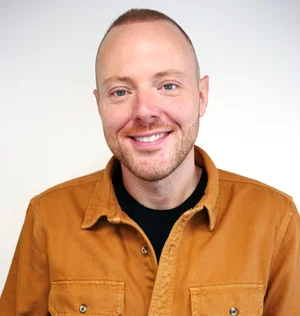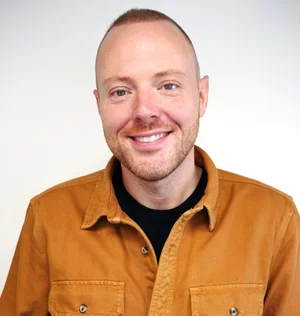
From Wall Street Gold Trader to Medium: Faith, Trust and My Sister Janet
Soul Sync with Jason Paul, in conversation with Nancy Nohavec. Listen below, or read on for the full write-up and transcript.
"It's the voices"
In the late 1980s, a group of people walked into the office of the chief gold trader at Shearson Lehman Brothers in New York. The firm was just starting to explore artificial intelligence, and they wanted to know something simple: how did this trader make money every single day?
The trader was Nancy Nohavec. She had no college degree and had started out as a clerk on the exchange floor. Her desk sat in a room full of men with Ivy League degrees and MBAs. She took large positions in gold for the firm and dealt with central banks and governments. By her own account, she made money every day.
She was senior enough by then to tell them the truth. "It's the voices," she said. "I hear voices." Two of them got up and walked out.
When Nancy told me that story on Soul Sync, I laughed. Then I sat with it for days. I have spent most of my working life in rooms where nobody would dream of saying that out loud. In the police I called it gut feel. In recruitment I called it reading people. I never once called it intuition, let alone anything spiritual. But looking back, it was the single biggest reason anything I built worked. And when I stopped listening to it, it was the reason things fell apart.
This piece is about that quiet sense of knowing, and why I believe it is one of the most underrated tools in business. It is also about Nancy's sister, Rev. Janet Nohavec, the former nun who became one of the most respected evidential mediums of her generation. Nancy came on the podcast to honour her, and I want to do the same here.
What the research actually says about gut instinct
Intuition is not just a spiritual idea. Psychologists and neuroscientists have studied it for decades, and the findings are more interesting than either side of the argument usually admits.
The body often knows first. In a well-known 1997 study published in Science, Antoine Bechara, Antonio Damasio and colleagues gave people a card game with hidden "good" and "bad" decks. Players started choosing the better decks before they could explain why. Their skin also showed small stress responses when they reached for a risky deck, before they consciously knew it was risky. The researchers concluded that non-conscious signals guide our behaviour before conscious knowledge catches up (Bechara et al., 1997). That is a scientific description of what most of us simply call a gut feeling.
Experts read patterns they cannot always put into words. The psychologist Gary Klein spent years studying people who make high-stakes decisions under pressure, such as fire commanders and military leaders. He found that they rarely weigh up options one by one. They recognise the situation and act. Daniel Kahneman, the Nobel prize-winning sceptic of intuition, eventually worked with Klein to find where they agreed. Their 2009 paper concluded that expert intuition can be trusted when two things are true: the situation has patterns that can be learned, and the person has had enough practice, with honest feedback, to learn them (Kahneman and Klein, 2009). Asked about this by McKinsey, Klein said many business intuitions are telling you something useful, and you want to take advantage of them (McKinsey Quarterly).
Leaders use it more than they admit. Surveys of senior managers in banking, technology and utilities have found that intuitive processes are used often in organisational decision-making (Khatri and Ng, 2000). A study of 172 executives across the US, Canada, Italy and Poland found that experienced leaders lean on judgements that were once analytical but have become intuitive with practice (Chief Executive).
Where I stand
I believe in that inner knowing completely. Looking back over my life, I can see two kinds of decisions. Some were made from fear: stuck in my head, overthinking, trying to control the outcome. Others came from a strong, genuine feeling that seemed to pull me in a particular direction. When I have followed that feeling, it has never let me down. The fear-driven decisions are behind almost every mistake I have made.
I saw the same thing again and again in business. Clever, capable people would think their way out of what they felt, and get it wrong.
There have been times in my career when I did things that made no logical sense to the people around me. My advisers questioned them. Other managers couldn't see the reasoning. All I had was a feeling. Sometimes a feeling defies every bit of logic you can put against it, and it is still the right one. Following it served me very, very well.
It has happened in my spiritual life too. More than once recently, I have felt a very strong pull from the spirit world towards a decision that, on paper, didn't add up. With hindsight, I can see clearly that each of those decisions was the right one.
As a medium, I believe this goes far beyond pattern recognition. I believe your soul knows what it needs to be doing. It knows its plan. When you sit with a feeling and truly listen to it, you are tuning in to something bigger than your own experience, and for me that includes the spirit world.
That doesn't mean ignoring the facts. Even the researchers who champion intuition say it works best when it is grounded in real knowledge, and the more cautious voices remind us that a feeling of certainty can come from a story we have told ourselves (Miller and Ireland, 2005; Maia and McClelland, 2004). Fear can disguise itself as a gut feeling. So do your homework. Then get still, and learn the difference between the anxious chatter of the mind and the calm, steady pull of your intuition. In my experience, that pull is the one to follow.
Intuitives in the boardroom
It may surprise you how many business leaders already work with intuitives. They just don't talk about it. In 2015, Fortune profiled several intuitive advisers working with senior executives. One, Colette Baron-Reid, said her clients included top executives in real estate, energy and entertainment. A Toronto estate agent with around $100 million in annual sales called her "my secret weapon". Another, Laura Day, said she had worked with at least four Fortune 500 companies, and a former Seagate Technology software director told Newsweek that anyone who could afford her would get "100 times their money's worth" (Fortune, 2015). Day has since described working one-to-one with a company's chief executive, answering specific questions about people and decisions (Mic).
In my experience, the best of this work isn't about predicting share prices. It is about helping leaders quieten the noise so they can hear their own inner guidance clearly.
I want to be straight with you about the evidence. Most of it comes from the advisers and their clients. Clients are rarely named, nobody has independently tested the predictions, and Fortune noted a strong stigma around it, as well as frauds in the field. Janet herself warned people to steer clear of anyone who keeps you coming back for money. So choose carefully. But the fact that hard-headed business people keep seeking out this kind of guidance tells you something. The quiet inner voice has always had a place at the top table. It just hasn't always been given a seat.
My own story: from the police station to the boardroom
Before I was a medium, I was a police officer. I never called it psychic. I called it gut feel. I would leave the station on a shift and, more often than not, run straight into someone committing a crime. It became a running joke at the station. Nobody could explain it, least of all me. I just went where something told me to go.
When I left the police, I went into sales and then legal recruitment. I spent around ten years building my own recruitment business into a multi-million-pound company. As I said to Nancy, she sold gold and I sold lawyers. Both are complex commodities. The difference is that when your gold is sold, it stays sold. A lawyer can change their mind and walk out of the other door.
That is why gut instinct mattered so much. On paper, a candidate could look perfect. A client could say all the right things. But I learned to feel when someone was telling me the truth, when a deal was about to wobble, and when the person in front of me was the right fit, before any of it showed up in the numbers. People used to say everything I touched turned to gold. It used to annoy me, because it wasn't luck. It was hard work, and following a feeling I couldn't always explain.
When I stopped listening
There is another side to this story, and it is the part I think leaders most need to hear.
At one point my business grew so quickly it felt like I had let a monster out of a cage. The more successful it became, the more I moved into my head. I got stressed. I started overthinking, checking, controlling. I stopped trusting the quiet sense that had got me there, and started trying to force outcomes instead. As quickly as the success had come, the wheels began to fall off.
I have been at both ends of that spectrum. I have made decisions in a heartbeat that turned out to be right, and I have sat at the top of a company feeling miserable, with every spreadsheet in front of me and no peace at all. When I eventually stepped away from the business, I realised the thing I had been chasing all along was not money or growth. It was peace. And peace, for me, has always lived in the same place as intuition: in being still enough to listen.
Nancy Nohavec: the gold trader who went inward
Nancy's path to Wall Street started with everything falling apart. When she and Janet were at school, their father's business went bankrupt. Nancy describes men arriving with guns and police cars, and the family scattering. She went to live with her best friend's family, and on her sixteenth birthday they gave her a Bible inscribed with Proverbs 3:5–6: "Trust in God with all of your heart and do not lean on your own understanding." She still has it.
She had no money and, as she puts it, no family to fall back on. So she trusted. In 1979 she started as a clerk on the New York Cotton Exchange. She moved to Shearson Loeb Rhoades as a trading assistant in 1980, and rose to Corporate First Vice President and Chief Trader of precious metals at Shearson Lehman Brothers. She was one of very few senior women running a trading desk in the 1980s (Nancy Nohavec).
A woman at the top of a man's game
It is hard to overstate what that meant in the 1980s. Nancy was turned down for interviews, and she is clear that being a woman on Wall Street made it harder. The rule on the trading floor was brutally simple: if you make money, they keep you; if you don't, they get rid of you. So she made money. Every day.
She was the chief gold trader at a time when no other women were doing that job, and people knew her name around the world. She dealt directly with central banks, governments and mining companies, taking positions where a small swing in the price could mean $600,000 or a million dollars by the end of the day. She told me at least four or five people would happily have taken her seat. There was, in her words, "a lot of animus" towards the woman without a degree who kept outperforming them.
Her intuition is what gave her the edge. She describes herself as a contrarian. When central banks tried to push the market against her firm, she could feel when they were bluffing. After a while, the people who had been telling her what to do started copying her instead, desperate to know what she was thinking. She was named First Vice President, the equivalent of a managing director. When she had her first daughter in 1989, the firm gave her a large pay rise to come back. When she returned again after having twins, they gave her another and began grooming her to run one of the biggest positions on the foreign exchange desk. Instead, she followed her heart home to her girls, and went on to start one of the first hedge funds set up by a woman.
None of it came from ignoring the facts. It came from knowing the facts so well that she could hear what sat underneath them.
What struck me most was not that she used her intuition. It was how she protected it. On a trading floor, everyone has an opinion. People would come to her desk insisting she had to be long or short. Nancy learned to stop telling people what she thought. As soon as she said a position out loud, it became a fact she had to defend, and she lost the freedom to change her mind as the market moved. So she went inward. She did all the research, read three newspapers a day and knew what every central bank was doing. Then she closed out the noise and listened.
She later carried the same instinct into the art world. She talked her way into a job at Israel Sack, the famous New York dealer in American antiques, by pitching fine and decorative arts as an alternative investment. She spent five years helping steer the firm through serious financial difficulty, and resigned a week before 9/11.
For decades, almost nobody knew what Nancy could really do. Her world was bankers, lawyers and politicians, and she asked Janet to keep her name out of her books. Our conversation was the first time she had used her own surname in an interview. Her advice for anyone in business is the same advice she gives about mediumship: "Trust your instincts. Pray and meditate and go inward. Cut off the outer world."
As a medium, she brings that discipline into every reading. If what spirit shows her doesn't land with the person in front of her, she doesn't doubt the information. She looks again at how she is translating it. That is exactly how good leaders treat a strong instinct: trust the signal, and question your interpretation of it.
Honouring Rev. Janet Nohavec
Nancy came on Soul Sync for one reason above all: to honour her sister. So I want to tell you about Janet properly.
Janet Nohavec was born in Belleville, New Jersey, and grew up in Franklin Lakes, one of five children (obituary). She had memories of spirit communication from the age of four, and she and Nancy saw their first spirit on the same day, when Janet was six and Nancy four (Chicago IANDS). Their mother, a Polish Catholic who had survived the Nazi work camps, was frightened by it. So the little girl learned to hide what she could see.
Around the age of 25, Janet heard a voice in her room tell her she was going to become a Catholic nun. She joined the Sisters of Charity at Convent Station and stayed for five years. When she mentioned talking to her late grandmother, she was told that was a bad thing. She left before taking her final vows, and soon afterwards met a medium who introduced her to Spiritualism (Daily Voice).
In 1996 she founded The Journey Within, a Spiritualists' National Union church in Pompton Lakes, New Jersey. It started with ten people and grew to around 200, drawing people from New Jersey, New York and Connecticut. It is described as the first church in the United States to be affiliated with the UK-based Spiritualists' National Union (PamPam). She became an approved overseas tutor at the Arthur Findlay College in Stansted, built a client base across more than 20 countries (Omega Institute), and had her evidential mediumship researched by several university groups (Chicago IANDS). She wrote two books: Through the Darkness, her autobiography, and Where Two Worlds Meet, her guide to developing mediumship.
What I admire most is the integrity she brought to the work. Janet was outspoken about fraud in mediumship. She warned people to avoid anyone who insists you keep coming back, or offers to lift a curse for money (Religion News Service, 2004). She said other faiths ask you to believe in an afterlife, while Spiritualism tries to prove it. For grieving people, she called a genuine connection "a phone call from heaven".
Nancy remembers her as a true empath who loved everybody. In her classes Janet never singled anyone out. If she felt a student wasn't a medium but was strongly intuitive, or might be suited to tarot, she would gently guide them towards their real strength. At a family Easter dinner, Nancy asked her to say grace. Janet began, "Father, Mother, God," and the eye-rolls went round the table. Then she asked, "How do you know God's a guy?"
Janet passed to spirit on 27 July 2022, aged 65 (obituary). Shortly before her surgery, she had urged Nancy once more to go public with her own mediumship. Nancy promised she would. Her website, and her conversation with me, are her keeping that promise. She is now working with Janet's estate to bring Janet's books back into print, so a new generation can learn from her.
Points to sit with
Whether you run a company, lead a team or are simply trying to make a big decision, here is what Nancy's story, the research and my own mistakes have taught me about trusting your gut without being reckless.
Do the homework, then get quiet. Nancy read three newspapers a day and knew what every central bank was doing. Intuition is not a replacement for knowing your field. It is what happens when that knowledge settles and you stop forcing it.
Notice where your gut has earned trust. Kahneman and Klein's research shows instinct is most reliable where you have real experience and honest feedback. My gut about people and deals was sharp because I had been reading them for years. Ask yourself whether this feeling comes from experience, or from wanting something to be true.
Keep your positions to yourself for a while. Once you announce a decision, you have to defend it. Give yourself room to change your mind before you go public.
Trust the signal, question the translation. A strong feeling usually means something. If the outcome isn't what you expected, look again at how you read it before you write the feeling off.
Watch for the moment you move into your head. For me, stress and success arrived together. When you notice yourself overthinking, checking and controlling, that is often the point you have stopped listening.
Make stillness part of the job. Prayer, meditation, a walk, five quiet minutes before a meeting. Nancy calls it cutting off the outer world. Whatever you call it, intuition needs space to be heard.
Experiment with it. Write down your gut call before a decision, then look back at how it played out. Over time you will learn what your intuition feels like when it is right.
The quiet voice is a superpower
The people who walked out of Nancy's office at Lehman Brothers thought they had heard something ridiculous. Decades later, some of the most serious research in psychology agrees with her more than they would have believed. Janet spent her life proving that the connection between this world and the next is real. Nancy spent hers quietly using a gift that most people around her never knew she had.
I have used that same gift in a police car, across a negotiating table and now in my mediumship. The lesson has been the same every time. When I trust it and stay grounded, things flow. When I override it and try to control everything, they don't.
That is why I truly believe the quiet voice is a superpower. When you listen to how you feel, it can make your life flow in ways you could never have imagined, with an abundance you might never have believed possible. And it all starts with trusting what you feel.
You can hear Nancy tell her story in her own words in the full Soul Sync episode above. You can find out more about her work at nancynohavec.com. If you would like to understand your own intuition more deeply, my free online development circle meets on Tuesdays, and everyone is welcome (join the circle).
Frequently asked questions
Is intuition real, or just guessing? Research suggests intuition is real and often reliable, particularly where people have long experience and honest feedback. Studies have shown the body reacting to risk before the conscious mind catches up. It is not infallible, so it works best alongside facts, not instead of them.
Can intuition really help in business? Yes. Surveys of senior managers show intuition is widely used in strategic decisions, especially under time pressure and uncertainty. Experienced executives often turn years of analysis into instinctive judgements.
Who was Rev. Janet Nohavec? Janet Nohavec was an American evidential medium, a former Sister of Charity and the founder of The Journey Within Spiritualists' National Union church in Pompton Lakes, New Jersey. She was an approved overseas tutor at the Arthur Findlay College, wrote Through the Darkness and Where Two Worlds Meet, and passed to spirit in July 2022.
Who is Nancy Nohavec? Nancy Nohavec is an evidential medium and Janet's younger sister. She was Chief Trader of precious metals at Shearson Lehman Brothers in the 1980s and later worked in the fine art and antiques world.
Sources
Bechara, A., Damasio, H., Tranel, D. and Damasio, A. R. (1997). Deciding advantageously before knowing the advantageous strategy. Science, 275, 1293–1295.
Kahneman, D. and Klein, G. (2009). Conditions for intuitive expertise: a failure to disagree. American Psychologist, 64(6), 515–526.
McKinsey Quarterly. Strategic decisions: when can you trust your gut?
Khatri, N. and Ng, H. A. (2000). The role of intuition in strategic decision making. Human Relations.
Chief Executive. Should CEOs rely more on intuition or data analytics?
Miller, C. C. and Ireland, R. D. (2005). Intuition in strategic decision making: friend or foe in the fast-paced 21st century? Academy of Management Executive.
Maia, T. V. and McClelland, J. L. (2004). A reexamination of the evidence for the somatic marker hypothesis. PNAS.
Daily Voice. Pompton Lakes pastor connects the living and the dead
Religion News Service (2004). Ex-nun embraces gift as medium
Chicago IANDS (2012). Guest speaker: Janet Nohavec
Omega Institute. Rev. Janet Nohavec
Fortune (2015). These execs say psychics are helping them make a fortune
-
Jason Paul: Nancy, welcome, welcome, welcome to the Soul Sync. It's lovely to have you on.
Nancy Nohavec: Thank you. Thank you very much. It's nice to be here.
Jason Paul: I'm being very dramatic today. I'm making you laugh and we haven't even started yet. You look lovely, I was saying. I absolutely love that lovely scarf, neckerchief. It's very nice. But you're not, we're not on to talk about fashion today. Now you are a really interesting person, and it's almost like I didn't quite know where to start, because there's a lot to your background, but also to your family in general.
So tell the listener, begin wherever you like, Nancy. Tell us about you.
-
Nancy Nohavec: All right. About me. Well, I'm here because of my sister, Janet. Janet and I grew up in a very dysfunctional home, as she wrote in her first book, Through the Darkness. And it was when we were young that Janet and I first saw our first spirit. We actually saw him, and it turned out to be our grandfather.
Janet was six, I was four. It was on the same day, we had a special connection. There are five of us, but throughout our lives, we always had a telepathic connection where I knew what she was thinking, she knew what I was thinking. Janet was two years older than I was, so we went to school together. We rode the bus together. We were quite different though, and we... But we were close, and we were different. We had a special bond. I can't say I'm as close with any of my other siblings. And when Janet found herself, truly found herself, her journey, guess began when she became a nun. That's when she really, really started to find her way. For me, backing up, our father had went bankrupt, and he did so while we were in school, and the whole family spread apart. Janet went to live with someone. I went, fortunately, to live with my best friend's family, and they were lovely people and God-fearing people, and we didn't grow up with God. It was, for me, a trajectory to have faith in God, not so much religion, but to have faith in God and to have faith in the inner self. And so, I went to Wall Street. Janet, you know, did other things, and then she became a nun, and then she left the convent and started in her journey in spiritualism.
But you know, I was always there. I told her, "Don't tell anybody." You know, on Wall Street, trust your gut. You trade. I used my skill on Wall Street to get ahead. It's phenomenal that I...
Jason Paul: Hmm.
Nancy Nohavec: You know, what I accomplished by using my instincts. So... Back then, it was, it was judged. It was, it was thought of as your gut. So with Janet, I always told her, "Don't tell anybody. Don't tell anybody I've got it. Don't tell. I just don't want anybody to know." I really
Jason Paul: Like some dirty secret, isn't it?
Nancy Nohavec: It was, it
Jason Paul: You know, when we look at this as on reflection, really, you're talking about a superpower innate to us all, and it is, it's, you know, like a dirty secret you want to put in the back of the closet, isn't it, Nance?
Nancy Nohavec: I was in the closet when she wrote her books. I said, "You cannot put my name in it. Do not, do not say anything about me." Only because, when you're dealing with the banking crowd, lawyers, politicians, it's a pretty conservative crowd on the front. You know, you know, their deep, dark secrets aren't very, you
Jason Paul: Well, I can only imagine, because trying to you know, you was in Wall Street at a time, I imagine, where times were very different back then.
Nancy Nohavec: Yeah
Jason Paul: To be a strong female, to kind of rise up in that environment as well, you've gotta have your stuff about you, and you've gotta be very strong to navigate that
-
Nancy Nohavec: That's right, and I did. And the reason why I did was, and again, I'll share this with you. When my father went bankrupt and the family fell apart, and it wasn't, you know, your convenient bankruptcy. You know, men showed up with guns and police cars. They burst down my mother's door.
I was at school. We were all at school, so we walked into mayhem, I was lost. We were all lost, including Janet and the rest of my siblings. It was my faith in that family who took me in who, I'll show it to you, and this played a major role in my life, which has to do with spiritualism. So, on my 16th birthday, I was thinking of dropping out of school, giving up, and my best friend's mother, parents, Mr and Mrs Cooper, gave me this Bible. And in the Bible, here it is. It's inscribed on my 16th birthday, March 10th, 1975, Proverbs 3:5-6, "Trust in God with all of your heart and do not lean onto your own understanding.
In all your ways acknowledge Him, and He will set your path straight." And He did, because I had nothing else to go on. I had no money. There was, like, no family. And so when I got a job on Wall Street as a clerk, a lowly clerk on the exchange, rejected for positions and different things, I just kept my focus on my inner self and God rather than the outer world. So I was never dismayed. I just kept plugging on. And it was actually my success, my gradual success. You know, I was turned down for different interviews, especially as a woman on Wall Street in the '80s. Bottom line is if you make money, they keep you. If you don't, they get rid of you. But I just kept making money by using my intuitive connection with my higher self.
-
Jason Paul: It's very interesting. Even as you're saying that it keeps making me think of The Wolf of Wall Street film, and that sort of era and that time, and like it's making...
Nancy Nohavec: Yeah, I was
Jason Paul: Well, it...
Nancy Nohavec: Men, and when I tell you it was
Jason Paul: They weren't firing things out of cannons, were they? It didn't get to that state, did it,
Nancy Nohavec: Well,
Jason Paul: Nance?
Nancy Nohavec: It was brutal. You had to be tough. I mean, I had probably four or five people who wanted to slit my throat to get my position. I ran a... You know, I was the chief gold trader at Lehman Brothers in the '80s, where there were no other females doing that and people knew me around the world.
I took large proprietary positions for the firm, so I would take, I would deal with central banks, I dealt with governments, I dealt with different mines. I had forward-forwards. I was always very good with numbers. I would have a lot of people giving me their opinions. "Oh, you have to be long. You have to be short." After a while, people started doing what I was doing. They wanted to know what I was thinking because I made money every day, people don't make money every day. But it was, it was my faith. But I'll tell you one story. After I was, you know, given a position of... like a... You know, it was... I think at that time I was first vice president, which was kind of like a managing director.
They'd since gotten rid of that title. And at Lehman Brothers, which was a big deal, they were just starting with artificial intelligence, and they came to me, asking how I made money every day, because I made money every day. And mind you, I didn't have a college degree. I was surrounded with people, guys, mostly men, who had Ivy League degrees or MBAs or who worked their life to get there, and there was Nancy running a desk.
So there was a lot of animus towards me.
-
Jason Paul: I was in the gutter after being a police officer for years, in the gutter when I left. Not just in the gutter, face down in it, unfortunately, at that particular time in my life.
And then I managed to get up, and I went into the world of sales, and I had this after a few years in legal recruitment because I sold lawyers. You sold gold, I sold lawyers. You know, they both are equally complex commodities to sell. Unfortunately, the only difference is, Nancy, when your gold gets sold, at least it's sold.
My product gets sold, it can change its mind and walk out the other door. But everyone used to say to me, "Jason, everything you touch turns to gold." And it used to annoy me back then because I used to think, "No, it's called hard work and following your intuition in your 20s."
And I realised because my like I said, my product, was you know, very complex as well. I became a very good psychic reading lawyers. You know, are they telling me the right thing? Are they you know, bullshitting me or whatever. And it's, you know, served me very well. But then, you know, I don't wanna go down another 'cause it's a whole rabbit hole in itself.
But I became very good at being a psychic. But then I when I started saying, "Okay, now I'm doing psychic," it was almost like, "Oh my God, I've been doing this all my life," you know?
-
Nancy Nohavec: You discovered yourself. That's what I did on Wall Street. I was a psychic. I knew who was bullshitting, who was, who wasn't. I had central banks who used to gang up on me, but just, it, for fun. But it wasn't me, they were ganging up on Lehman, but I knew when they were bullshitting, you know? And so as a trader, I was a contrarian, and when using your psychic abilities, I didn't know you were a police officer. I find that fascinating, and most, a lot of police officers use their gut, their intuition, much like I did on Wall Street. And you, when you're stripped of everything, you, that's when you really get to know yourself and your relationship with God, because I really do have a relationship with God. A lot of people call it spirit the One or the Creator, whatever you say. But if you really trust when, especially when you're doing readings, that trust, and you don't rely on yourself, that's when you give an excellent reading. You know, and that journey will help you do well in life, much like it helped you on your journey in sales, and now it's helping you in this journey
So they walk in the '80s and they say, you know, "How do you, how do you make money every day?" And at that point I was senior enough to say, "It's the voices. I hear voices." And I did. I would hear voices. I would do all of the research, the fundamentals, the technicals. I knew what every government was doing, you know, because governments have their gold reserves, different central banks, what was going on politically.
So you really... I read three papers and it was, it was really intense, but I loved it and I was good at it. So I said to them, "It's the voices." And the two of them got up and walked out. But now, they're listening because it's become and people are more open about it and more comfortable with being a medium
-
Jason Paul: Mm. Well, times have changed a lot, haven't they?
Nancy Nohavec: Yeah
Jason Paul: With me, when I started, when I was heading my legal recruitment business, which I owned for years, which I've just recently stepped away from to now do mediumship, I wouldn't start with my same surname because I didn't want it getting out the closet at all, like you, that I was doing this.
'Cause I thought, you know, lawyers, you know, see this and whatever. So I used my grandad's surname, Paul, until one day, you know, I accidentally sent it from the wrong inbox, to my company from my medium email address, and then the secret was out the bag. But I kept it in the kind of closet in that senses as well.
But it has become more mainstream, but I also think it's, there's a lot of people not doing it well out there. I wanna ask you, so Janet
Nancy Nohavec: Yeah
-
Jason Paul: Is at this time, well, working as a nun. I'm assuming you're not seeing her, because even the visitation, there's not, is it? You, is it a convent where she was in it all the time, or was it...
Nancy Nohavec: No, it was, it was the Sisters of Charity and they've since kind of closed their chapters, and it was right here in Morristown. In fact, my husband and I sponsored her. I paid off all of her debts before she went in because she was, you can't go in with any debts. Oh, she was dirt poor.
Nuns make nothing. I mean, literally nothing, and she was living, in a group home with other nuns. And so she would come to my summer house with my husband. They would drive up on the weekends, and we would spend all weekend together. So we would practise together in the St Lawrence River. It's up, it's up, on the Canadian border, New York State and Canada, and it's beautiful up there. And my husband's family, had been there for generations, and they fell in love with Janet. And it was a tiny little town, and Uncle Skip would say, "Hello,
Jason Paul: Ha.
Nancy Nohavec: You know, in the morning, and she loved it up there. And after she left the convent, just getting to know my husband's family really brought Janet into an area of confidence and relying on herself. And then she left the convent, and then, you know, eventually went over to Lily Dale. But like you, this is the first time I've put my surname on, an interview.
I usually, I've
Jason Paul: Oh my goodness
Nancy Nohavec: Hiding under the [unclear] moniker because
Jason Paul: This is so symbolic as a gay man to help you come out the closet and be the first time. Oh my goodness me, I'm gonna...
Nancy Nohavec: Work for politicians and you know, like, ugh, yeah, and they were in private school,
Jason Paul: Nancy, I'll have to get you to sign some sort of special form just to check you don't change your mind afterwards
Nancy Nohavec: But anyway, no, Janet and I practised, when she was really, really practising, you know, we would hold hands. We would like, you know, just she would read me. I would say, "You're making it up." I would, I would read her, but no one knew. So, all along, we had our little secret. My sisters didn't even know I was doing this. My
-
Jason Paul: What, because it, one thing that just keeps jumping out at me is how you describe sort of having faith, and the different levels of faith, and how that's kind of got you through. But what drew Janet into a convent?
Nancy Nohavec: Well, when, you know, after our family broke up and I had my faith, I had nothing else. I had no money, you know, I was making, like, really nothing. I really trusted in God, and not religion. And I used to teach after my career and after I went to the antique firm, I was, got to know the Bible, and I was a leader in studying the Bible from a historic perspective, not for religions. It was non-denominational. But back then, Janet saw how well I was doing, and like, "how, why are you doing so well?" I said, "Janet, it's God. It's not the religions, it's God." So we were born Catholic. My mother was a Catholic, and so Janet decided to go into, there are different sects of Catholicism, that Sisters of Charity let, they you didn't have to wear a habit, and they let you smoke, so Janet chose them of that. And but whenever we went out to dinner, I said, I would say, "Oh, and this is my sister, Janet, the nun," and the meals were always on the house. It
Jason Paul: Oh, that's lovely. You... No, no wonder you wanted to take her out everywhere
Nancy Nohavec: We had so much fun. We had... I loved her. I truly... There's, there are a few people who I trusted implicitly, and Janet was one of them, because she truly was a saint. So on her voyage, her own voyage with God, she too then to her own journey with the Catholic Church, and I'm not, I'm not, saying anything negative about the Catholic Church, but her own journey, she decided to trust in God, the Creator. And I remember the first time, you know, it was at a family dinner, my whole family at Easter, and I said, you know, "Janet, why don't you say the prayer?"
And she said, "Father, Mother, God," and everybody at the table was like, "Oh, God," you know, like, the eye rolls. Because but then we had conversations about it, and she said, "Well, how do you know God's a guy?" And I said, "I don't, you're right. How do we know that God is a man? We don't." But that's why, you know, people, if you just trust in Mother, Father God, trust in the Creator, but the Creator, it says all through the Bible, is within us. We just have to make that connection, and that is what led me, and that is what I told Janet, and that is what led Janet, because God was, a Mother, Father God was very important to Janet in her journey and in her life. And so, you asked, and it was my own success that got her, that really led her to her own relationship with God
Jason Paul: Just so interesting, life, isn't it? When you start looking back at it and you think if you just trust that you can, you can. You know, if you believe something is possible, anything is possible, and I've seen people do things. You only need to look at telekinesis and the things that people can do with energy
Nancy Nohavec: Yes
Jason Paul: What's possible if you believe you can.
But it's almost like we you know, we have this illusion, don't we? We come down here, plunk, we forget everything we've ever known... well, not initially. Not until... well, very young, as a baby, don't we? We sort of have some connection, and then we go through our lives in a process of unlearning, and then, some of us, we never find faith.
And some of us, you know, and you start looking back at it now, and it's just absolutely crazy. Your mum, obviously, you know, was a massive part of I guess why you were, so open because of her connection to spirit. However, you know, she was called a demon, a child by her own mother, though.
-
Nancy Nohavec: Right. You... your mom. It's Janet.
Jason Paul: Oh, sorry,
Nancy Nohavec: Well, my mother, oh, my mother was very superstitious, but my mother, she too had a like, a... She was snatched from her home. She was a Catholic Polish girl snatched from her home by the Brownshirts when she was 13. They came in the middle of the night.
She and her family lived on a farm. Three brothers were put in the boys' camp, and she was put in the girls', not, the boys' wagon, and she was put in the girls' wagon, and she never saw anybody again. But she was in work camps. They killed people in work camps. She survived the war, and she met my father in Bayreuth, Germany, which was the home of Wagner, wasn't bombed.
And my father was from Pilsen, near Prague in Czechoslovakia. They married, and they came over to the United States. But my mother was very superstitious, and she thought we were, you know, it was demonic. She didn't like any of that. She wanted us to... Although we didn't practice Catholicism because she saw a lot of what the Catholics did during World War II and that turned her away, she had her own strong belief in God. So, but my grandfather had committed suicide, and she didn't want that near us because we were, we were little girls. We were toddlers, and she thought he was demonic rather than we. And so my mother, our mother, was very proud of Janet and what Janet built. And you know, if you think of what she did do, I mean, she really did bring a lot of people to mediumship because of her being a nun. You know, I have a lot of people of faith, nuns, who come to me for readings because of my sister's, and men or former men of the order, or people of faith who trust that of my relationship with God because it's not demonic. Much like that verse, trust in God with all of your heart, and you know, when we doubt when we're reading, don't lean on your own understanding. It's really, it really truly is, like, the how-to book. Don't be afraid. It is within you. And yeah, so, our mother was, she was a wonderful woman, very strong, and she was very proud of what Janet did. Very proud.
-
Jason Paul: Mm. It is really lovely to hear you talking about it in such a way. When you was in your career, at what point was it that you decided to step away from that and into your own mediumship? Because it's not a decision that I took lightly, because it was almost like there's so many other things that I could be doing.
Nancy Nohavec: Yeah
Jason Paul: It almost felt that I couldn't not do it, because it felt that when you know it's your calling, you know, it's being of service it feels like. And you know, for me it was like, hang on a minute, I want to be a voice for these people. What was it like for you?
Nancy Nohavec: Well, after I... Well, I had a girl, my daughter, our daughter, and I got married. My husband, works, you know, in energy and gold, and he now writes for Substack. But anyway, we married. We had a daughter in '89, and they gave me a giant raise to come back because back then I made money every day. And then I got pregnant again, and I had twin daughters. And when I came back, they gave me another giant raise, and they were grooming me to take over foreign exchange and dollar-mark, and that was the big position on the foreign exchange desk. You know, my heart was with my girls, and so I started a small hedge fund, one of the first hedge funds that a woman has started, and I had some initial, you know, seed money. And I made... I did it for about seven months, but my heart wasn't into it. I wanted to play with my kids. So I had a nanny, and then I stopped doing that but when my... I was bored. When my kids went to school, and I was really getting into the Bible and what the Bible meant from a historic perspective, I got bored, and I had my friends pray and say, you know, I said I wanted a job. So I wanted to go in into antiques. Again, I had no degree in antiques, and who do I meet in taking a course but one of the most famous, in the antique world who had the most famous antique shop in the world in America, in Americana. You know, we furnished the White House. We furnished, installations at museums. He walks up to me during a symposium where there were 300 people at NYU. It was a course at NYU, so, you know, I did take a lot of courses at NYU and other and other colleges. He says, I had a name tag. I'd never met him before, and it was Israel Sack, was the name of the company, and 100 years old.
And he walks up to me and he said, "So, Nancy, what are you doing?" And I'm, I look at him. He had just spoken. I said, "Well, Albert, now that you ask, I know that everybody on Wall Street, after they get their bonus, they either buy art, jewelry, real estate, and if they can afford it, they come to you and they buy your antiques, but I'd like to make it, talk about how it's really alternative investing in fine and decorative arts."
He hired me on the spot. He said, "I've been trying to I've been trying to you know, prove that for, you know, 100 years." But back then, '90s, it was the faux pas to discuss investing in art and together. So, the blue bloods would never, ever dream of doing such things. But I started to research it, and the results were astounding.
And so shortly after, I discovered that they were going bankrupt. But I thought, "Why are you offering me a job when people get their degrees in 18th century furniture finish?" They get their PhDs in this. And then I discovered they were having financial difficulties. So they taught me everything they knew. I said, "Don't worry, I'll get you out of bankruptcy." So I introduced different, kind of vehicles on how to make money. I dealt with the bank, I dealt with the lawyers, and they were $40 million in debt. I was with them for five years, and when left, again, my husband was doing really well and he was travelling a lot, and I thought, "You know, I wanna travel with him." And I resigned about a week before 9/11, and 9/11 happened. My husband and I were in London, and he was entertaining, and we couldn't get home for a few weeks. And we lost a lot of friends, and we live in an area which is commuting to New York, and it was very, very sad. And I had already resigned, and then the company couldn't sustain, you know, everything stopped. And at that time he was in his 90s, and the company folded. But when they did fold, their inventory covered their debts. So they went out with grace and dignity, and I'll take the...
Jason Paul: Oh. My birthday's actually 9/11, and I'll actually never, ever forget that and it's always, sobering every time I have a birthday. And I went to the site of 9/11 a lot of times when I was cabin crew, 'cause I'd do New Yorks [unclear]. They were the most popular route, seven of those a day.
So I used to be there all the time. I used to absolutely, love it. Your stories are just incredible, and it almost sounds to me like, people would be chasing after you. Everywhere she walks, that Nancy, it's like gold. People, running behind you. How does she keep, landing all these things?
Nancy Nohavec: Like you, how did Albert... How, you know, it was God, you know? It was God who got me there, and he got me there to help him. You know, I have a diary on my time there, and I should write a book. I keep, everybody keeps saying I should write a book. But
Jason Paul: Should write a book, Nancy. Start immediately, please.
-
Nancy Nohavec: But after that, we bought...
I like restoring old homes, and we bought an old home and I restored it. And it was then I called Janet because you know, I was restoring an old home, and things would fly across the room, and I said, "Janet, it's time. It's time." And so I started taking courses at The Journey Within, and I would, I was in her Monday morning advanced class, or Monday night advanced class.
And no one knew I was her sister, by the way, because we really didn't look alike. And I said, "Janet, don't worry. No one will know. I'm not going to..."
But I've taken courses with loads of people. Mavis has been to my house for dinner. A lot of them had been to my house because, you know, Janet liked the way I cooked. So I was taking courses, and on Monday nights... So I'll tell you a funny story.
Jason Paul: Yes,
Nancy Nohavec: Were other a few of her other, tutors. I said to Janet, I said, "I don't wanna go with them." Although they were good, I said, "Janet, I wanna go with you." So her church, had you ever been to The Journey Within?
Jason Paul: No, I haven't, but I really want to go, and I feel quite called to go there at some point.
Nancy Nohavec: To do with The Journey Within
Jason Paul: Mm.
Nancy Nohavec: When Janet, she would, she would go around and she would have a hat, because obviously everybody wanted to go with Janet. So everybody would take a name out of the hat. So Janet would come up to me and she would say out of the side of her mouth, "Take the paper out of my hand." I would just crack up. And so I would always go with Janet, and we had a lot, just had a lot of fun together. Because, you know, I would just give her a call, "Janet, what do you think of this?" And blah, blah, blah, blah, blah. And yeah. So, and then, we'd, I would do readings up in the Thousand Islands, and loved swimming, and it's an energy field up in the Thousand Islands.
The St Lawrence River is a high energy area, and I think it's contiguous to the what's it called? The Burned-over District, starting over in Niagara Falls going throughout New York State. And
Jason Paul: It sounds beautiful
Nancy Nohavec: It is beautiful. And so Janet would come up every summer and in fact, Mavis and Jean were up there at my other house, which I've since sold.
I was doing two houses at the same time, and one had to go, so
Jason Paul: I can only imagine the amount of mischief that was had.
Nancy Nohavec: Yes.
-
Jason Paul: Ah.
Nancy Nohavec: And so, I... Yeah, that was... Yeah, so, getting to why I went public, Janet came here two weeks before she went in for surgery. I knew she wasn't doing well, we had a joint reading right here in my library, and I knew she was weak. And she was telling me, like she was encouraging me to go public for a long time, and I remember there was a centennial congress that I was supposed to go to Arthur Findlay, and she had a room picked out for me, and I had to cancel at the last minute.
And she said, like she was getting disgusted with me on why I wasn't going public, and this time she was like really annoyed with me and she said, "You've just got to." And for the years I was like, "Yeah, yeah, yeah. I'll do it. I'll
Jason Paul: Why wasn't you?
Nancy Nohavec: Well, again, my daughters work for politicians, like the governor of New Jersey, a congressman in Washington, DC.
And I didn't, you know, I didn't want like, it, like, and we knew everybody, and you know, I was on boards. I was on the board of the First National Historical Park of the United States, which is right here in Morristown. I'm on different boards on American history. Once you tell people, you know, what you do, they give you the side eye, and they drop you, and I've lost a lot of friends. But anyway, getting back to that I said, "Janet, I promise you I will." Then she died in surgery, and then I was sitting here thinking and I thought, "Oh, you know, I did give her my word." Like, she kind of came to me, and she does. She comes to me in my dreams all the time. And so I put up a website and I went public, and that was that and I lost a lot of friends as a result, you know, friends who think I'm a nut, and well
Jason Paul: Well, the nuts are the best. I've been called nutty all my life, Nancy, so I wouldn't worry about that
Nancy Nohavec: Well, but the thing is, I'm not a nut. It's not, it's not,
Jason Paul: Well, it's ridiculous because it, we're the truth and everyone's gonna learn the truth when they get back to the spirit world. But the crazy thing is, I hope we get to a place in society where this does become the norm, because then imagine what's possible. But it's, you know, it's power politics, commodity, just social media.
Ugh
-
Nancy Nohavec: Well, the thing right now, the one, you know, because I'm an analyst from Wall Street, and then I was also an analyst in working with high-end antiques and dealing with high-end people, it becomes very competitive, and there are little cliques within organisation, and it's bled into spiritualism. And I see, you know, there are those who are, you know, getting ahead, unfortunately at the behest of those and it's too bad, and that's not what spiritualism is about. It's about, you know, getting to know oneself. There are people who are doing readings who've not done their inner work.
They've not found, themselves. I'm, you know, we're all here for a reason. We're here for a short term, and then we go to the other side. But a lot of people are using it as escapism. You know, it is a thrill once you recognise you can connect to the other side or you connect to your intuitiveness. It is a thrill, but they use it as an escape go to the other side, but you're still here, and we're still here fight the battles here. And so to stand up and to do the right thing and to know, kind of make a difference while we're here. That's what I'm doing.
Jason Paul: Yeah, I agree with you. I think that it's about, are you doing it for the right reasons? Are you doing it... You know, you can really affect someone's life.
Nancy Nohavec: Yeah
Jason Paul: Know, people are often coming to you in a real time of sensitivity, and I know that for me it was almost like I was sort of putting it off, stepping into it, and it was almost like I had to say, "Come on now, Jason, you need to do this because you need to do justice to mediumship."
For me, it was about, I see so many mediums, you describing someone with fact after fact after fact, but you don't feel the emotion, you don't feel the power, you don't feel them in... It just feels clinical. And I've always wanted to be, when I'm bringing someone through, you're not just hearing about them, you're hearing from them.
Nancy Nohavec: Right. Right. Right. That's right. And I taught a class, actually I taught two classes up at the river this... I didn't advertise it, but it was well attended up at the river, because we spend some time up there during the summer. It's a reorganisation of your thought. When one is embarking on this, one has to reorganise their thought not to pay attention to the outer world, to really connect to the inner soul, our souls to connect to the inner world, and that is when you can really truly feel and get a message across.
And it does change people's lives. Really does
-
Jason Paul: We just have to learn to get out the way, and it's because it's so simple. Even recently I've had some such big lessons in my mediumship. I had one of those, nightmare platform demonstrations, Nancy, where I'd invited my family. I had my mum there, I had my two friends, a medium friend, I'd hosted this evening, and I had a room full of expectations, and if there was a trap door, Nancy, I and I could've gone down it, I would have.
But the spirit world in all their intelligence, bless them, even two days later I was just about laughing about it. My mum was making a joke. I thought, "I'm not ready yet, by Tuesday tomorrow I will be." But you learn a lot, and the spirit world came through, and that I know what the lesson was from that.
And even the hardest lessons in my life, even that awful moment on that stage where my mum had got a bottle of Prosecco for us to have afterwards to celebrate this night, and I was having a glass like so stressed in the back. But I'm glad it happened, because what I've gained from it in learnings already has outweighed the embarrassing moment.
But you just strike me as someone that just, absolutely follows what you feel, and even in those, moments where, of course, we're gonna have these live lessons, that faith carries you on, and it's that faith that drives the trust. Because you, we can't understand, this is the problem, we can't comprehend what we don't understand, and we'll never fully understand, so you just have to trust, and if that's at the beginning of your journey with not a lot of trust, maybe you're just starting out, you know?
But it's about discovering that and then really... 'Cause your trust, Nancy, if I said to you right now, for instance, "Okay, $10 million is coming to you next year," would you be able to trust in that right now? Or would you start thinking, "Well," you know, be putting the logical lens over it, the Nancy Gold calculator comes straight into your head?
Nancy Nohavec: Well, factually, you know, if you, the analytical part, the left brain, right brain, you know, I would say, "Hmm, well, it's a possibility, but why not give it a... you know, why not trust that might happen, you know?" And so I'll let you know if it does. I'll mark this day, and I'll
Jason Paul: Yes. What are some of...
Nancy Nohavec: It,
Jason Paul: Come on
-
Nancy Nohavec: Well, I'm an optimist, you know. You have, one has to have faith. But getting back to that trust, when you're putting yourself out there every day and taking huge positions for a firm you're, you know, and the ups and downs are hundreds of thousands of dollars, have to literally close the outer world out. Because I would have people coming up and saying, "Well, you know," it's called FUD, you know, "Well, this and this happened, and that therefore you're wrong." So after a while, I stopped telling people what I thought because as soon as I let my thought out there that I was, let's say I was long 100,000 ounces of gold, and at the end of the day I could make a million dollars or $600,000 based on, you know, a small swing or whatever, and I was dealing forward-forwards and different things like that. As soon as I put it out there, then it was fact. I didn't have the ability to change my mind. So with the ebb and flow of the market, I had to trust myself to change my mind. So I just went inward. So I knew who I was. So I've used that to bring it through my reading. So I'm an evidential medium, like my sister. I trust whatever it is that they show me. If at first it doesn't make sense, then it, perhaps it's my deliverance or my interpretation of what it is that they're showing me that is not connecting with the sitter. If I rearrange it is that they're showing me, because I believe it 100%, it usually lands.
So I have to re-examine my vehicle or my way of translating it. So, yeah. So I trust, it's not myself. I have faith. Call it God. It's easy for me to say God, Mother, Father, God. People, the spiritualism world calls it the Creator, the Divine. There seems to be an allergy to God. I'm
Jason Paul: There is. It almost, it does do that to me a little bit sometimes. It gets my... I sort of jump up a little bit. But I don't know. I sort of more just say spirit. But it is the same thing. We just, we're obsessed with labels, aren't we? We're all, we got different labels
Nancy Nohavec: Right, but if you think... Well, again, it's the religion's interpretation. You know, most, Bibles have been reimagined to suit whichever king or whichever organisation was writing them. But if you think about, you know, God came down incarnate, Jesus, you know, and the Father-Son thing has always confused everybody. So Jesus was incarnate, and he walked the Earth, and he said, you know, "Do what I'm doing. You can do what I'm doing. You can, you can create miracles." They spoke in tongues. What are we doing? We're kind of speaking in tongues. So, and then off he went again. So he was persecuted for speaking the truth, but all he said was, you know, in God," you know?
"Believe. Have faith." So I choose God. Some people say the Creator, the Divine, the Spirit. Whatever it is, you must have that faith, I believe, in life. It makes it easier. It really makes it easier
-
Jason Paul: I wanna make sure that we get some of Janet's lessons out there, what is it that you wanna share? 'Cause I know even we were speaking briefly about, you know, some of her teachings and how you're kinda trying to bring some of those back to life. What can we leave, you know, with all the wisdom that she's given you over the years, to let that live on in this podcast episode? It's like, I mean, it's like the impossible question, isn't it? Because it's, there's so much
Nancy Nohavec: I'm, I've got her book right here, right here. Janet, Where Two Worlds Meet, which will be reprinted. I'm working on it. But again, you know, it has to deal with the estate. So, which isn't completed yet. So, And it will be four and a half years that she's gone, and I miss her terribly every day.
She was, Janet was, she was so, abused when she was young. Like, kids made, you know, fun of her a lot, I watched it, and it was awful what they did. And so she had to retreat to herself, that she was an empath, a true empath. But the one thing she didn't like, and she did see ego come in her classes. She would never, ever single one person out. She was a one-on-one person. So if she didn't think that you could be a medium, but you are intuitive, or you could perhaps do tarot or something else, she would gently guide you to what strength was. She loved everybody, you know? I know love is the answer. A realist in this world. There's not a lot of love around, and there's not a lot of love in spiritualism. I would've thought that being Janet's sister, this spiritualist community would've been kinder to me, and they haven't. You know, I've... A lot of them, surprisingly, you know, I guess maybe perhaps there was a memo sent out, "Don't speak with Nancy," or I don't, I'm not certain. But there... Yeah. Anyway, Janet was
Jason Paul: It's like gorilla dust. I used to have people say to me in the sales world, you know, it's like that. Do you have, do you know that term gorilla dust?
Nancy Nohavec: Never
Jason Paul: Oh, it's almost like, when you're very good at something, you know, there's a bit of jealousy, I feel.
Nancy Nohavec: Possibly. Well, yeah,
Jason Paul: Who knows?
Nancy Nohavec: Don't know what it is, gorilla dust, but I'll go with it. But Janet truly loved everybody, and I don't think, and she didn't think that everybody could do this, and I think a lot of people like sell a lot of classes, and so they have a lot of people signing up for very expensive classes that they can do this, but I don't think that they can.
I don't think... I think everybody can tune in they can be intuitive, not everyone can be a medium, and I think, I think we have to reel things back a little bit. That's, but that's my humble
-
Jason Paul: I do agree. I'm only drawn to teachers now who teach from the heart and let spirit lead the way, and are doing it and are nurturing. Because I bounced around from a lot of different teachers at the beginning, and I just, ones where they would, belittle or it just, and the environment wasn't right.
It didn't feel right to me. That's probably why it took me quite a few years to really get into it because I was, seeing, non-spiritualist type acts going on, and I'd think, "Oh, I don't like this. You know, isn't this meant to be about love?" And it just didn't feel like there was alignment
Nancy Nohavec: Right, and then you, and then you discover like what they truly are in their personal life, and it's like, "Ooh, that's not nice."
Jason Paul: Yeah
Nancy Nohavec: So but I'm not judging. But the thing is, if you truly, truly trust what you're seeing, once you've made that connection, and I know I've had this connection all of my life. So when one truly, truly trusts in the higher being, higher being I think won't let you down. And that's what brought Janet to her celebrity, and she truly was, and everybody loved Janet. Everyone loved Janet. And so, the one thing that you know, which has been I think unfortunate is since Janet's passing we haven't heard much about her, so that's what we're working on with the estate and the books will be republished, and we'll see what happens.
So, I'm doing this to honour my lovely sister. And she does come through readings. Some readings I'm like, "Mm," and then some are spot on, and I know, I know my Janet when I see her, you know? And I just like, "Janet, you
-
Jason Paul: Oh, it's like my grandad, 'cause he was a medium. And I know... Yes, and he's a guide of mine, but he comes through all the time and I love it. And you know, he's... But he plays games now, and he's teaching people from the other world. And he has taught me a lot from the other world as well. But there's certain readings where the one that, you know, ignites your heart because, I know when it's the medium getting in the way, and it's almost like, you know, I can understand but I can't say yes because, you know,
Nancy Nohavec: Right.
Jason Paul: Same for you, I imagine
Nancy Nohavec: Day and age, everybody wants to bring Janet through, you know? So, yeah, I just have to be careful. But I remember, I was in a reading circle with Janet, and there were a few other people there, and I had gotten really, really sick, and I was... I guess we were kind of taking a break, and I told the group I had a temperature of 105, and I
Literally wanted to die, and but I awoke to my mother pulling my arm. And so Janet looked at me, and she said, "Well, you should have gone with her." And I said, "Janet, I'd be dead." And she said, "Well, I think I'm gonna try and work on going over there and coming back." And so, you know, I don't know if she's going to reincarnate.
You know, she was, cremated, but she does come through in through, in some of the readings, and definitely through my dreams.
-
Jason Paul: Nancy,
Nancy Nohavec: Yeah
Jason Paul: I'm really grateful that you've come on and you've shared, this story and raised awareness, for Janet, and I think it's beautiful that you're doing that. And I'm so glad that you've, chosen to use your surname and to come out with what you're doing. It's wonderful. So in Soul Sync tradition then, how would you like to leave us on a final thought today?
Nancy Nohavec: Trust your instincts. Trust yourself. Pray and meditate and go inward. Cut off the outer world and go inward
Jason Paul: I knew you was gonna say trust. That's because I trusted I knew what you was gonna say. There we go. Nancy, thank you for coming on Soul Sync. It's been an absolute delight.
Nancy Nohavec: Thank you. Thank you very much.