What Does Spirit Communication Feel Like? Inside the Mind of a Medium
Two mediums compare clairvoyance, clairsentience, symbolism, intuition and the deeply individual experience of communicating with the spirit world
What actually happens inside the mind of a medium when someone in the spirit world draws close?
Do we see them?
Hear them?
Feel them?
Simply know?
And perhaps more importantly: does everybody experience it differently?
These questions fascinate me because the longer I develop my own mediumship, the less interested I become in presenting it as something neat, mechanical or easily reduced to a set of instructions.
In fact, I increasingly think that one of the most confusing things we can say to somebody beginning their mediumistic development is:
“This is what it should feel like.”
Because what if it doesn't?
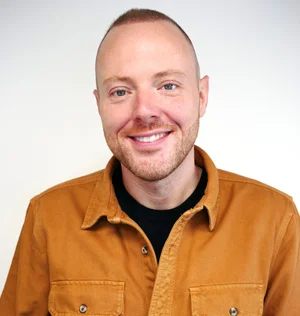
That was really the starting point for a recent Soul Sync conversation with Dutch psychic medium Dennis Blaauw of Astra Anima.
Dennis and I both work mediumistically, but the fascinating part is that our internal experiences are not identical. Even during the conversation we disagreed, challenged one another, changed direction and occasionally discovered contradictions in our own thinking.
And I rather liked that.
Because perhaps mediumship needs more exploration and fewer absolute answers.
Listen to the Soul Sync conversation
Two Mediums Reveal How They Experience the Spirit World with Dennis Blaauw
So, What Does Mediumship Actually Feel Like?
This is probably one of the questions I'm asked most frequently.
And my slightly frustrating answer is:
It depends.
For me, spirit communication very often begins visually.
A face appears within my mind.
Not necessarily as though a physical person is standing in front of me. It is more like an image within my internal awareness — sometimes incredibly vivid and sometimes fleeting.
That face starts something.
It is almost as though my consciousness recognises: someone is here.
But the more I've examined my own process, the more I've realised that the image isn't actually the whole experience.
Alongside it there is usually feeling.
Emotion.
Personality.
A change in atmosphere.
A knowing that seems to arrive before I've logically worked out why I know it.
Dennis's experience can be different again. In our conversation, he explained that the nature of a connection can change depending upon who — or what — he feels he is connecting with.
And that raises what I think is a hugely important point:
Perhaps there isn't one correct sensation of mediumship.
There may be many doorways.
Clairvoyance, Clairsentience and the Different Languages of Perception
Traditionally, mediumistic experiences are often described using the various clairs.
Clairvoyance generally refers to receiving visual impressions.
Clairsentience relates to feeling or sensing.
Clairaudience refers to impressions experienced as sound or words.
Claircognizance is often used to describe an unexplained sense of knowing.
There are other terms too, including experiences associated with smell, taste and physical sensation.
But even these labels can become boxes if we're not careful.
I spent a long time thinking clairvoyance was my dominant way of working simply because my visual impressions can be so vivid.
Yet during another conversation, medium Colin Bates challenged me on that.
He suggested that underneath the image, my real starting point may actually be clairsentience — feeling.
And I think he was right.
I see the face.
But I feel the person.
That distinction has completely changed the way I work.
Interestingly, Science Also Shows That Our Inner Worlds Differ
This is where the conversation becomes especially interesting.
Leaving aside the question of whether an impression originates from spirit, modern neuroscience does support one important part of this discussion:
human beings do not all experience their internal world in the same way.
Research into visual mental imagery shows enormous individual variation. Some people's mental imagery is extraordinarily vivid, whereas people with aphantasia report little or no voluntary visual imagery at all. Neuroscientist Joel Pearson's review of the field describes mental imagery as involving brain networks extending from frontal regions into sensory areas and notes this striking variation in vividness between individuals.
That does not prove clairvoyance or mediumship.
But it does tell us something important.
When one medium says:
“I see spirit very clearly.”
and another says:
“I don't really see anything — I feel it.”
there is no reason to assume that one person's internal experience should resemble another's.
The human mind itself is already far more individually configured than we sometimes acknowledge.
What About Feeling Spirit in the Body?
Then there is clairsentience.
For many mediums, information seems to be experienced through bodily sensation and emotion.
A heaviness.
A warmth.
A feeling in the chest.
A sudden emotional shift.
A sense of somebody's personality.
Science has its own term for our ability to perceive internal bodily states: interoception.
Research into interoception examines how the brain represents sensations from within the body and how these contribute to emotion, mood and our sense of self.
Again, that does not establish that a particular bodily sensation has come from someone in spirit.
But it gives us another useful framework.
Our bodies and minds are constantly receiving, interpreting and integrating information.
Perhaps good mediumistic development therefore involves becoming more sensitive to our internal experience without immediately deciding what every sensation means.
That last part matters.
Does Spirit Communicate Through Our Memories?
This was one of the areas Dennis and I explored most deeply.
My own belief, based upon how I experience mediumship, is that spirit can communicate using the enormous library already contained within our consciousness.
Our memories.
Images.
Emotions.
Relationships.
Music.
Places.
Films.
Smells.
Objects.
People we have known.
Everything within what I sometimes call our tapestry of life.
In my own mediumship, my grandfather has sometimes appeared within my awareness when I have known perfectly well that the communicating spirit person is not actually him.
Initially that confused me.
Why are you here?
Eventually I began to realise that the image itself could be part of a language.
What does my grandfather represent to me?
What is he doing?
Where is he?
What feeling accompanies the scene?
What aspect of that memory am I being drawn towards?
Dennis quite rightly challenged me on this during our conversation.
He pointed out that some impressions can feel completely novel: a smell somebody doesn't remember encountering, a landscape they don't recognise, a voice or sensory impression without an obvious personal association.
And I think that's important.
I don't want my beliefs about how mediumship works to become so rigid that I stop noticing when my own experience contradicts them.
Mediumship should remain an enquiry.
Symbolism: The Pizza Is Sometimes Just a Pizza
This is something I've had to learn the hard way.
Spirit gives me a washing machine.
My brain says:
Launderette!
Spirit gives me a pizza.
My brain immediately decides:
Domino's!
Spirit shows me a woman.
My analytical mind races ahead:
Daughter!
And suddenly I've moved away from what I actually received into something I've constructed myself.
I reached a point where I almost had to renegotiate my relationship with the spirit world.
I decided:
Just say what you are given first.
Stay with it.
Feel it.
Explore it.
But don't rush to make it mean something.
That distinction between perception and interpretation has become enormously important in my own mediumship.
Dennis caught me out during the episode, because I also said spirit communicates symbolically.
His response was essentially:
Well, a symbol requires interpretation.
Touché.
And he's right.
The answer, for me at least, isn't to stop interpreting altogether.
It is to become increasingly aware of when the interpretation begins.
Why “No” Can Be One of the Best Words in Mediumship Development
For developing mediums, a “no” can feel catastrophic.
You give information.
The sitter says:
No.
And suddenly:
I've lost it.
I'm rubbish.
I've made everything up.
I'm never doing this again.
I know that territory very well.
But I increasingly think we need to change our relationship with being wrong.
A “no” contains information.
Did I accurately perceive something but interpret it incorrectly?
Did I move too quickly?
Did I turn an impression into a relationship that wasn't there?
Did I simply get it wrong?
That's okay too.
Dennis and I actually demonstrated this rather beautifully during the episode with an impromptu colour experiment.
He selected a colour.
I confidently felt into it.
Turquoise appeared first.
Then I changed my mind.
Dark purple.
The colour?
Orange.
Not exactly my finest psychic hour.
Then I chose one for Dennis.
He slowed down.
He sensed blue-green.
And irritatingly, he was basically correct.
But that is precisely why experimentation matters.
If we're terrified of being wrong, we stop experimenting.
And if we stop experimenting, how do we ever discover the nuances of our own perception?
Can Mediumship Actually Be Taught?
Dennis and I disagreed on this too.
I tend to resist the phrase “teaching someone to be a medium.”
I prefer unfoldment.
My belief is that a good mediumship teacher is helping somebody recognise, understand and develop a sensitivity that already belongs to them.
Dennis made the perfectly reasonable counterargument that there clearly are skills involved.
And of course there are.
Discernment can improve.
Attention can improve.
Vocabulary can improve.
Confidence develops.
A medium learns how to communicate what they perceive.
They learn how not to lead somebody.
They learn when they have moved into interpretation.
They learn to stay with an impression.
They learn how their own consciousness works.
So perhaps the distinction is this:
A teacher cannot give you somebody else's mediumship.
But a good teacher may be able to help you discover your own.
That is a very different proposition.
Are We Trying Too Hard?
This may be the most paradoxical part of mediumship development.
We want to become better.
So naturally, we try harder.
But the harder we try to make something happen, the more we can interfere with the very process we're trying to allow.
I know this intimately.
I've sat in readings internally screaming:
Come on. Give me something. Anything. Name. Date. Memory. COME ON.
Shockingly, that rarely improves matters.
The more pressure I create, the more analytical I become.
The more analytical I become, the further away I move from that subtle first impression.
There is actually an interesting parallel here with established psychology.
Research into “choking under pressure” has found that excessive pressure can impair skilled performance. One proposed mechanism is explicit monitoring: something that normally operates relatively automatically becomes disrupted when we begin consciously scrutinising every step of it.
That research is not about mediumship.
But the parallel fascinates me.
How many times do we interfere with something subtle because we're monitoring ourselves too intensely?
Am I connected?
Am I doing it right?
Is this good enough?
What does this mean?
Perhaps sometimes development is not about concentrating harder.
Perhaps it is about becoming sufficiently practised that we can stop gripping the experience quite so tightly.
“I Care — But I Don't Care”
That sounds dreadful out of context.
Yet it has become one of the most useful ideas in my own development.
Of course I care.
Deeply.
Mediumship involves people's lives, memories, grief, relationships and love.
It deserves sensitivity and responsibility.
But I cannot care so intensely about performing well that my need to succeed becomes louder than the communication itself.
That is a different type of caring.
It is caring about the result.
Caring about being right.
Caring about how I am perceived.
And that creates pressure.
So increasingly I tell myself:
I care deeply about the work.
But I don't care about proving myself.
There is tremendous freedom in that distinction.
Should Mediumship Training Have More Room for Experimentation?
This was another area Dennis and I explored.
I have enormous respect for the history and traditions of British mediumship.
The great pioneers experimented relentlessly.
They sat in circles.
Explored altered states.
Investigated different forms of communication.
Worked with healing.
Trance.
Physical mediumship.
Psychometry.
Inspirational speaking.
And many other approaches.
Yet I sometimes wonder whether parts of modern mediumship development have become more standardised than the pioneers themselves ever were.
Dennis made an important counterpoint.
Frameworks have value.
They create boundaries.
They establish common language.
They can help people develop safely and methodically.
I agree.
The problem comes when:
“Here is one useful framework”
quietly becomes:
“This is the only way it can happen.”
Because if consciousness is individual, and if spirit communication is individual, surely our development must leave at least some room for discovery.
What Does the Scientific Research Say About Mediumship?
I think it's important to be careful here.
Science has not established that communication with deceased people is a proven explanation for mediumistic experiences.
But it is also inaccurate to suggest that mediumship has never been experimentally studied.
It has.
Some blinded experiments have reported that certain mediums produced information rated significantly more accurately for intended sitters than control readings. A 2020 meta-analysis of 18 experiments reported an overall result above chance and concluded that its findings supported anomalous information retrieval through an unknown mechanism.
Other controlled research has failed to find such an effect. One study testing mediumistic writing under strict blinded conditions found no significant difference between target and control letters, while another forced-choice experiment reported insufficient evidence for anomalous information reception.
And I actually find that tension interesting.
Because the scientifically responsible position isn't:
“Science has proved mediumship.”
Nor is it:
“Nobody has ever found anything interesting.”
It is:
There are intriguing findings, conflicting findings, methodological challenges and unanswered questions.
For me, that makes consciousness worth continuing to investigate rather than pretending the mystery has already been solved.
Perhaps the Biggest Mistake Is Comparing Your Mediumship With Somebody Else's
This is really where Dennis and I landed.
If you're developing your mediumship and somebody else sees faces while you don't, that does not automatically mean you're doing something wrong.
If somebody hears words and you only receive feelings, that does not mean they're “more advanced.”
If somebody produces names easily while your communication arrives through memories and emotion, that does not automatically make their connection better.
Experience matters.
Practice matters.
Evidence matters.
Discernment matters.
But comparison can become resistance.
Your consciousness contains an entirely different lifetime from mine.
Different memories.
Different emotional associations.
Different imagery.
Different sensitivities.
Different ways of processing the world.
Why would your mediumship need to be a copy of mine?
In the episode I said that assigning people labels such as beginner, intermediate and advanced can sometimes become unhelpful if those labels encourage constant comparison rather than unfoldment.
I'm increasingly convinced that good development should help somebody become more themselves, not more like their teacher.
Mediumship as a Creative Relationship
Perhaps that's the phrase I've been searching for.
A creative relationship.
Not creative in the sense of inventing information.
Quite the opposite.
Creative in the sense that two worlds — however we ultimately understand them — are attempting to communicate through the enormously complex instrument of human consciousness.
Learning that instrument takes time.
It requires curiosity.
Experimentation.
Humility.
A willingness to be wrong.
And perhaps most importantly, the confidence to stop asking:
“How does somebody else do this?”
and begin asking:
“How does this unfold through me?”
That is the conversation Dennis and I really had.
We didn't finish with a single theory of mediumship.
I'm rather pleased about that.
Because certainty closes questions.
Curiosity opens them.
And when it comes to consciousness, the spirit world and what human beings may ultimately be capable of perceiving, I think we still have an extraordinary amount left to explore.
Listen to the full conversation
Listen to my full Soul Sync conversation with psychic medium Dennis Blaauw, where we compare how we experience spirit communication, experiment with intuitive colour perception and explore whether mediumship is something that can really be taught — or something that has to be individually discovered.
Discover Dennis Blaauw and Astra Anima:
AstraAnima.com
Explore more conversations about mediumship, consciousness and the spirit world through Soul Sync here on JasonPaulMedium.com
Read the full conversation
If you'd like to explore the conversation in full, open the section below to read the complete transcript of my Soul Sync discussion with Dennis Blaauw. We explore what spirit communication feels like, clairvoyance and clairsentience, symbolism, the role of memory, mediumship development, experimentation, traditional training and why trying too hard can sometimes get in the way.
-
Full Transcript
Jason Paul:
Hello and welcome back to the Soul Sync podcast. It's me, Psychic Medium Jason Paul, and it's lovely to have you here.I've just got back from Prague late yesterday. I had a lovely few days away, which was really beautiful. I went by myself, saw lots of the sights, and on one of the days I even did 25,000 steps. My feet are actually feeling it today!
I wanted to have a conversation today with medium Dennis Blaauw, who's been on the podcast fairly recently, because we both wanted to talk about how we experience our mediumship.
I believe mediumship is very difficult to teach because it is more of an unfolding, and every medium ultimately experiences their mediumship in a different way.
The way the spirit world communicates with us is through our memories, through every experience that we've ever had within our consciousness. They can draw on our past experiences, the way we feel about certain things — everything within our tapestry of life.
So for that very reason, no two people can experience it in exactly the same way.
And that's what can make it very difficult in the early days, where a lot of mediums compare themselves. One medium feels it like this, another medium over here feels it like that, and it can be difficult to navigate.
So I wanted to bring Dennis onto the podcast to have a conversation about how we experience our mediumship.
We're both at different stages — not one better than the other, just different — and coming up very soon we're going to be doing an evening of platform mediumship together near Amsterdam.
I know many of you are trying to develop your own relationship with the spirit world, so I thought this would be a really interesting conversation, explaining how Dennis and I each experience mediumship.
And it's a pretty fascinating conversation, if I do say so myself.
So, enjoy.
Dennis Blaauw! Welcome, welcome, welcome back to Soul Sync.
Dennis Blaauw:
You don't allow any jokes, huh? Because you're erasing the first part.Jason Paul:
I am erasing the first part! That's the whole point of the editor.I might put it in a bloopers section. You never know.
Do you know what, actually? If I had outtakes from Soul Sync — not that I do a huge amount of editing overall — my God, there'd be some funny ones.
Normally most of the funny things happen before I push the record button because I try and get it out of my system before I start being too silly.
I start getting a bit pent-up and excited, depending on the guest and how they stir my energy up before we get going.
Dennis Blaauw:
It's probably mutual, no?Jason Paul:
Well, it is an exchange of energy, isn't it?We're all one!
But I wanted to bring you back on because, firstly, we're sharing the platform.
It's a very dramatic way of saying a stage or a raised piece of concrete, however you want to dress it up, but it is what we say in the mediumistic world.
We're sharing a platform near Amsterdam, doing some mediumship.
Dennis Blaauw:
It's not actually Amsterdam. It's close to Amsterdam.Jason Paul:
Oh well, I've already got the location wrong!Thank God you've told me. I could have turned up to the wrong venue.
We're doing some mediumship at a location close to Amsterdam on a date which I've now forgotten, so we're doing very well so far!
But it's in early August. It's a Thursday. I know it's the first Thursday of August.
I should know this considering it's one of the first times I'm actually gracing a platform in a country other than England, so it's very exciting.
But I wanted to talk today because a lot of the time when I do episodes of Soul Sync, we talk about different matters.
Today I wanted to talk more about mediumship from the sense of: what are we working on? Where are we up to? What does our mediumship look like?
The first thing I want to say is that mediumship, from my experience and how I see it now, is different for every person.
I don't believe any two people experience it exactly the same.
And firstly, I would say that is part of what makes it so difficult to “train” someone to be a medium.
It's a journey of helping somebody unfold.
Would you agree with that?
How do you view that statement, Dennis?
Dennis Blaauw:
I agree and disagree at the same time.Jason Paul:
Oh, we're already having a debate!We haven't even started for two minutes yet.
Why do you agree? Why do you disagree?
Dennis Blaauw:
Well, you actually make two statements.It's a journey of the self — yes, I agree.
Can you train somebody?
Well, I think you can.
That's what we see. We have teachers teaching mediumship, and you're doing it yourself too.
Jason Paul:
Well, I would say I don't view it in quite that way.Yes, okay, we can use the word teacher. I would probably say tutor.
But I would say good teachers of mediumship are really helping you to unfold something.
You can't teach somebody mediumship because mediumship is the truest essence of you.
You can't teach somebody something that they already are.
If you're already a soul with an ability to connect to other souls, then I would say it's more about helping you remember and helping you forget some of the thought patterns and beliefs that you've learned which are misaligned from that truth.
Dennis Blaauw:
Maybe.I think that's a big part of it.
But then, for example, why would you be able to connect to people who have crossed and gone to the other side, but have a hard time connecting with plants, animals, rocks or the sky?
Would you put that down to saying, “Well, my essence isn't related to rocks and animals and plants, but more to people?”
Jason Paul:
That's a very good point as well.Because everything, from what I now understand and believe, is one and the same.
Every atom is connected to another atom.
I have to say, though, I think part of my journey now is trying to live in a way that more fully encompasses the fact that I am one and the same as everything.
But the illusion of separation is a very difficult illusion to overcome sometimes when our eyes are constantly showing us separation from the moment we're born.
I'm not slating my eyes! I'm eternally grateful for them.
But they're showing us a very small spectrum of reality.
It's very difficult to fully encompass that sense that we are all one and the same.
Would I say I fully encompass that in my being?
No.
And a lot of mediums don't.
How many mediums do you know that love a drink, for example?
They're very disconnected from other parts of reality and don't necessarily live a life that completely reflects these ideas.
Dennis Blaauw:
Correct.And actually, you talking gives me a lot of things to say.
You mentioned that a lot of mediums drink, for example.
For a lot of mediums, sometimes it feels like they're turning something on within themselves and then turning it off when they're not working.
That's interesting because then it means it's not necessarily their complete expression of soul that is constantly there.
They choose, at that moment, to turn it on and off.
Coming back to learning, probably what people are learning is how to do that more consciously.
To temporarily drop certain layers of themselves and then be able to connect.
Then when the job is done, so to say, they take on everything they were before.
You see that difficulty with beginning mediums, and you see it basically in any spiritual practice.
People can want something and jump into a certain practice, but after a certain amount of time they cannot hold the tension anymore or keep themselves within that field or frequency.
Then they collapse back to who they were.
Do you recognise that?
Jason Paul:
Well, I can.Because in the early days of my mediumship, I probably spent the first year trying to find out where the power button was after inadvertently finding it.
Then I became ever more obsessed with sitting in the power to activate the power, turn on the power, turn up the power, turn down the power!
It took me a long time to realise where the switch was.
And then the moment I realised where the switch was, I realised there'd never been a switch the whole time.
It had always been on.
But it is a frequency, isn't it?
It's all about energy.
My understanding evolves.
And I think part of why I wanted you to come on today is that I think we're both at different stages in terms of our mediumship.
Different stages just meaning different places.
We both have different ways of interpreting the spirit world.
And I think one of the most unhelpful things you can do in mediumship is say, “You're intermediate. You're advanced. You're at this level. You're at that level.”
I think that's really unhelpful because straight away you're creating resistance in your own unfolding by comparing somebody else to you.
You're a soul.
You have the same potential.
Yes, some people are more experienced because they've experimented more with their faculties and understand more about how they work.
I'll tell you how spirit evolved with me over the years.
At the very beginning, I went for a long stage of getting stuck — I say stuck — with faces.
I'd get a face in my mind.
The term “third eye” is one of those things I don't always think is helpful either because I spent a long time wanting the image to come through right here, almost as if it was going to project onto the wall like a projector.
But in the beginning, I would get faces.
Then I'd feel like I couldn't move beyond the face.
The face was just there.
I'm very clairvoyant and the spirit world has its own distinct language of communicating with me.
Firstly, I'll say it's with good humour.
They've realised that humour definitely seems to be a language I understand.
But for a long time the spirit world would give me one thing.
They'd give me a washing machine and I would say laundrette.
They'd give me an ironing board and I'd say shirt.
I was interpreting everything.
I had to have an energetic reset with them about a year ago.
I said, “Do you know what? I'm making life difficult.”
You show me a pizza, I say Domino's.
You show me a woman, I say daughter.
So I decided: right, I'm going to have a reset.
Everything you give me, I'm just going to say what I receive.
But it's a journey, isn't it?
How does your mediumship work?
When a spirit person is coming to you, Dennis, what's going on within your own internal reality?
Dennis Blaauw:
When I connect with something, or something connects with me — and it can be a spirit of any type — it changes each time.It's not necessarily always the same.
I'm not sure whether everybody has it like that, but many mediums I talk to explain something similar.
It changes per connection.
And that's what can make it difficult sometimes because we tend to expect something.
Then we try to work with what we expect.
But being open to anything actually makes you better able to perceive what kind of connection is coming through.
It's not really different from life.
Any skill that you acquire in life is transferable to mediumship.
I think we forget that sometimes because we try so hard with mediumship.
We say there's only one type of relationship we can build on.
But if we look at life, we have different kinds of relationships.
If we meet another person, we talk differently.
We act differently.
We know which words to say and which not to say.
It's not much different when I do mediumship.
You also have to realise that when you have ten minutes, you need to get connected as quickly as you can.
But it's not only you making the connection, so you don't need to worry so much.
Most of the time, you can feel and sense that spirit is mediating in between as well.
It may be guides mediating in between, or you sense that the spirit person is actually trying to get a little closer to your frequency or making it easier for your impressions.
So asking me what it's like to have a connection?
It varies so much.
It varies so much.
Jason Paul:
I guess that's in the nature of the fact that every soul is different.Every spirit person is different.
Again, that's what can make it tricky in mediumship.
If you've got a teacher or you're at the beginning of your journey and somebody says:
“Right, okay, first thing you're going to do in this exercise is get a name. You're going to get an address. You're going to get whatever piece of evidence.”
Whilst I understand the merits of that at a very, very early point of your unfoldment, it can also become restrictive.
At the beginning of my journey, I needed bucketloads of evidence.
I was struggling to believe this was reality.
Or maybe I simply wanted a burden of proof.
It kind of makes sense, doesn't it, being an ex-police officer?
The burden of proof for the spirit world had to be beyond all reasonable doubt!
But my mediumship has changed.
It's evolved.
No two spirit people are the same.
What I think the spirit world does do is get to understand your language of the soul and how you interpret things.
If you're listening to this and wondering, “How the hell does a medium connect to spirit?”, let me cut through the noise.
From the way I understand it, they can use your memories.
They can use everything within your consciousness.
Every experience.
Every memory.
Every emotion you've ever had is potentially within the repertoire.
They can draw upon those things because how else are they going to communicate through you?
One of the problems we sometimes have in mediumship is believing that the mind is the enemy.
We start dividing ourselves into left brain and right brain.
But the spirit world can draw upon our emotions and our consciousness.
A lot of the time, when I get a spirit person come through, the first thing I get is a face.
Always a face.
It could be the face of a famous person.
Quite often my granddad's face comes through.
And I went through a stage of thinking:
“Why are you doing this to me?”
My mediumistic granddad — why do you keep appearing?
Are you trying to ruin my connection?
But there was symbolism involved.
Everything can become symbolic with the spirit world.
I remember one particular experience where my granddad came through sitting on a bar stool, almost laughing at me.
I thought:
“Why are you doing this? What is the spirit world trying to communicate to me?”
It was an Irish bar.
Of course it was an Irish bar.
Where else would it be, Dennis?
But there was an underlying message.
He was drawing my attention to a scene within the bar.
And that's the thing.
If the spirit world is communicating through your memories and experiences, then your experiences are completely different from mine, Dennis.
We've had separate lives.
Straight away, the language of the spirit world coming through your internal lived experience is going to differ from mine.
So of course our mediumship is going to be different.
Dennis Blaauw:
Yeah, I think that's partially the story.And I think you already said it in the beginning.
Because now you also said they use symbols.
But just before that, you said you don't do interpretations anymore.
A symbol is always an interpretation.
Jason Paul:
So you're saying I already have a conflict within myself?Dennis Blaauw:
Yes!Jason Paul:
There is a conflict in that.Let me unravel that particular point.
Yes, the spirit world can use symbols, and you are interpreting the symbolism.
But from my understanding of where I'm at now in my mediumship — and it is a journey, you never get to a destination; if you think you've arrived, you're probably further from arriving — what I now believe is that spirit can use these experiences, and it's about the feeling.
What is within the feeling of the symbol?
That's normally where I feel the message lies.
For me, I'll get a symbol.
The first thing I'll normally do is feel into it.
You give me a boat on a lake.
I'm feeling into: what is that memory?
What is it you're wanting to express to me?
Because they're bringing emotion.
And if you're not having emotion in your readings, I think there can be different styles of medium.
There can be a more technical approach and a more emotional approach.
I think people sometimes naturally lean towards one or the other.
Dennis Blaauw:
This is starting to sound like my wife's philosophy classes!You're either a feminist or an analytical philosopher.
Jason Paul:
Well, again, Dennis, this is the thing.I don't agree with boxes!
For too long I've been trying to contain myself within a box, and I'm never someone to be contained within a box.
Put me in a box and I want to burst!
Mediumship shouldn't be put in one either, should it?
Surely you must agree with that, Dennis?
Dennis Blaauw:
Sorry — you're asking me whether I like boxes or not?Jason Paul:
No!The point I'm making is, firstly, mediumship is individual.
Secondly, what I believe can happen in mediumship is that the spirit world draws upon your memory bank and image bank.
When we talk about symbolism and interpretation, one of the biggest problems I've had is receiving something and then immediately hearing the analytical brain go ding.
You try and place it.
That's like the washing machine and suddenly saying laundrette.
You've interpreted it.
You've tried to place it.
I have that so much.
Every time I get a “no” in a reading, I'll tell you this: quite often it isn't necessarily because what I originally received was completely inaccurate.
It can be because I've moved into interpretation.
I'm at a point now where when I get a “no”, the first thing I do is go back.
I can often tell that I've gone into the analytical brain.
I've tried to interpret it.
And you can feel it because the energy changes straight away.
Dennis Blaauw:
Yeah, but I think you're missing something.I don't disagree.
I think that's a very big part.
But all of our senses can be used mediumistically.
When you're talking about feelings, yes, they can be directly connected to memories.
If that is your strongest mediumistic sense, probably it will be elicited through memories quite often.
I'm just giving an example.
But smell and hearing can be completely novel.
You don't necessarily need to have a memory attached to them.
They can talk to you.
You hear voices.
You can smell what they're smelling.
They can be smells you haven't experienced before, or at least not connected to anything you consciously remember.
Even images can be like that.
You can see landscapes or places you've definitely never visited.
Of course you could say, “Maybe you've drawn it from movies,” but at the same time, why couldn't it be something else?
Jason Paul:
It's interesting, isn't it?And you're right.
There are many other ways beyond clairvoyance.
Clairvoyance has always been what I would describe as my strong one.
But actually, I'm not sure it is.
I was having this conversation the other day with Colin Bates.
I said, “Clairvoyance is my main faculty.”
And he said, “It's not. It's actually clairsentience.”
I thought: yes, you're right actually.
Because there's always a feeling.
The reason I automatically say clairvoyance is because the images I get can be so vivid.
They're visual.
I can see them.
It's almost as though the spirit world has found a way of working with me where they know the first thing to do is give me a face.
The face triggers me.
It lets me know there's someone there.
It starts the engines, you could say.
Dennis Blaauw:
Have you ever noticed that when your other senses are more open in your direct environment, they also open up within your mediumship?Jason Paul:
I think you can do a lot to help your development.And you're right.
If you're in a situation where you're really present and in the moment, perhaps surrounded by something beautiful, I do think other senses can become heightened.
I keep saying to myself there are so many things I want to do now in my newfound life of New Jason!
I keep saying to my mum:
“I want to come over and start doing experiments. Put a blindfold on me, put jars under my nose and make me identify the smells.”
But the problem with my mum is that I know she's very immature.
She'd probably come along with some cat litter or something!
So it's a trust issue, you see.
But I do think there are ways to train perception.
One thing I've just started doing is working with colour.
I've always been very attracted to colour and I find colours massively change my mood.
I've got this crazy-sized colour deck in the cupboard.
There must be over 500 different shades.
I've randomly taken about 100 of them and put them in brown envelopes.
Every day I take one brown envelope and try to feel and detect the colour.
At the moment I'm doing quite well with it.
Some days I don't just get the general colour.
I might get a specific shade.
I might not say “red.”
I might say “dark maroon.”
Do you want to be put on the spot?
Dennis Blaauw:
Do you have one there?Jason Paul:
All the envelopes are downstairs.That's going to be a problem.
Dennis Blaauw:
I've got a colour in my hand.Jason Paul:
You've got a colour?Okay.
This makes the point perfectly.
The first thing I want to do is feel that colour.
I don't want to think about the colour.
I want to feel into it.
But there's also an element where if I stay with it too long, I start overthinking and second-guessing.
The first thing I was aware of was turquoise.
But that isn't my final colour because I feel that you hadn't fully selected it.
So I'm going to say purple.
Dark purple.
Is that correct?
Dennis Blaauw:
Totally.Jason Paul:
Let's have a look.Oh, it's bloody orange!
Of course it is!
But the point is, when I do the experiment normally at home, I take my time to feel into the colour.
Every colour has a different quality to it.
Especially when I've been doing a lot of mediumship — if I've been on a course or something extended — you can take me back afterwards, and honestly, one time I did ten cards in a row with my mum.
She looked at me like I was Harry Potter, Dennis!
But that's because I'd been very sensitive and open for the whole week.
Dennis Blaauw:
Yeah, no, I believe you.It was a bit unfair to make you—
Jason Paul:
I'm half tempted to do the same back to you.I almost feel I have to now.
Dennis Blaauw:
Oh yeah, come on.Let the boy go down the drain!
Jason Paul:
This may be cut out later, but you never know.Let's have a look.
Okay.
I already know which one I've selected.
I'm just going to send you the vibration of this colour.
Dennis Blaauw:
You don't necessarily need to do that, but okay.I would say it hinges somewhere on the blue and green spectrum.
Jason Paul:
And it is blue!Very good.
And actually it is kind of green as well.
Yeah, it's a bluey-green.
That's because you took your time, Dennis!
I went in like a bull in a china shop.
I didn't take my time.
I felt the pressure.
But that's ego, isn't it?
There's a lesson to be learned within the exercise.
It's a good thing to do.
And those cards — I can't remember what you call them — the ones with the triangle, circle and squiggly line.
Dennis Blaauw:
I want to try again.Jason Paul:
Do you know what?There are many parts of me that do want to try again.
I'm very good with colour normally.
Colour is something I work with a lot.
In the early stages of my mediumship, a lot of readings I did would start with a colour and then read into that colour.
Some of what I perceive as the best readings I've ever done have started with something as simple as a rose.
You can read into anything.
I remember doing a reading once where a mediumship tutor gave me a rose and said:
“Okay. Do a reading from this rose.”
Dennis Blaauw:
It's very interesting.I don't really like using it, but at Arthur Findlay College they give you these kinds of exercises and they actually do work.
And I think that's how we did the bone readings, right?
Jason Paul:
Oh yes!I remember I was really good at the bones.
So basically, we got a pile of bones.
They weren't real bones.
Obviously, traditionally and in ancient cultures, real bones may have been used.
Dennis Blaauw:
They weren't even bones. They were plastic.Jason Paul:
Well, yes!Because if they were real bones, I wouldn't have touched them!
Effectively, we got them, shook them up, and then did a reading from the way the bones landed.
And it was amazing, wasn't it, the level of detail that was coming out?
Dennis Blaauw:
Yeah.And that's what interests me sometimes.
In shamanism, for example, you take time.
If you do some kind of oracle reading or psychic reading through an oracle, there's often a ritual around it.
I know people with tarot do it.
They may infuse the cards with their energy or something similar.
There is a ritual around it to make sure the objects are in a certain vibration.
But we didn't really do any ritual with the bones.
We did blend a little bit with our energy and their energy, if you remember.
Jason Paul:
I do.And do you know what?
That's the bloody point as well.
We did a lot of experimenting.
And that's what you need to do.
You need to experiment.
Try different things.
Dennis Blaauw:
Yeah, I agree with that.With experimenting, your perspective can change if you're open to the experiment.
It can be challenging, frightening or whatever.
But afterwards you can accumulate so many things.
Sometimes you can also drop an old inner perspective that doesn't suit you anymore because you've found something new.
I know you're classically medium-trained, right?
Or at least from that direction.
You're not completely classically trained, I know, but you're still somewhat within the English school of mediumship.
Can I say that?
Jason Paul:
Yeah.And I like the ways of the old and how they trained back then.
I like the creativity in their mediumship and how they pushed boundaries.
I really feel that they were the true pioneers.
So I guess I've always been curious about the ways of the old because I think there's so much to be said for that way of developing.
Dennis Blaauw:
Yeah.I definitely don't want to attack it.
But I can see differences in our thought patterns.
When you go to the Arthur Findlay College, for example, that's basically the only place I know where I've gathered with other mediums on such a big scale.
You can see big differences among the people who come there.
The point I was trying to make is that exercises can change your perspective.
They can help you drop perspectives that no longer suit you.
And I'm treading a thin line here, but I think some classical English mediums can sometimes have boundaries that are too narrow about what they're communicating with.
Jason Paul:
But it works very well at the college.I think part of the problem is more to do with how mediumship can sometimes be formally structured and taught.
Whilst I love the college — there's nowhere like it — I do sometimes think mediumship can become too rigid in the way it's taught.
And I feel that can become limiting because mediumship shouldn't only be done in one particular way.
If we become too fixed, perhaps we're stopping the intelligence of the spirit from bringing through what it needs to bring through.
You can look at the extraordinary forms of mediumship explored historically — things like psychic surgery and physical mediumship.
Perhaps part of the reason we see less of that is because people aren't exploring in the same way.
Dennis Blaauw:
Maybe.But at the same time, the framework also provides boundaries in which different kinds of people can find common ground and communicate with one another.
Those boundaries can be strict and strong, which means the communication stays within that system.
You don't have a blown-out party of people going in all directions.
So I think it definitely holds value.
The point I was still trying to make is that because of the boundaries people put around themselves, they may not even be open to doing certain exercises which could show them something beyond those boundaries.
They may grow strongly in one particular direction, but not be able to communicate about other kinds of experiences.
There are definitely people who grow beyond that and are able to talk about it.
But in general, if you have a strong framework, you can become unable to explore exercises which might give you an alternative perspective.
And if you know how to integrate that within yourself, it can potentially break open perspectives that were holding you back.
Jason Paul:
I think you make a good point.With mediumship, one of the most important things to understand is that when you're bringing through spirit, you're learning a skill of communication.
And that skill can be difficult.
Part of becoming a medium is learning how to channel something without overwhelming it with your own fear and pressure.
One of the most difficult things for me about being a medium was the fact that I care so much.
I absolutely care.
You're sitting in front of someone.
Suddenly you're about to claim you've got their uncle who passed away and to whom they were incredibly attached.
Even just that environment of saying:
“Right, okay. I've got your uncle here.”
In the early days I'm thinking:
“Oh my God. I'm now making a claim that I have this person.”
There's all sorts going on internally.
I think you've got to take the pressure off yourself.
And in the early days, the word experiment really helps.
Because experiment invites you to get it wrong.
It invites you to get a “no.”
You're essentially taking the pressure off yourself in whatever way or mechanism you need to do that.
I'll tell you something Charlie Kelly said to me a few weeks ago.
We were talking about the pressures of mediumship.
He said:
“The moment I stopped caring was the moment my mediumship took off.”
At first I thought:
“What do you mean?”
And, in true Charlie Kelly style, he basically said:
“I don't give a fuck.”
But what he was really saying was that he stopped caring about the outcome of the reading.
There was merit in that.
It was the moment of releasing, letting things flow and allowing.
That's when the readings started to flow.
I've tried it myself.
I say more often now:
“I do care, but I don't care.”
Dennis Blaauw:
Yeah, but that's with anything.It's not just mediumship.
Try playing football.
Jason Paul:
But what I mean is that in many other areas of life, generally, if you put effort in and try, you're rewarded for that.We're told:
“If you work hard, if you try, if you put in effort, eventually the fruits of your labour will pay off.”
But the point I'm making is that with mediumship, I used to try so hard in readings that the trying itself created resistance.
It created friction.
It put me in my head.
It didn't put me where I needed to be — allowing and letting it flow.
Dennis Blaauw:
Yeah, okay.There is something to say about that.
Mediumship has an extra level where trying can interrupt the flow.
But trying can interrupt flow in many things.
I used sports as an example because you can't play sport by only being analytical.
You need to connect with your body.
You need to connect with your surroundings.
You need to connect with your passion.
Then you go for it.
There are many things in life where nobody can really teach you:
“If you do exactly this, then this happens.”
Of course, there are instructions.
But many things in life are transferable to mediumship.
I've got my son.
I can't really teach him exactly how to cycle.
I can put him on the bike.
I can make sure he doesn't fall too badly.
But eventually, he has to get on the bike and experience it.
Jason Paul:
Maybe give him three wheels or four wheels before you give him two!Dennis Blaauw:
No, in the Netherlands we have walking bikes first.Jason Paul:
Oh, I thought you were going to say penny-farthing.The one with the massive great wheel at the front!
Dennis Blaauw:
No, walking bikes.I'm not sure he needs a tricycle at that point.
But what I'm saying is that there are many skills in life where you try, you fail, and then you learn.
And you've been doing that all your life.
Jason Paul:
Do you know what?I'm a trier, Dennis.
I am a trier.
I've tried a lot and succeeded a lot.
But there are many times where my trying, despite my best endeavours, hasn't always served me in the way I would have liked.
Dennis Blaauw:
Exactly.Mediumship isn't that different in that way.
Even now, you're trying to set up a different direction for your life, right?
Jason Paul:
Do you know what?I wouldn't even say I'm trying now.
I'm allowing life to unfold in the way it needs to unfold in order for me to do what I need to do.
That's the way I'm trying—
I've said trying again!
That's the way I'm trying to see it!
Dennis Blaauw:
That's my point!Sometimes we're making it too difficult because we think it's so much outside of ourselves.
I think you touched upon that at the beginning.
We tend to think mediumship is so much different from what we already are.
Then when you calm down, you notice perhaps it's been there the whole time.
Jason Paul:
I think that's the moral of this conversation.Mediumship is experienced very differently by different people.
So firstly, if you're listening to this, don't compare yourself to another person.
Don't try to become another medium.
Understand that it's a creative process and let that unfold.
Embrace the “no's”, because a “no” means you're experimenting.
You're fine-tuning these instruments of yours.
These faculties.
These senses.
Whatever you want to call them, Dennis.
That's what we're doing.
And it is different.
If you're still hanging on in there at this point in the conversation, then we are appearing near Amsterdam.
I know I keep saying Amsterdam!
It's because I fly into Amsterdam.
So British, isn't it?
I'm calling the whole area by the airport I happen to be landing at!
But I'm very excited to do it.
It'll be interesting because I really feel this work is a calling at the end of the day.
I don't feel it can be anything other than a calling because of what the work involves and the nature of unfolding it.
Mediumship has been extremely healing for me and has helped me in so many different ways in my life.
It continues to do so.
That's why I feel in service to it, because I feel it has given me so much as well.
I try to give to it too, but that isn't always possible.
But in this newfound era of mine—
I'm in one of those moods today.
The sillier, the better!
If you do want to find out more, then go to the show notes.
We'd love to see you.
But mediumship is individual.
I think that's the moral of the story today, don't you, Dennis?
Dennis Blaauw:
Yeah.And also, when you come and see us, we definitely can't cut out any bloopers, so that will be fun too.
Jason Paul:
Well yes, it is live!And I love the fact you're being so assumptive:
“When you come and see us.”
Yes, when you come and see us, it'll be lovely!
I look forward to shaking your hand, if that's what you like.
Or hugs are free.
Dennis Blaauw:
And we should also mention that we have a third party, right?Jason Paul:
We do.We have a third wheel, much like the bike that your son is on!
He's a lovely medium called Lucas Auken.
You recently released a talk with him.
Dennis Blaauw:
I did.Jason Paul:
I pushed the button on it today.He's also very talented.
He's a lovely medium.
I've not actually seen him work a huge amount, but I'm really excited to witness that whilst working alongside him for the first time.
It'll be lovely.
Well, it's been a blast.
Very interesting.
Thanks for coming on.
Dennis Blaauw:
Yeah, I liked it, Jason.Thanks for inviting me again.
About Jason Paul
I'm Jason Paul, a psychic medium based in Bristol, working with people throughout the UK and internationally via Zoom.
My approach to mediumship is grounded in the belief that this work is first and foremost an act of service — an opportunity to explore the continuity of life and, where possible, bring evidence, connection and meaning through communication with the spirit world.
You can explore my mediumship readings, upcoming events, Soul Sync conversations and further reflections on mediumship and consciousness throughout this website.